All species › Passerines › New World warblers › Hooded Warbler
Hooded Warbler | Setophaga citrina
Monnikszanger | Chipe encapuchado | Mariquita-encapuzada
The Hooded Warbler is a North American warbler of the forest understorey. It winters mainly in Mexico, Central America and the Caribbean and reaches northern Colombia only in small numbers. It constantly fans its tail, showing the white inner webs.
Voice
The call is a loud, metallic chink. The song, a clear series of whistled notes with an emphatic ending, weeta-weeta-wee-tee-o, is rarely heard in winter.
Recording: Sue Riffe — CC BY-NC-SA 4.0 · xeno-canto
Identification
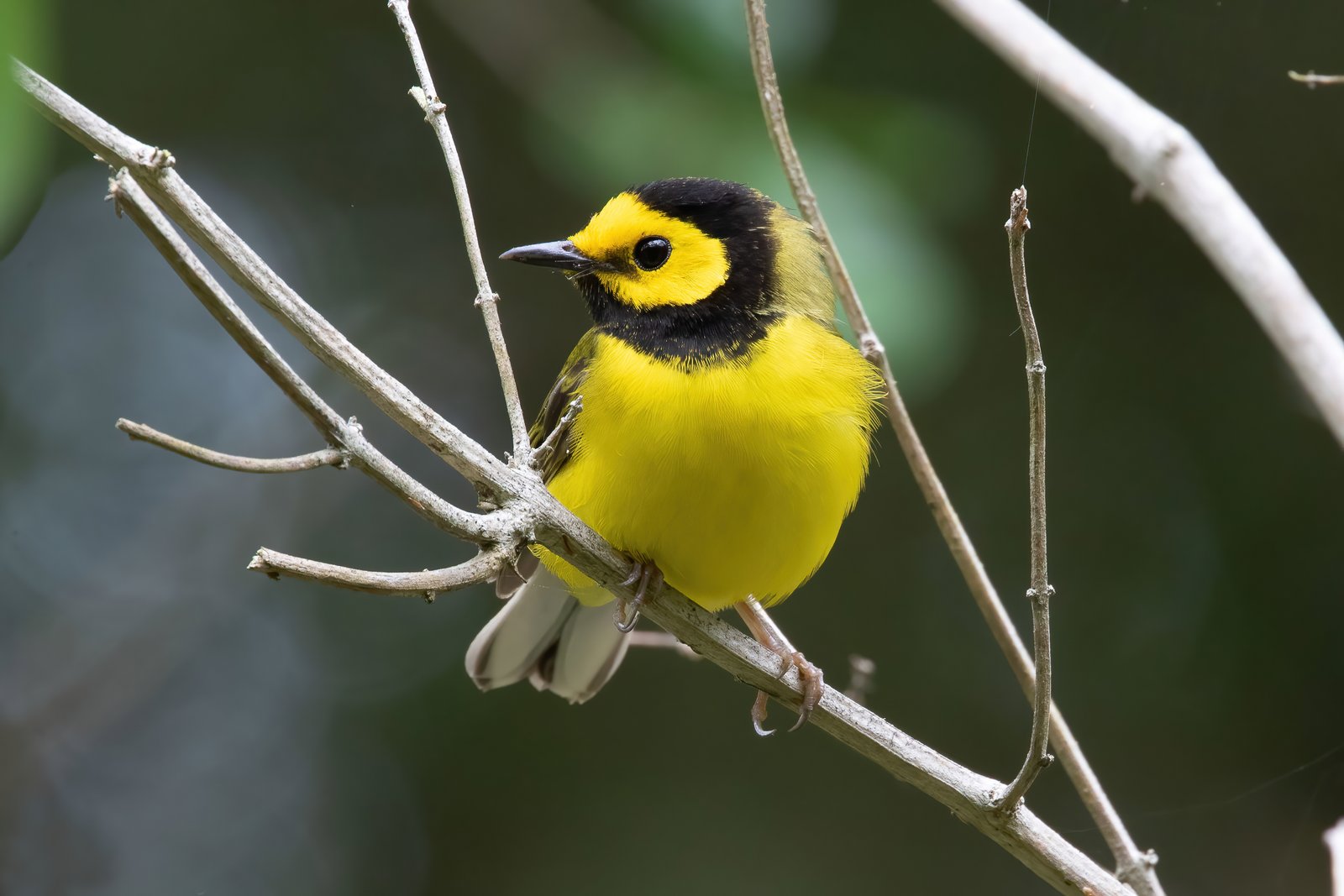
13–14 cm. The male has a bright yellow face and forehead, enclosed by a black hood that continues over the throat and upper breast. The upperparts are olive-green, the underparts bright yellow. The female has an olive crown and a yellow face; some females show part of the black hood. Both sexes have much white on the inner webs of the outer tail feathers, visible when the tail is fanned.
Confusion species
Kentucky Warbler Geothlypis formosa has yellow spectacles, a black cheek patch and no white in the tail. Wilson's Warbler Cardellina pusilla is smaller; the male has only a black cap and both sexes lack white in the tail. Male yellowthroats, such as Masked Yellowthroat Geothlypis aequinoctialis, have a black mask rather than a hood around a yellow face, and live in grassland.
Habitat
In winter in the understorey of humid lowland forest, secondary forest, forest edges and dense thickets, mainly in the lowlands and foothills. On the wintering grounds males more often occupy tall forest and females more often scrub and forest edges. It forages low in the vegetation for insects and also catches them in short sallies. It does not breed in the guide area.
Where the bird is most at home, classified by the vegetation units of the Andes and the west coast.


Range and movements
Rare winter visitor, mainly October to April. In Colombia only a few records each year, mainly in the Caribbean lowlands, the Sierra Nevada de Santa Marta and northern Chocó. In Ecuador, Peru, Bolivia and the Galápagos absent or at most an exceptional vagrant. Breeds in the eastern United States and winters from Mexico to Panama and in the Caribbean.
How and when to look
In winter, in the forest understorey of northern Colombia, listen for a loud, metallic chink; the bird repeatedly fans its tail, which shows off the white in the outer feathers.
Conservation status
Least Concern. The North American population is stable to increasing; on the wintering grounds the species depends on forest with a dense understorey.
Scientific name
Setophaga citrina | (Boddaert, 1783)
Boddaert described the species in 1783 as Muscicapa citrina; because it was later moved to another genus, the author and year stand in brackets. The genus Setophaga was introduced in 1827 by Swainson. The genus name comes from Greek sēs (genitive sētos), 'moth', and -phagos, '-eating', so 'moth-eater'. The species name comes from Latin citrinus, 'lemon-yellow', for the yellow face and underparts. The specimen the first description was based on came from Louisiana, United States.