All species › Parrots › African and New World parrots › Lilacine Amazon
Lilacine Amazon | Amazona lilacina
Lilakruinamazone | Amazona lila | Papagaio-lilás
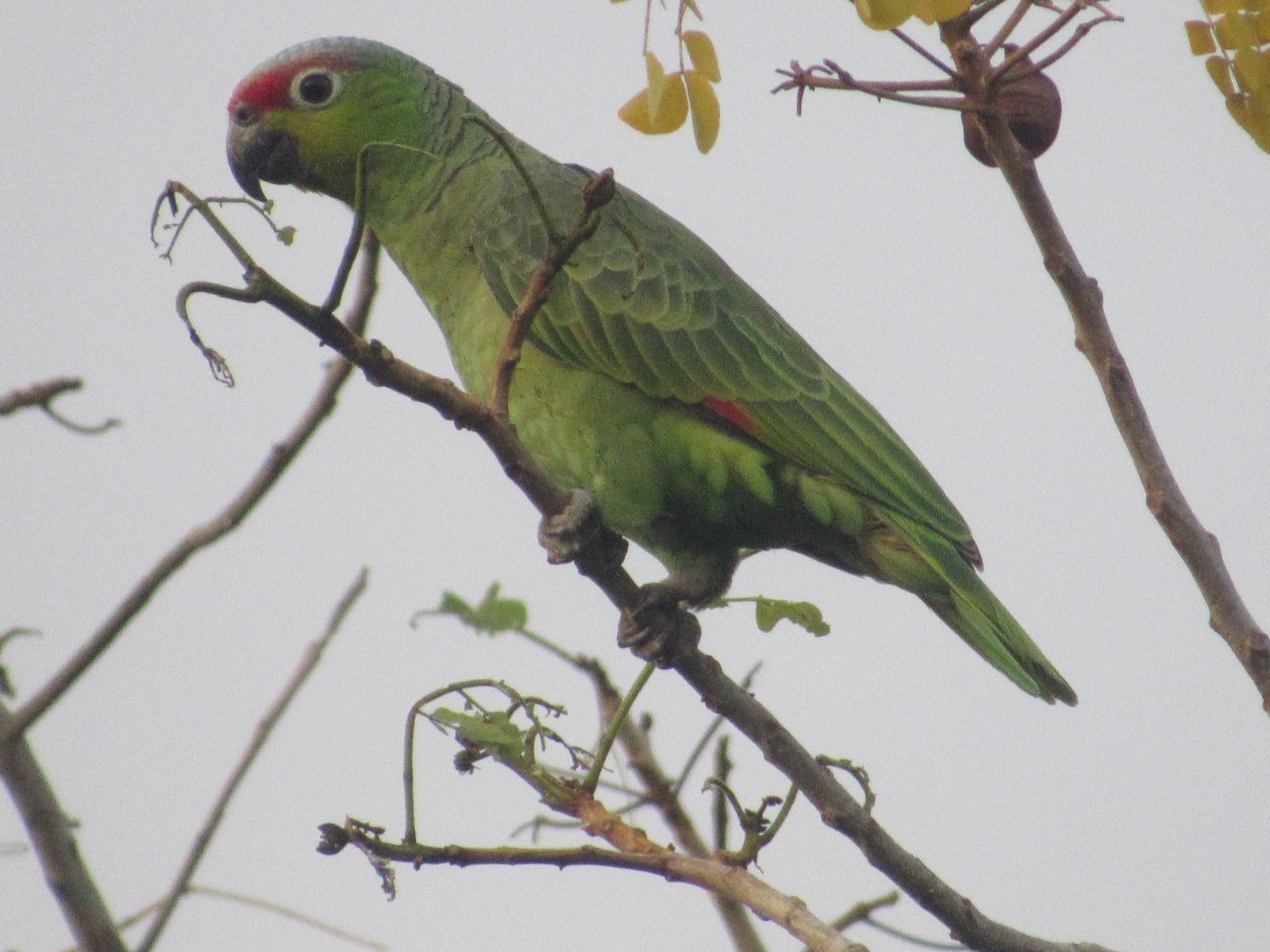
The Lilacine Amazon is an amazon parrot of western Ecuador and the extreme south-west of Colombia, formerly treated as a subspecies of Red-lored Amazon. It is one of the rarest parrots of the guide area. Flocks roost in mangroves and by day feed in dry forest and semi-open country.
Voice
Loud, harsh calls in flight and at the roost, similar to those of Red-lored Amazon.
No recording with a suitable Creative Commons licence is available for this species yet.
Identification
34 cm, with a short, square tail. The plumage is green, somewhat duller than in Red-lored Amazon. The lores and forehead are red, and the crown feathers have lilac tips. The cheeks are yellowish green. The bill is entirely blackish. The wing has a red speculum and blue tips to the primaries. The sexes are alike.
Confusion species
Red-lored Amazon Amazona autumnalis has a pale upper mandible and greener cheeks and lives further north in Colombia. Bronze-winged Parrot Pionus chalcopterus is dark, with bronze-coloured wings, a blue breast and red undertail coverts. Red-masked Parakeet Psittacara erythrogenys is slimmer, with a long, pointed tail and a red head.
Habitat
Mangroves, dry and semi-humid deciduous forest and semi-open country with scattered trees in the lowlands of western Ecuador, mostly below 500 m. It roosts communally in mangroves and by day flies to forest and farmland to eat fruit, seeds and flowers. It nests in tree cavities.
Where the bird is most at home, classified by the vegetation units of the Andes and the west coast.


Range and movements
In Ecuador in the lowlands west of the Andes, mainly around the Gulf of Guayaquil, where flocks roost in the mangroves, with small, scattered groups further north. In Colombia only in the extreme south-west, in Nariño near the border with Ecuador. Absent from Peru, Bolivia and the Galápagos. Does not occur outside the guide area.
- Resident
- dark = core range, pale = thinly spread
How and when to look
At dusk, search the mangroves along the Gulf of Guayaquil, for example at Manglares Churute, for flocks flying to their roost.
Conservation status
Critically Endangered. The population is small and fragmented and is declining through loss of dry forest and mangroves and through trapping for the bird trade.
Scientific name
Amazona lilacina | Lesson, 1844
Lesson described the species in 1844 and placed it straight away in the genus where it still stands. The genus Amazona was introduced in 1830 by Lesson. The genus name is a Latinised form of Amazone, the name the French naturalist Buffon gave these parrots in the 18th century, believing they came from the Amazon jungles. The species name comes from Latin lilacinus, 'lilac', for the lilac crown. The specimen the first description was based on came from Vicinity of Guayaquil, Ecuador.