All species › Passerines › Ovenbirds and woodcreepers › Little Thornbird
Little Thornbird | Phacellodomus sibilatrix
Kleine stekelkruin | Espinero chico | João-de-pau-pequeno
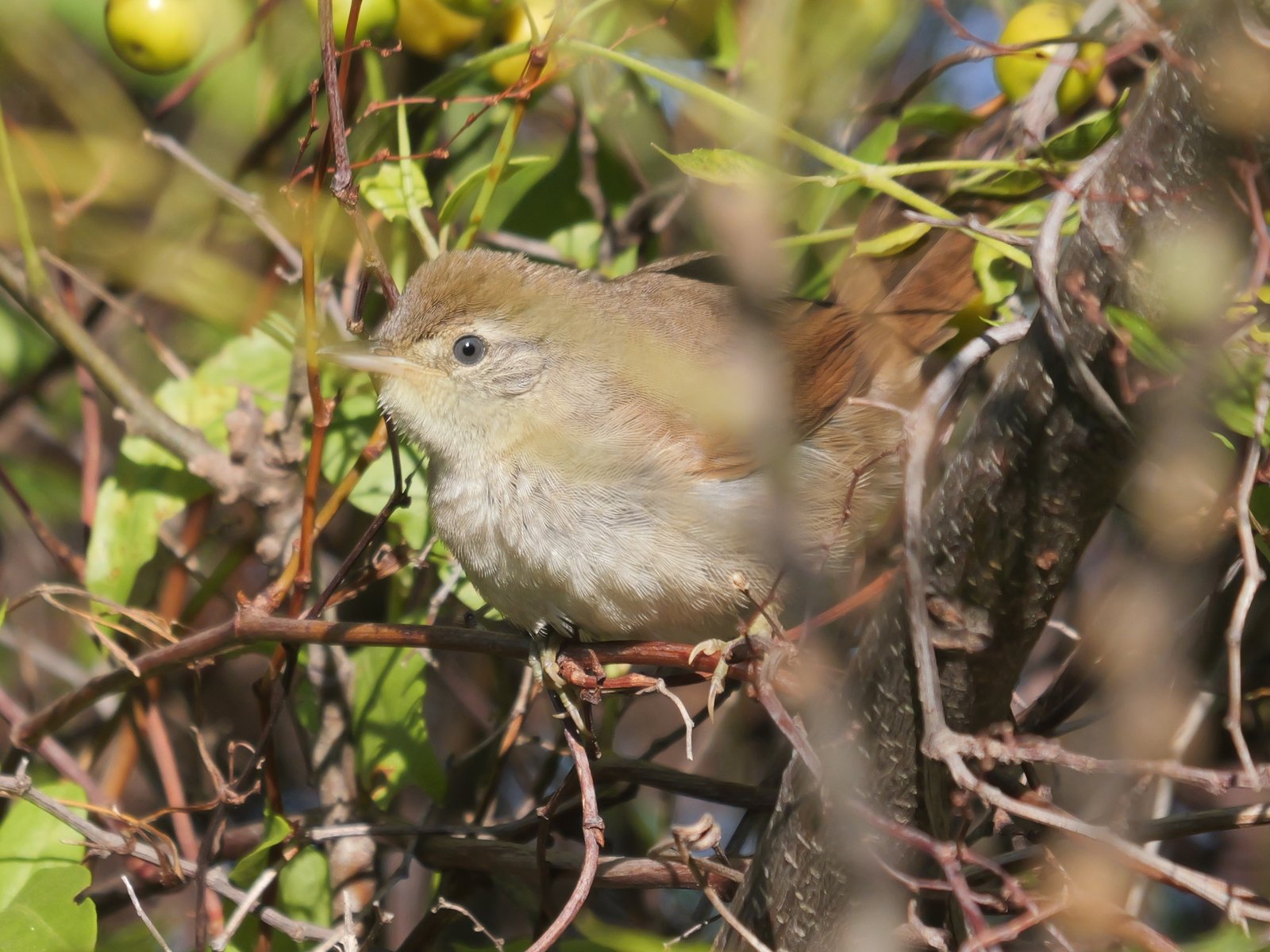
The Little Thornbird is the smallest thornbird, a greyish-brown ovenbird of dry Chaco woodland. It has a rufous forehead and a rufous shoulder patch. In the guide area it occurs only in the far south-east of Bolivia.
Voice
A rapid, high series of notes, often as a duet, thinner than in larger thornbirds. The call is a short chip.
Recording: Franco Vushurovich — CC BY-NC-SA 4.0 · xeno-canto
Identification
12–13 cm, with a short, straight bill and a fairly long, rounded tail. The forehead is rufous, the upperparts greyish brown. The lesser wing coverts form a rufous shoulder patch. A faint, pale supercilium. The underparts are dull white, pale buff on the flanks. The sexes are alike.
Confusion species
Rufous-fronted Thornbird Phacellodomus rufifrons is larger, without a rufous shoulder patch, and lives further north in Bolivia. Stripe-crowned Spinetail Cranioleuca pyrrhophia has a streaked crown and a distinct white supercilium. Short-billed Canastero Asthenes baeri has an orange chin patch and a rufous tail.
Habitat
Dry Chaco woodland, thorn scrub and groves in pasture, in the lowlands below about 600 m. It searches for insects in the outer foliage of shrubs and low trees. The nest is a fairly small pile of thorny twigs with several chambers, at the tips of branches.
Where the bird is most at home, classified by the vegetation units of the Andes and the west coast.


Range and movements
Absent from Colombia, Ecuador, Peru and the Galápagos. Bolivia: locally in the Chaco of the far south-east, in Tarija and southern Chuquisaca. Outside the guide area in western Paraguay, northern Argentina and Uruguay.
- Resident
- dark = core range, pale = thinly spread
How and when to look
In open Chaco woodland in the far south-east of Bolivia, look for small stick nests on the outer branches of thorny trees; the birds often give their rapid duet.
Conservation status
Least Concern. The Chaco is being rapidly cleared for farming and ranching.
Scientific name
Phacellodomus sibilatrix | Sclater, 1879
Sclater described the species in 1879 and placed it straight away in the genus where it still stands. The genus Phacellodomus was introduced in 1853 by Reichenbach. The genus name combines Greek phakellos, 'bundle of twigs', and domos, 'house', after the large stick nests. The species name sibilatrix is Latin for 'whistler' (feminine), from sibilare, 'to whistle'. The specimen the first description was based on came from Córdoba, Argentina (presumed).