All species › Passerines › Ovenbirds and woodcreepers › Many-striped Canastero
Many-striped Canastero | Asthenes flammulata
Veelstreepcanastero | Canastero multilistado | Lenheiro-listrado
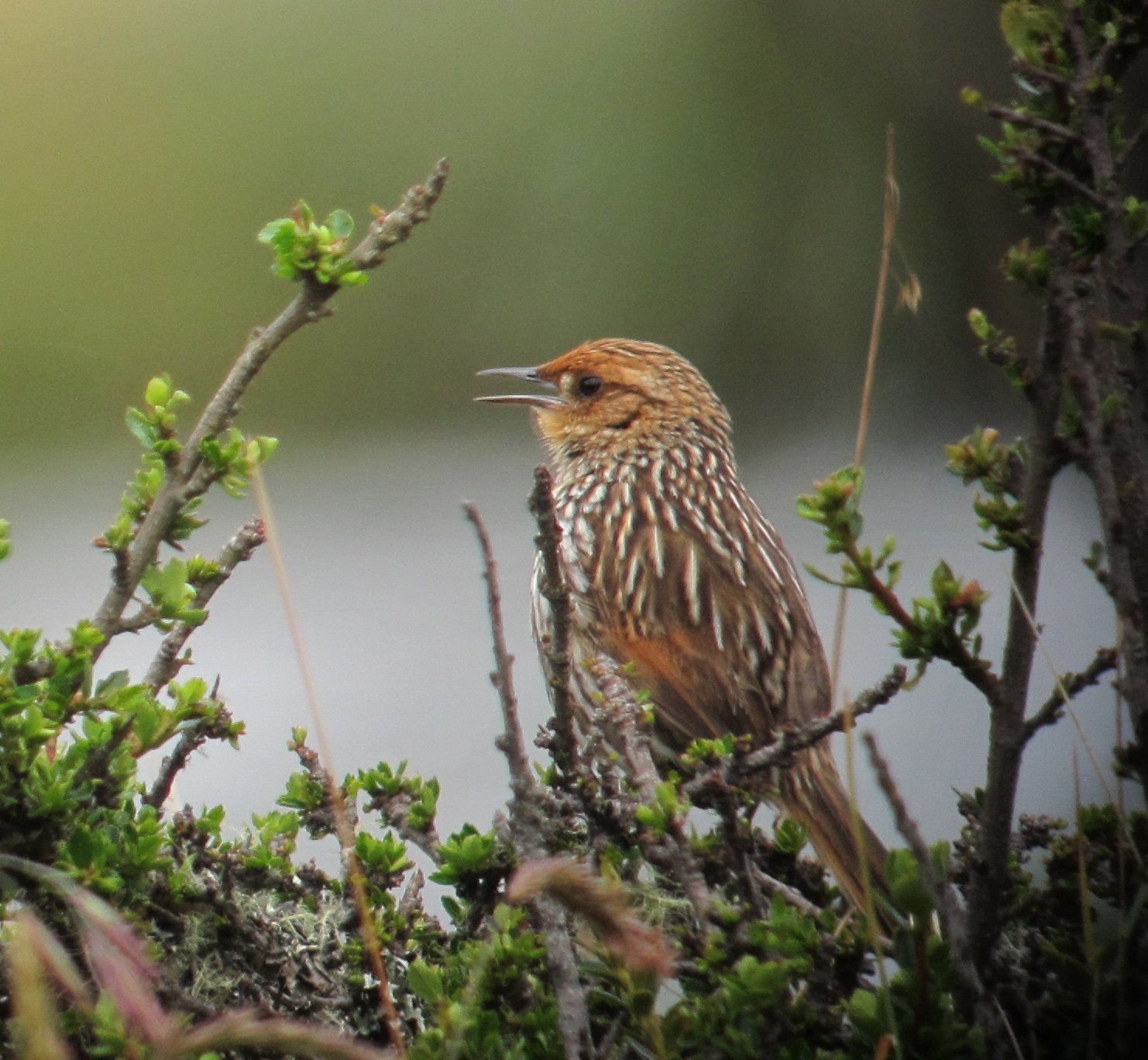
The Many-striped Canastero is a heavily streaked canastero of páramo and jalca in the northern Andes. It lives hidden among grass tussocks and low shrubs and sings from a tussock or shrub. The pattern of black, buff and rufous stripes makes it the most streaked canastero of the north.
Voice
The song is a dry, descending trill, often preceded by a few single notes. Calls with a sharp chip.
Recording: David Monroy Rengifo — CC BY-NC-SA 4.0 · xeno-canto
Identification
16 cm, with a straight, pointed bill and a fairly long, pointed tail. The upperparts are blackish with broad buff and rufous streaks; the crown is streaked rufous. The throat has an orange-rufous patch, the underparts are white to buff with black streaks. The wings and outer tail feathers show much rufous. The sexes are alike.
Confusion species
White-chinned Thistletail Asthenes fuliginosa is plain brown, without streaks, with a long, frayed, forked tail. Streak-backed Canastero Asthenes wyatti is paler, with streaked upperparts but almost unstreaked underparts. Junin Canastero Asthenes virgata is very similar, but less black-streaked below and lives further south, in central Peru. Line-fronted Canastero Asthenes urubambensis is dark and much less streaked.
Habitat
Páramo and jalca with tall grass tussocks, low shrubs and edges of elfin forest, mostly between 2800 and 4500 m. It forages alone or in pairs among the grass and on the ground for insects and other invertebrates. The nest is a closed ball of grass, low in a tussock or shrub.
Where the bird is most at home, classified by the vegetation units of the Andes and the west coast.


Range and movements
In Colombia in the páramo of the Central and Eastern Andes. In Ecuador in the páramo along the entire length of the Andes. In Peru south to Huánuco and Junín. Absent from Bolivia and the Galápagos.
- Resident
- dark = core range, pale = thinly spread
How and when to look
Walk through páramo with grass tussocks and shrubs in the early morning and watch for birds singing from a tussock or darting off low through the grass.
Conservation status
Least Concern. Fire and grazing in the páramo degrade the habitat locally.
Scientific name
Asthenes flammulata | (Jardine, 1850)
Jardine described the species in 1850 as Synalaxis flammulatus; because it was later moved to another genus, the author and year stand in brackets. The genus Asthenes was introduced in 1853 by Reichenbach. The genus name comes from Ancient Greek asthenēs, 'insignificant', 'weak'. The species name comes from Latin flammula, 'little flame', meaning 'flame-streaked', for the heavily streaked plumage. The specimen the first description was based on came from Andes near Quito, Ecuador.