All species › Swifts › Hummingbirds › Neblina Metaltail
Neblina Metaltail | Metallura odomae
Neblinaglansstaartkolibrie | Metalura de Neblina | Metalura-de-neblina
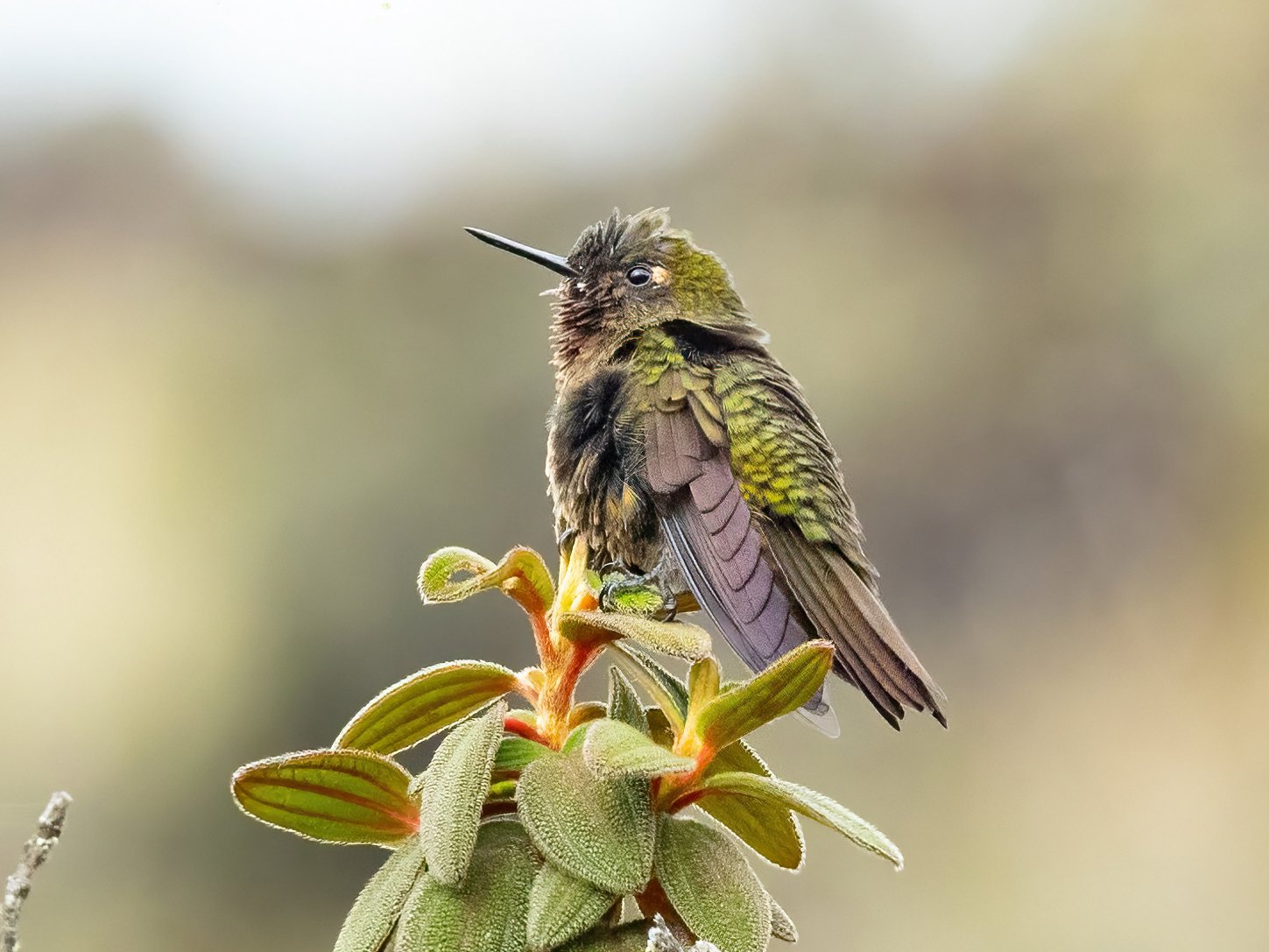
The Neblina Metaltail is a small, dark green hummingbird of the treeline in southern Ecuador and northern Peru. The male has a rosy-red to purplish-red throat. The range is small and largely remote; the species was described only in 1980.
Voice
A loud see-see-see, also described as a jerky, wiry chatter.
Recording: Niels Krabbe — CC BY-SA 4.0 · xeno-canto
Identification
10 cm, with a short, straight black bill. The male is glossy dark green above, with bronzy olive to coppery sides of the head and neck and a glittering reddish-purple to rosy-red gorget. The tail is dark olive-green above and shining golden green below. The female is duller, with a throat spotted rosy red and tawny underparts heavily spotted bronzy.
Confusion species
Tyrian Metaltail Metallura tyrianthina is smaller, with a green throat and a coppery-red tail; the female has a plain rufous throat. Viridian Metaltail Metallura williami has a green throat, with a black centre in birds of southern Ecuador. Coppery Metaltail Metallura theresiae is reddish bronze, with a green throat, and lives further south, east of the Marañón.
Habitat
Edges of elfin forest and páramo, with shrubs and small trees, between 2600 and 3650 m, mostly between 2900 and 3400 m. It takes nectar at flowering shrubs and catches small insects.
Where the bird is most at home, classified by the vegetation units of the Andes and the west coast.


Range and movements
In Ecuador in the far south, from the northern part of Podocarpus National Park in Loja and Zamora-Chinchipe. In Peru in the north, in Piura and Cajamarca. Absent from Colombia, Bolivia and the Galápagos. Does not occur outside the guide area.
- Resident
- dark = core range, pale = thinly spread
How and when to look
Along the road to Cerro Toledo in Podocarpus National Park, at flowering shrubs near the treeline. Start early, as the summits are often soon covered in mist.
Conservation status
Least Concern. The population is estimated at fewer than 6700 mature individuals and is probably declining, but much of the habitat is remote and protected.
Scientific name
Metallura odomae | Graves, 1980
Graves described the species in 1980 and placed it straight away in the genus where it still stands. The genus Metallura was introduced in 1847 by Gould. The genus name combines Latin metallum, 'metal', with Greek oura, 'tail', after the metallic tail. The species name honours the American businesswoman and conservationist Babette Moore Odom (1911–1984), who sponsored field programmes in Peru. The specimen the first description was based on came from northern Peru.