All species › Swifts › Hummingbirds › Oasis Hummingbird
Oasis Hummingbird | Rhodopis vesper
Atacamakolibrie | Colibrí de oasis | Beija-flor-do-oásis
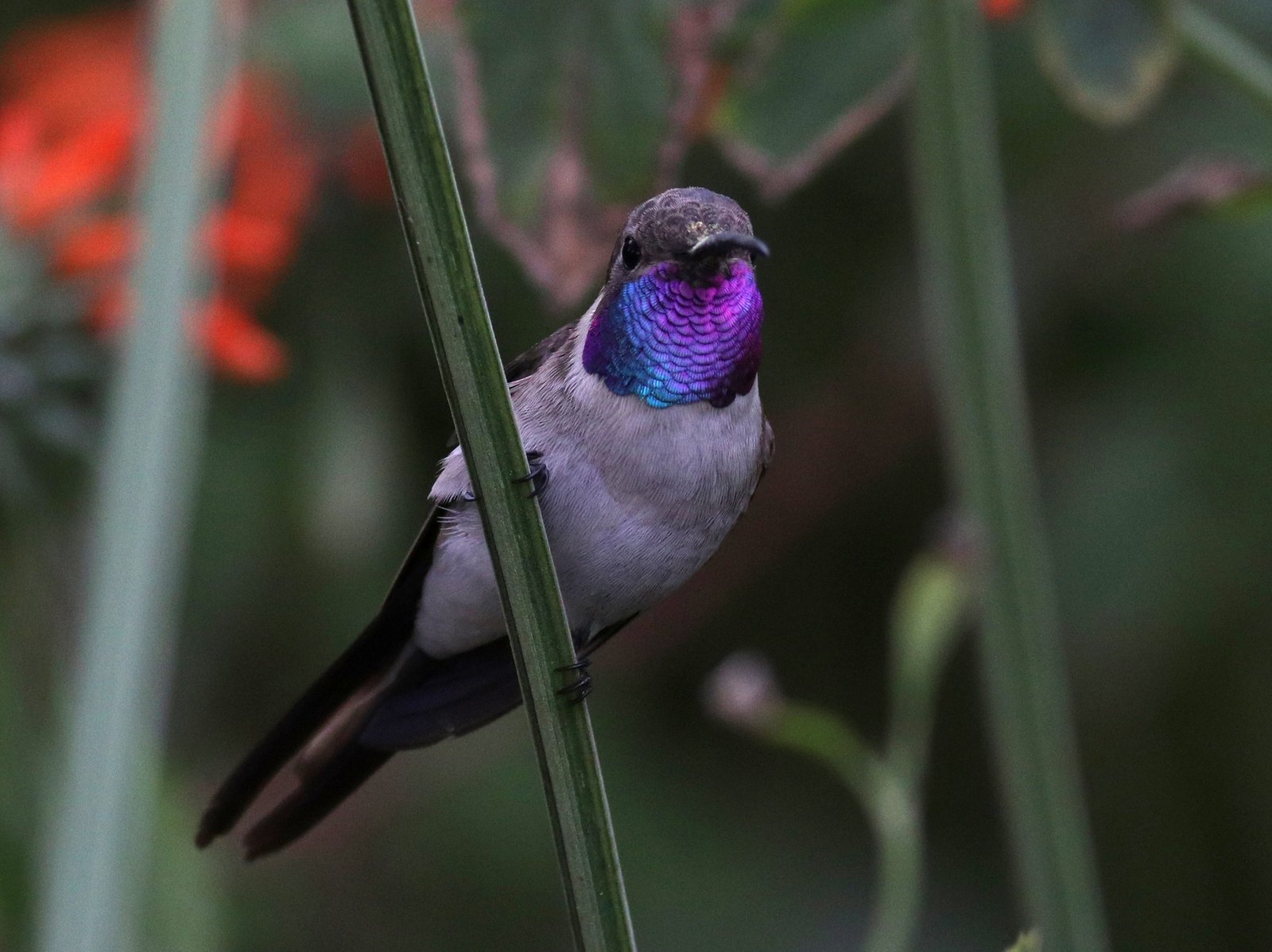
The Oasis Hummingbird is a medium-sized hummingbird of the oases and river valleys of the coastal desert of Peru and northern Chile. It has a long, slightly decurved bill and a cinnamon rump. The male has a glittering rosy purple gorget and a long, deeply forked tail.
Voice
A dry, hard chik and high, squeaky series; males sing a short, scratchy song from a perch.
Recording: Ignacio Escobar — CC BY-NC-SA 4.0 · xeno-canto
Identification
11–13 cm (the male is longer because of its tail), with a long (about 3 cm), slightly decurved, black bill. The male is olive-green to grey-green above, with a cinnamon to rufous rump and uppertail coverts. The throat is glittering rosy purple to magenta with a violet sheen; the rest of the underparts are greyish white with pale brown flanks. The tail is long, deeply forked and dark. The female has whitish underparts without a coloured gorget, also a cinnamon rump, and a shorter, less forked tail with white tips.
Confusion species
Peruvian Sheartail Thaumastura cora is smaller, with a short, straight bill and no cinnamon rump; the male has long white tail feathers. Amazilia Hummingbird Amazilis amazilia has a red bill with a dark tip and rufous underparts. Purple-collared Woodstar Myrtis fanny is smaller, with a shorter bill and a blue-green throat in the male.
Habitat
Oases, irrigated farmland, orchards, riverside scrub, parks and gardens in the coastal desert and in the river valleys of the western slope of the Andes, from sea level to about 3000 m, locally higher. It feeds at the flowers of shrubs, trees and garden plants, including non-native species, and catches small insects. The nest is a cup of plant down on a branch, often in a garden or orchard.
Where the bird is most at home, classified by the vegetation units of the Andes and the west coast.


Range and movements
In Peru along the Pacific coast and in the river valleys of the western slope of the Andes, from the northwest to Tacna in the south. Absent from Colombia, Ecuador, Bolivia and the Galápagos. Outside the guide area in northern Chile, south into the Atacama Desert.
- Resident
- dark = core range, pale = thinly spread
How and when to look
Search parks, gardens and flowering hedges in Lima and other coastal oases, and in the green river valleys that run from the Andes to the coast. Watch for the cinnamon rump when the bird hovers at a flower.
Conservation status
Least Concern. The species is common in irrigated areas and towns and benefits from gardens and planted flowers.
Scientific name
Rhodopis vesper | (Lesson, 1829)
Lesson described the species in 1829 as Ornismya vesper; because it was later moved to another genus, the author and year stand in brackets. The genus Rhodopis was introduced in 1854 by Reichenbach. The genus name refers to Rhodopis (around 500 BC), a well-known Thracian courtesan or hetaira. The specific name is Latin vesper, 'evening' or 'evening star'. The specimen the first description was based on came from Chile.