All species › Passerines › Wrens › Ochraceous Wren
Ochraceous Wren | Troglodytes ochraceus
Panamese bergwinterkoning | Soterrey ocroso | Corruíra-ocrácea
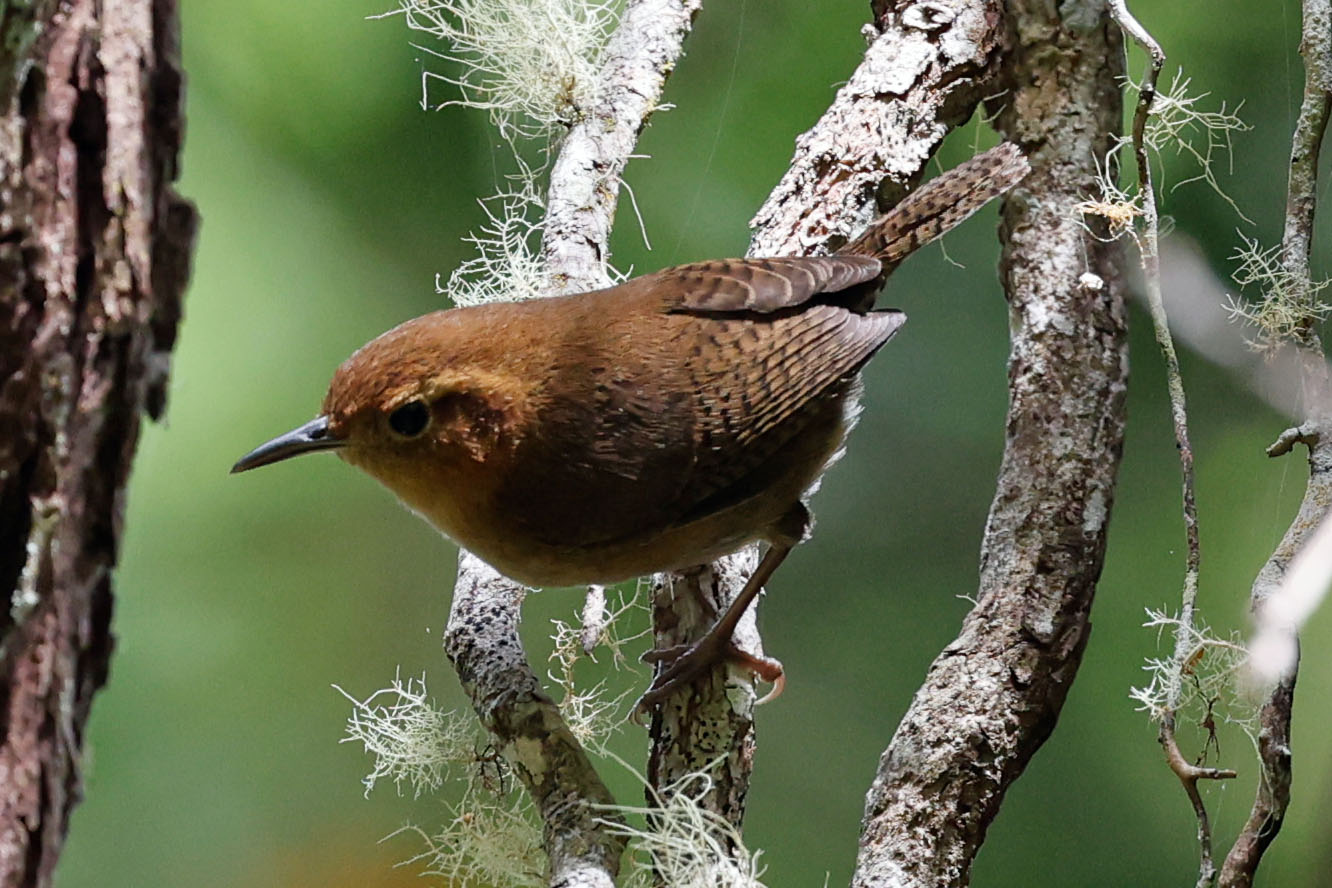
The Ochraceous Wren is a small, ochre-coloured wren of mossy montane forest in Costa Rica and Panama. In the guide area it is known only from the Colombian side of Cerro Tacarcuna, on the Panama border, where it was first found in 2017. It forages among moss and epiphytes on branches, much like Mountain Wren.
Voice
A series of high, thin, slightly trilling notes and short trills; the call is a soft, dry chit. The recordings from Tacarcuna match those from Panama.
Recording: Sue Riffe — CC BY-NC-SA 4.0 · xeno-canto
Identification
10 cm, with a short, thin bill and a short tail. The upperparts are warm ochre-brown, the crown slightly more rufous. A broad, ochre supercilium contrasts with a dark eye-stripe. The cheeks, throat and breast are ochre, and the belly is paler. The wings and tail are brown with dark barring. The sexes are alike.
Confusion species
Mountain Wren Troglodytes solstitialis is very similar, but has less ochre on the head and breast, a paler belly and a different song; it lives in the Andes, not in the Serranía del Darién. Southern House Wren Troglodytes musculus is larger and duller, without an obvious supercilium, and lives in open country.
Habitat
Humid, mossy montane forest and cloud forest, in Panama roughly between 1000 and 2500 m. It creeps along branches and trunks, seeking insects and spiders among moss, ferns and bromeliads, from the middle levels up into the canopy. The nest is a domed structure in moss or epiphytes.
Where the bird is most at home, classified by the vegetation units of the Andes and the west coast.


Range and movements
In Colombia known only from the eastern slope of Cerro Tacarcuna in the Serranía del Darién, on the Panama border; birds were seen there daily, which points to a small resident population. Absent from Ecuador, Peru, Bolivia and the Galápagos. Outside the guide area in the mountains of Costa Rica and Panama.
How and when to look
Its occurrence in Colombia is limited to a remote border range that can only be reached on an expedition. In mossy forest, watch for small, ochre-coloured wrens creeping along branches, and record the song.
Conservation status
Least Concern. Its habitat in the Serranía del Darién is largely intact, but its occurrence in Colombia is very small and poorly known.
Scientific name
Troglodytes ochraceus | Ridgway, 1882
Ridgway described the species in 1882 and placed it straight away in the genus where it still stands. The genus Troglodytes was introduced in 1809 by Vieillot. The genus name comes from Greek trōglodutēs, 'cave-dweller', after the wrens' habit of creeping into and nesting in cavities. The species name comes from Latin ochraceus, 'ochre-coloured', for the ochraceous plumage. The specimen the first description was based on came from Volcán Irazú, Cartago, Costa Rica.