All species › Passerines › Tapaculos › Paramo Tapaculo
Paramo Tapaculo | Scytalopus opacus
Paramotapaculo | Churrín paramero | Macuquinho-do-páramo
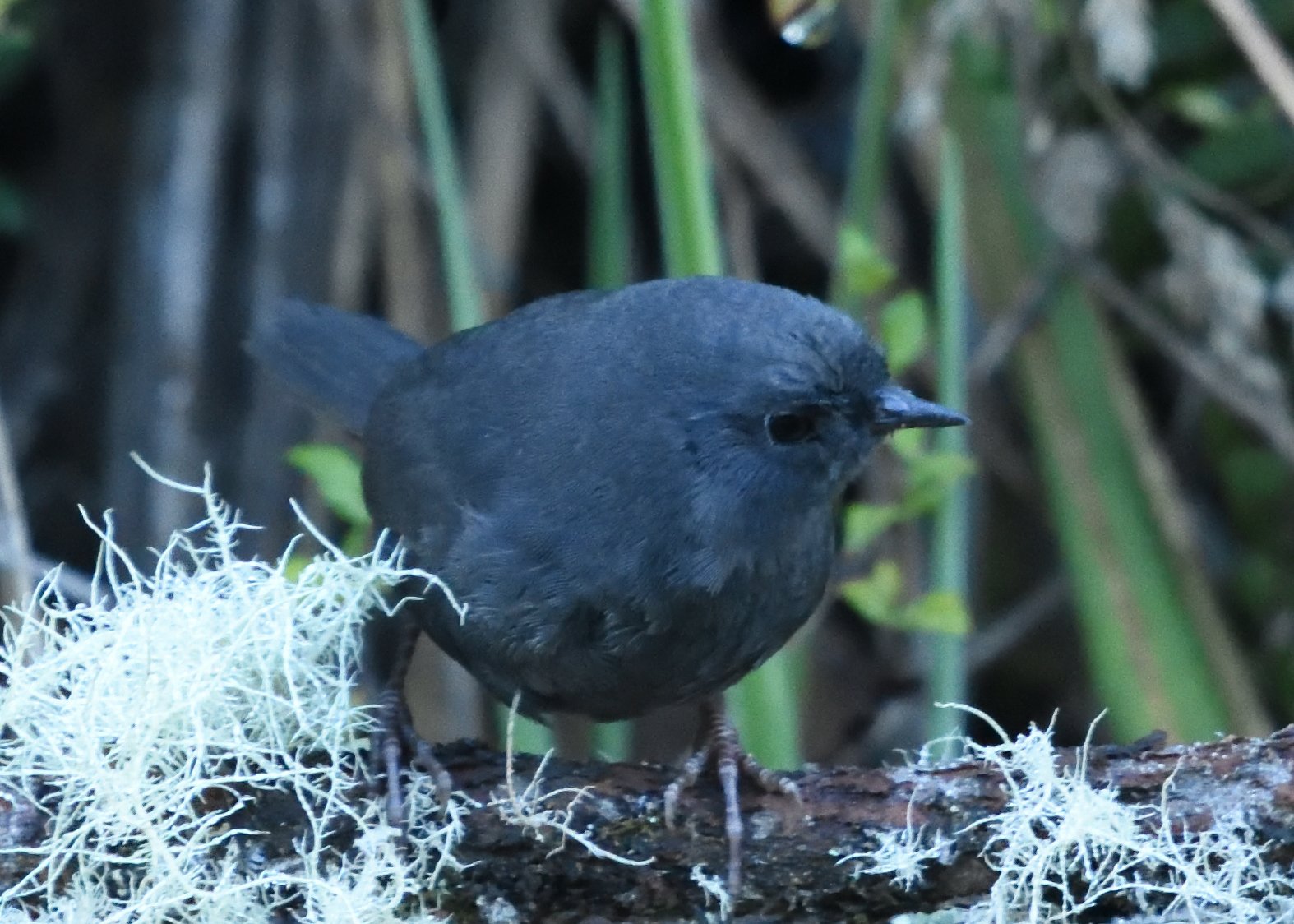
The Paramo Tapaculo is a small, dark grey tapaculo of the treeline in the Andes of Colombia and Ecuador. It lives in dense shrubbery between cloud forest and páramo and is noticed almost only by its song. On the basis of vocal differences it has been regarded as a separate species since 2010; the former southern subspecies is now Loja Tapaculo.
Voice
The song consists of series of short, repeated notes delivered from dense vegetation, and differs clearly from those of Paramillo Tapaculo and Loja Tapaculo. Also short, sharp calls.
Recording: David Tan — CC BY-NC-SA 4.0 · xeno-canto
Identification
11 cm, round, with a short, often cocked tail, short wings, a thin bill and fairly long legs. The male is very dark grey above and medium to dark grey below; the flanks and undertail are tawny to dark brown with dark barring. The female is brown above and paler grey below, with the same brown flanks. Juveniles are variable, usually brown and barred above and grey and buff below.
Confusion species
Loja Tapaculo Scytalopus androstictus, in southern Ecuador and northern Peru, has a white wing spot in the male and a different song. Spillmann's Tapaculo Scytalopus spillmanni lives lower, in the montane forest itself, and has a different song. Blackish Tapaculo Scytalopus latrans is almost entirely blackish, without obviously brown flanks, and usually lives lower. Paramillo Tapaculo Scytalopus canus lives only in the north of the Western Andes of Colombia and lacks the brown flanks. In tapaculos the song is the main identification feature.
Habitat
Scrub and dense shrubbery at and above the treeline, elfin forest, Polylepis groves and the upper edge of humid montane forest, mostly between about 3000 and 4000 m. It forages on or just above the ground for small arthropods and sometimes eats berries. Little is known about its breeding; females with brood patches and juveniles have been found in various months.
Where the bird is most at home, classified by the vegetation units of the Andes and the west coast.


Range and movements
In Colombia in the Central Andes, mainly in the south, to Nariño. In Ecuador along the high Andes south to about the middle of the country. Absent from Peru, Bolivia and the Galápagos. Does not occur outside the guide area.
- Resident
- dark = core range, pale = thinly spread
How and when to look
In the early morning, listen along roads crossing the treeline, for example around the Papallacta pass in Ecuador or in Los Nevados park in Colombia, for the song from the shrubbery. The bird sometimes shows briefly in a gap at the edge of the vegetation.
Conservation status
Not Evaluated: in its current circumscription (without Loja Tapaculo) not assessed separately; the species in its former, broader sense was considered Least Concern. Paramo Tapaculo is fairly common locally and occurs in several protected areas; fire and grazing around the treeline degrade the habitat locally.
Scientific name
Scytalopus opacus | Zimmer, 1941
Zimmer described the species in 1941 and placed it straight away in the genus where it still stands. The genus Scytalopus was introduced in 1837 by Gould. The genus name combines Greek skutalē or skutalon, 'stick', with pous, 'foot'. The species name comes from Latin opacus, 'dark, shaded', after the dark plumage. The specimen the first description was based on came from Tambillo, Río Upano, Ecuador.