All species › Pigeons and doves › Doves and pigeons › Picui Ground Dove
Picui Ground Dove | Columbina picui
Picuiduif | Tortolita picuí | Rolinha-picuí
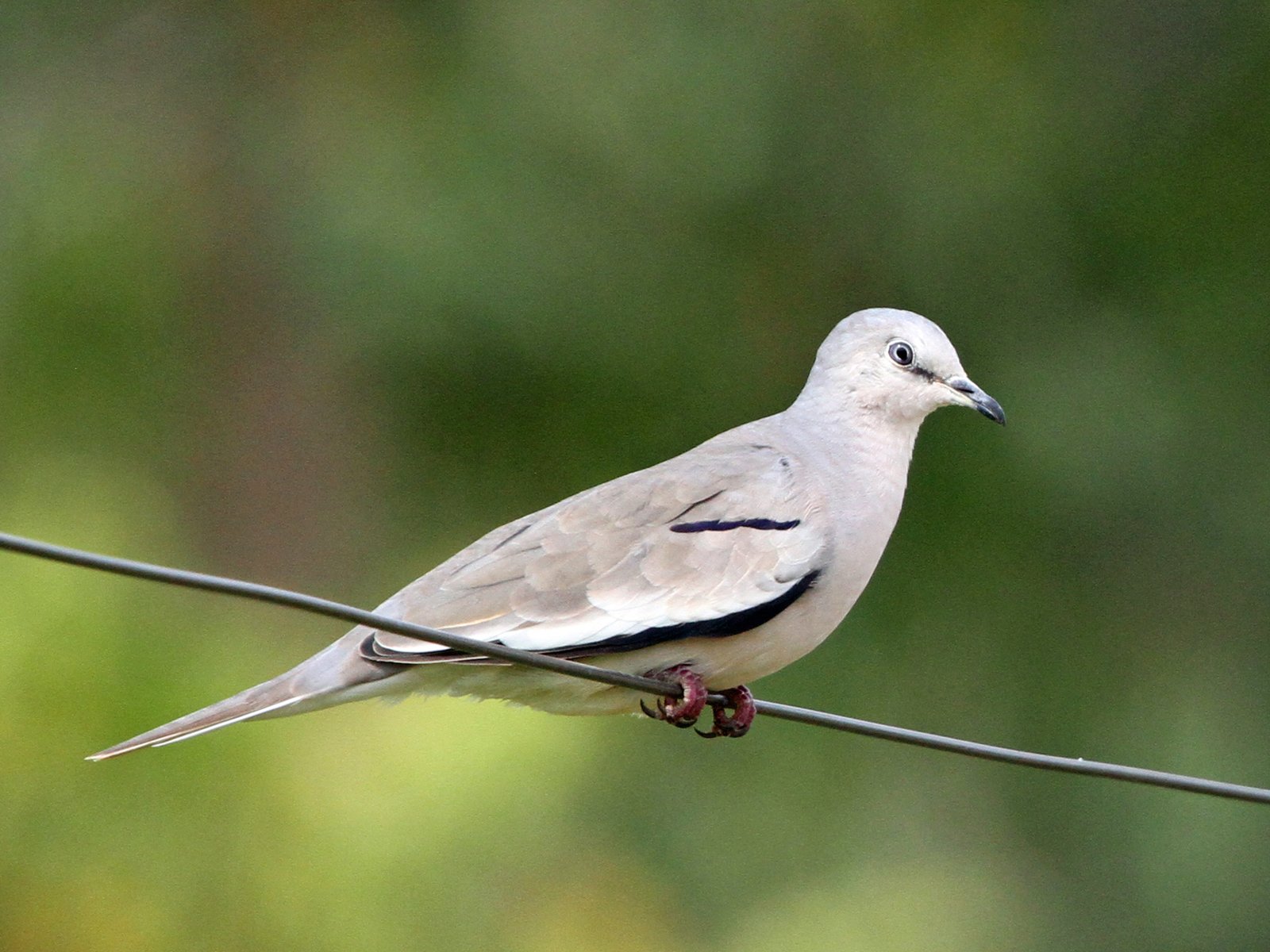
The Picui Ground Dove is a small, pale ground dove with much white in the wing and tail, widespread in the dry open country of southern South America. In the guide area it occurs mainly in Bolivia, in the lowlands and in the dry Andean valleys. The name imitates the call.
Voice
A monotonous, repeated two-syllable cooing, pee-kwee pee-kwee, which gives the species its name.
Recording: JAYRSON ARAUJO DE OLIVEIRA — CC BY-NC-SA 4.0 · xeno-canto
Identification
16–18 cm, with a fairly long tail. The upperparts are pale greyish brown, the forehead and throat whitish, the underparts pale greyish pink. A narrow blue-black line runs across the wing coverts, with a white band behind it; in flight a large white wing patch shows and the underwing coverts are black. The outer tail feathers are white. The female is browner and duller; juveniles have pale feather fringes.
Confusion species
Ruddy Ground Dove Columbina talpacoti has no white in the wing; the male is rufous. Croaking Ground Dove Columbina cruziana has a yellow bill base and a purplish-brown scapular band. Bare-faced Ground Dove Metriopelia ceciliae in the Andes has yellow and orange bare skin around the eye and pale-spotted upperparts.
Habitat
Dry open country, Chaco scrub, savanna, fields, villages and towns, from the lowlands into the dry Andean valleys, locally to about 3000 m. It searches the ground for seeds, often in small groups.
Where the bird is most at home, classified by the vegetation units of the Andes and the west coast.


Range and movements
In Bolivia widespread in the eastern and southern lowlands and in the dry Andean valleys. In Peru only locally in the south. Absent from Colombia, Ecuador and the Galápagos. Outside the guide area in Brazil, Paraguay, Uruguay, Argentina and Chile.
- Resident
- dark = core range, pale = thinly spread
How and when to look
In villages, fields and dry scrub in eastern and southern Bolivia and in the valleys around Cochabamba and Tarija, often on the ground along roads; on take-off the white in the wing and tail stands out.
Conservation status
Least Concern. Common and benefits from agriculture and settlement.
Scientific name
Columbina picui | (Temminck, 1813)
Temminck described the species in 1813 as Columba Picui; because it was later moved to another genus, the author and year stand in brackets. The genus Columbina was introduced in 1825 by Spix. The genus name comes from Latin columbinus, 'of a dove, dove-like'. The species name comes from picuí, after the Guaraní name Puih-kû'í for a dove; Félix de Azara called the bird 'Paloma picuí'. The specimen the first description was based on came from Paraguay.