All species › Passerines › Tanagers and allies › Rufous-browed Hemispingus
Rufous-browed Hemispingus | Poospiza rufosuperciliaris
Roodbrauwboomgors | Hemispingo cejirrufo | Tico-tico-de-sobrancelha-ruiva
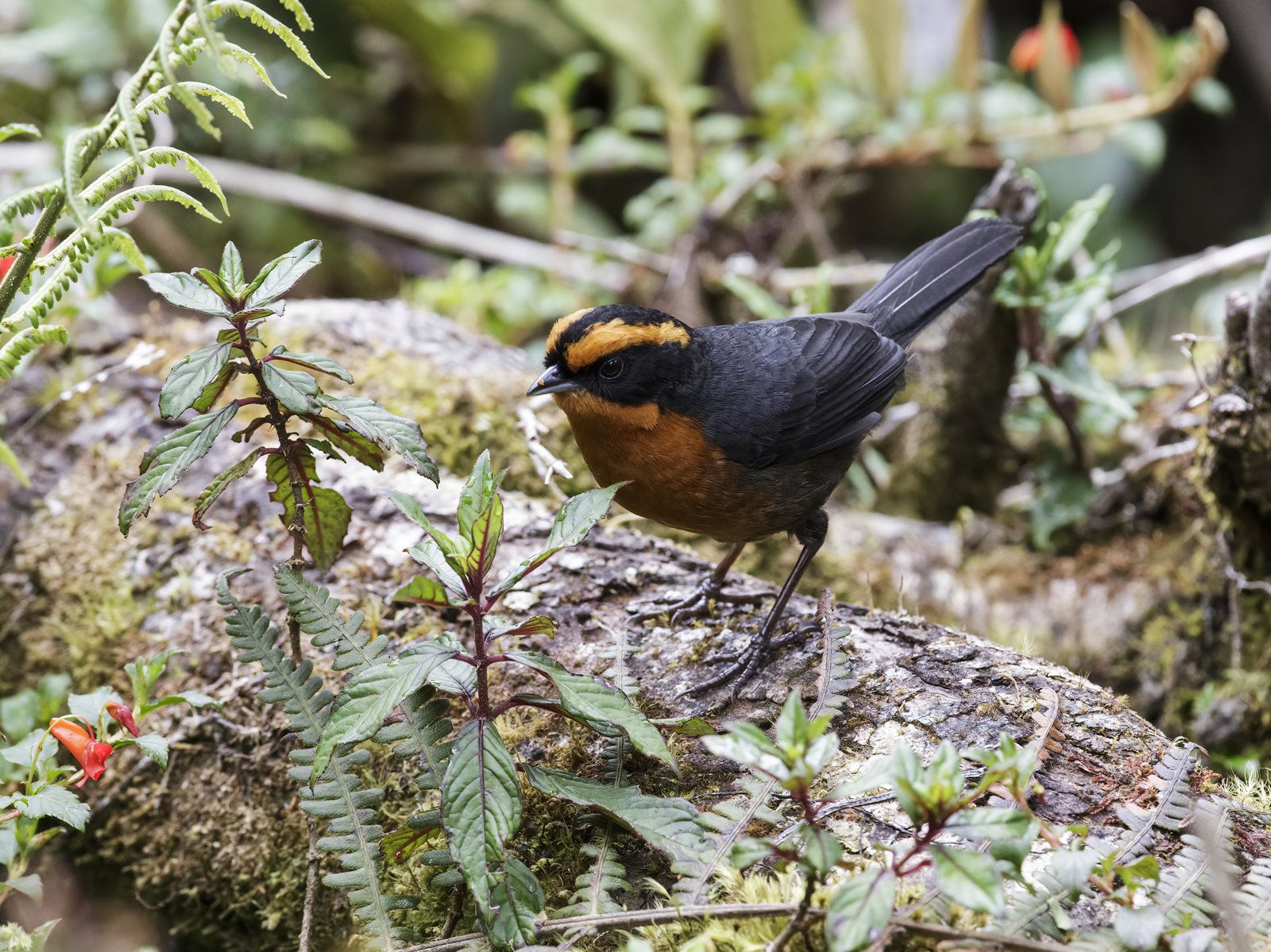
The Rufous-browed Hemispingus lives only in Peru, in bamboo and scrub at the treeline on the eastern slope of the Andes. It was long regarded as a hemispingus, but proves to be closely related to the warbling finches of the genus Poospiza. The black head with a broad rufous eyebrow and the rufous throat and breast are distinctive.
Voice
The song is a loud series of jerky, wiry squeaks and chips. The call is a dry tik or tsip.
Recording: Daniel Lane — CC BY-NC-SA 3.0 · xeno-canto
Identification
15–16 cm, with a pointed, dark bill. The head is largely black, with a broad cinnamon-rufous eyebrow that reaches the nape. Upperparts and tail dark slate, wing coverts paler grey. Throat, breast and upper belly cinnamon-rufous; lower belly, flanks and undertail coverts dark grey tinged brown. Sexes alike. Young birds are duller.
Confusion species
Orange-browed Hemispingus Kleinothraupis calophrys has an orange-yellow eyebrow and yellow underparts and lives further south. Rusty-browed Warbling Finch Microspingus erythrophrys is grey above and white below, with a rufous eyebrow, and occurs only in Bolivia. Rust-and-yellow Tanager Thlypopsis ruficeps has a rufous head and yellow underparts.
Habitat
Elfin forest and humid montane forest at the treeline, especially with patches of Chusquea bamboo, roughly between 2250 and 3500 m. It forages low in dense vegetation, in pairs or small groups, for insects. Little is known about the nest.
Where the bird is most at home, classified by the vegetation units of the Andes and the west coast.


Range and movements
Only in Peru: on the eastern slope of the Andes, locally and patchily, from central Amazonas through San Martín and La Libertad to southern Huánuco, where most records come from. Absent from Colombia, Ecuador, Bolivia and the Galápagos.
- Resident
- dark = core range, pale = thinly spread
How and when to look
Search bamboo scrub at the treeline in Huánuco; the birds keep low in dense vegetation and often give their dry call first.
Conservation status
Least Concern; previously assessed as Near Threatened and Vulnerable. The population is estimated at 1500–7000 mature individuals. Regular burning of the adjacent grasslands lowers the treeline and destroys habitat; increasing grazing by cattle is also a threat.
Scientific name
Poospiza rufosuperciliaris | (Blake & Hocking, 1974)
Blake & Hocking described the species in 1974 as Hemispingus rufosuperciliaris; because it was later moved to another genus, the author and year stand in brackets. The genus Poospiza was introduced in 1847 by Cabanis. The genus name combines Ancient Greek poa, 'grass', and spiza, 'finch'. The species name comes from Latin rufus, 'rufous', and supercilium, 'eyebrow', referring to the rufous supercilium. The specimen the first description was based on came from Peru.