All species › Passerines › Tyrant flycatchers and allies › Rufous-crowned Elaenia
Rufous-crowned Elaenia | Elaenia ruficeps
Roodkruinelenia | Fiofío crestirrufo | Guaracava-de-topete-vermelho
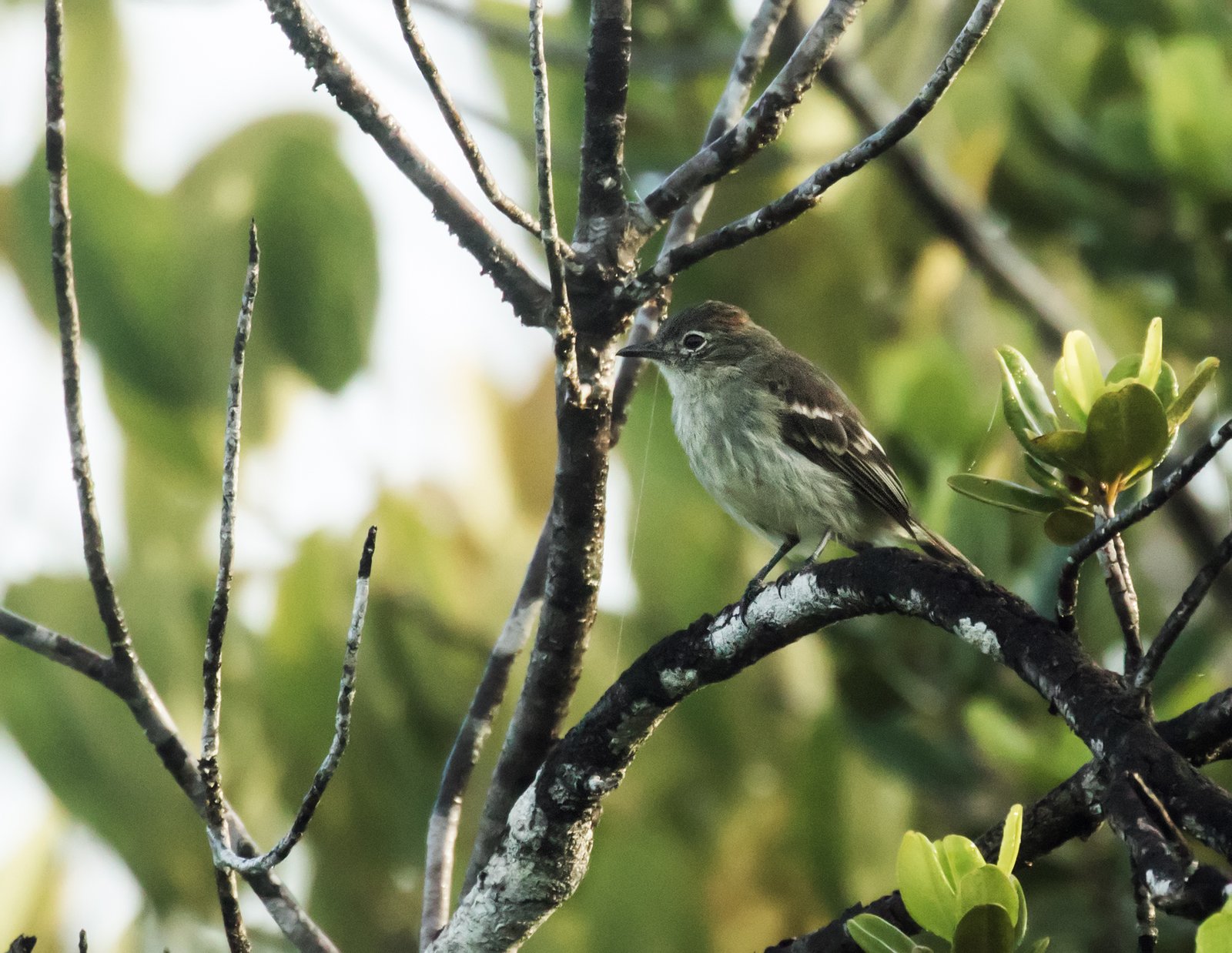
The Rufous-crowned Elaenia is a medium-sized, dark elaenia of open savanna and scrub on sandy soils in northern South America. It is the only elaenia with a rufous rather than a white crown patch. In the guide area it occurs only in eastern Colombia.
Voice
Rapid, energetic rattles and trills, often introduced by a downslurred whistle, roughly tji-tji-rrrrr.
Recording: Mauricio Cuéllar Ramírez — CC BY-NC-SA 4.0 · xeno-canto
Identification
15 cm, with a short crest and a small black bill with a pale base to the lower mandible. The head and upperparts are dark olive-brown, with a faint pale eyebrow and a narrow white eye-ring. The crown has a rufous patch, usually hidden, sometimes visible at the back of the crest. The wings are dark with two whitish wing bars. The underparts are pale yellow, with greyish-olive streaks on the throat, breast and flanks. The sexes are alike.
Confusion species
Yellow-bellied Elaenia Elaenia flavogaster is larger, has a white crown patch, a greyer, unstreaked breast and a shaggier crest. Lesser Elaenia Elaenia chiriquensis and Plain-crested Elaenia Elaenia cristata live in similar savanna; Lesser lacks the breast streaks and has a white crown patch, Plain-crested has a plain, raised crest without a coloured patch.
Habitat
Open savanna with scattered shrubs and palms, low woodland and forest edges on poor sandy soils, also gallery forest, in the lowlands below 500 m. It takes insects and small fruits in shrubs and low trees, usually alone or in pairs.
Where the bird is most at home, classified by the vegetation units of the Andes and the west coast.


Range and movements
Colombia: locally in the east, from Meta east to Vichada and Guainía. No confirmed records from Ecuador, Peru or Bolivia; absent from the Galápagos. Outside the guide area in southern Venezuela, the Guianas and northern Brazil.
- Resident
- dark = core range, pale = thinly spread
How and when to look
Search the shrub savanna on sandy soils in Vichada and Guainía; the rattling call gives the bird away in the early morning.
Conservation status
Least Concern. Savanna and scrub on sandy soils are locally burned or converted to farmland.
Scientific name
Elaenia ruficeps | Pelzeln, 1868
Pelzeln described the species in 1868 and placed it straight away in the genus where it still stands. The genus Elaenia was introduced in 1836 by Sundevall. The genus name comes from Ancient Greek elaineos, 'of olive oil' or 'oleaginous'. From Latin rufus, 'rufous', and -ceps, 'headed': 'rufous-headed', after the rufous crown. The specimen the first description was based on came from Borba, Amazonas, Brazil.