All species › Gamebirds › Guans, curassows and chachalacas › Rufous-vented Chachalaca
Rufous-vented Chachalaca | Ortalis ruficauda
Roodbuikchachalaca | Guacharaca culirroja | Aracuã-de-crisso-ruivo
The Rufous-vented Chachalaca is a chachalaca of dry forest and scrub in northern South America that in the guide area occurs only in north-eastern Colombia. It is one of the noisiest birds of the dry lowlands: pairs and groups sing in loud choruses at dawn.
Voice
A loud, rhythmic, grating chorus in which pairs and groups answer each other, mainly at dawn; also softer calls within the group.
Recording: Jerome Fischer — CC BY-NC-SA 4.0 · xeno-canto
Identification
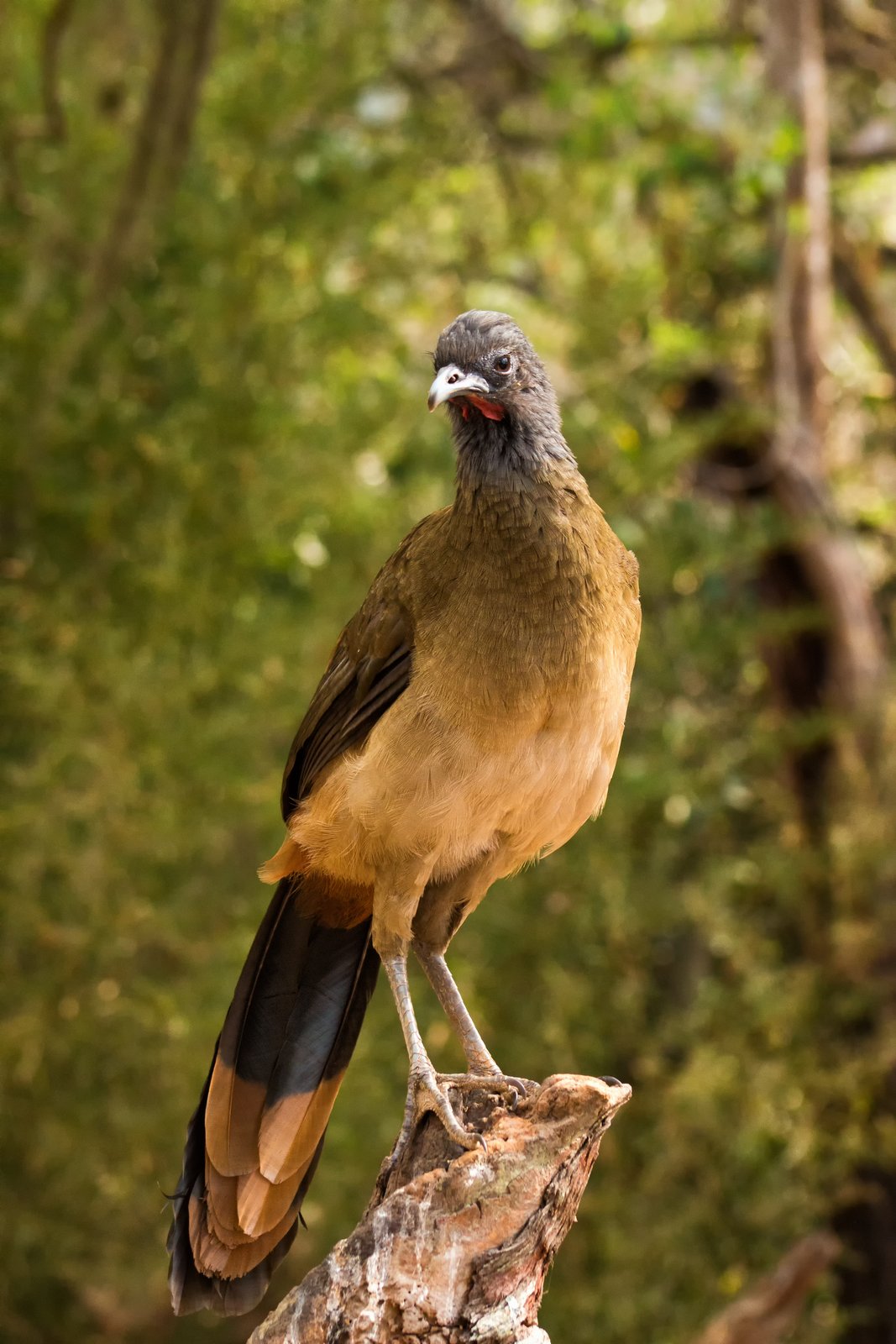
53–61 cm. The head is grey, the upperparts olive-brown, the breast grey-brown and the belly paler. The undertail coverts are rufous. The long tail is bronzy olive-green; in birds on the La Guajira peninsula it has white tips, in birds elsewhere rufous tips. There is a patch of bare red skin on the throat. The sexes are alike.
Confusion species
Chestnut-winged Chachalaca Ortalis garrula has a rufous-chestnut head, a whitish belly and chestnut primaries. Colombian Chachalaca Ortalis columbiana has pale scaling on the neck and breast and lives further south in the Andean valleys.
Habitat
Dry and semi-arid forest, thorn scrub, gallery forest and forest edges, also around farms and in gardens; from sea level to about 1500 m. It lives in pairs or groups in bushes and the lower tree layer and eats fruit, leaves and flowers. The nest is a platform of twigs in a bush or tree.
Where the bird is most at home, classified by the vegetation units of the Andes and the west coast.


Range and movements
In Colombia in the north-east, on the La Guajira peninsula, in the Cesar valley and on the border with Venezuela. Absent from Ecuador, Peru and Bolivia. Outside the guide area in northern Venezuela and on Tobago.
- Resident
- dark = core range, pale = thinly spread
How and when to look
Listen at dawn in dry forest and scrub on La Guajira and in the Cesar valley for the loud choruses. Birds often perch in the open in bushes and low trees along roads.
Conservation status
Listed as Least Concern. Common and resilient to changes in the landscape; it is hunted locally.
Scientific name
Ortalis ruficauda | Jardine, 1847
Jardine described the species in 1847 and placed it straight away in the genus where it still stands. The genus Ortalis was introduced in 1786 by Merrem. The genus name comes from Ancient Greek ortalis, 'pullet' or 'hen'. The species name comes from Latin rufus, 'rufous', and cauda, 'tail'. The specimen the first description was based on came from Tobago, Trinidad and Tobago.