All species › Passerines › Tyrant flycatchers and allies › Rufous-webbed Bush Tyrant
Rufous-webbed Bush Tyrant | Cnemarchus rufipennis
Roodvleugelstruiktiran | Birro grande | Tirano-arbustivo-de-asa-ruiva
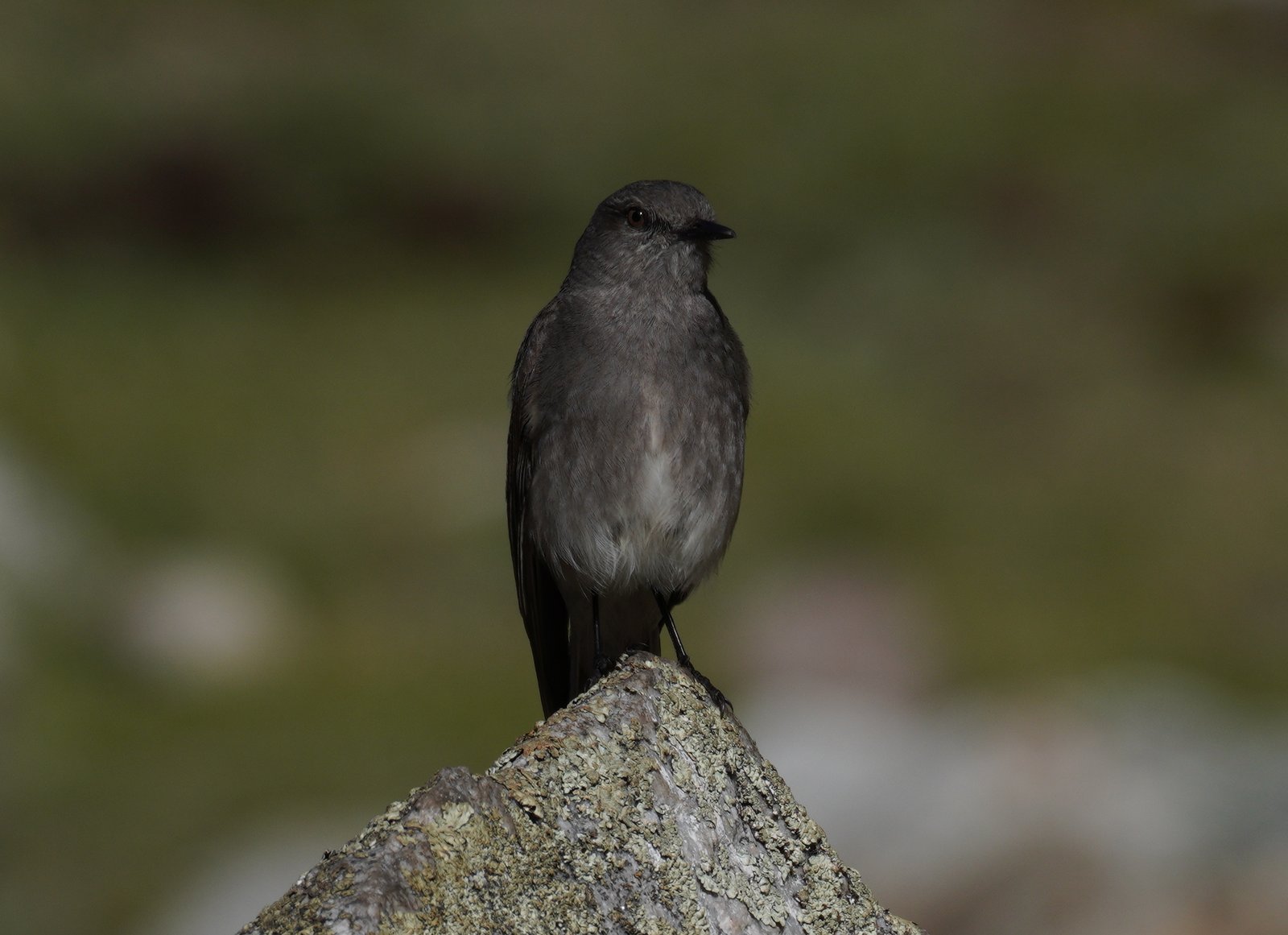
The Rufous-webbed Bush Tyrant is a plain grey flycatcher of Polylepis groves and shrubby rocky slopes high in the Andes of Peru and Bolivia. At rest it looks uniformly grey, but in flight the wings and tail show much rufous. It was formerly placed in a genus of its own, Polioxolmis.
Voice
Usually silent. A soft, descending whistle and short, dry calls.
Recording: Eduardo Quintanilla — CC BY-NC-SA 4.0 · xeno-canto
Identification
21 cm, with a thin, black bill. The whole plumage is grey, slightly darker above and paler on the belly, with dark lores. The wings are dark grey with rufous inner webs to the flight feathers, which form a broad rufous patch in flight; the underwing is also cinnamon. The tail is grey with rufous inner webs. The sexes are alike.
Confusion species
Red-rumped Bush Tyrant Cnemarchus erythropygius has a white forecrown, a rufous rump and belly, and usually lives in wetter habitat. Black-billed Shrike-Tyrant Agriornis montanus is larger, with a heavy, hooked bill and white outer tail feathers. Ground tyrants (Muscisaxicola) walk a lot on the ground and have shorter tails without rufous.
Habitat
Polylepis groves, rocky slopes with shrubs, ravines and the edges of puna grassland, roughly between 3000 and 4600 m. It perches on a rock or shrub and catches insects with sallies to the ground or into the air. Little is known about the nest; it is probably placed among rocks.
Where the bird is most at home, classified by the vegetation units of the Andes and the west coast.


Range and movements
Peru: in the Andes of the centre and south, from Áncash and Huánuco to Puno. Bolivia: in the Andes of La Paz, Cochabamba and further south. Absent from Colombia, Ecuador and the Galápagos. Outside the guide area in north-western Argentina.
- Resident
- dark = core range, pale = thinly spread
How and when to look
Search Polylepis groves and rocky ravines high in the Andes, for example in the Cordillera Blanca or around Abra Málaga near Cusco; in flight look for rufous in the wings and tail.
Conservation status
Least Concern. The species is fairly scarce and tied to Polylepis woodland, which is heavily fragmented by cutting, fire and grazing.
Scientific name
Cnemarchus rufipennis | (Taczanowski, 1874) (GBIF: Polioxolmis rufipennis)
Taczanowski described the species in 1874 as Muscisaxicola rufipennis; because it was later moved to another genus, the author and year stand in brackets. The genus Cnemarchus was introduced in 1905 by Ridgway. The genus name combines Greek knēmos, 'mountain slope', with arkhos, 'ruler, chief'. Latin rufus, 'rufous', and penna, 'feather, wing': rufous-winged. The specimen the first description was based on came from Maraynioc, Peru.