All species › Passerines › Antbirds › Rufous-winged Antshrike
Rufous-winged Antshrike | Thamnophilus torquatus
Roodvleugelmierklauwier | Batará alirrufo | Choca-de-asa-vermelha
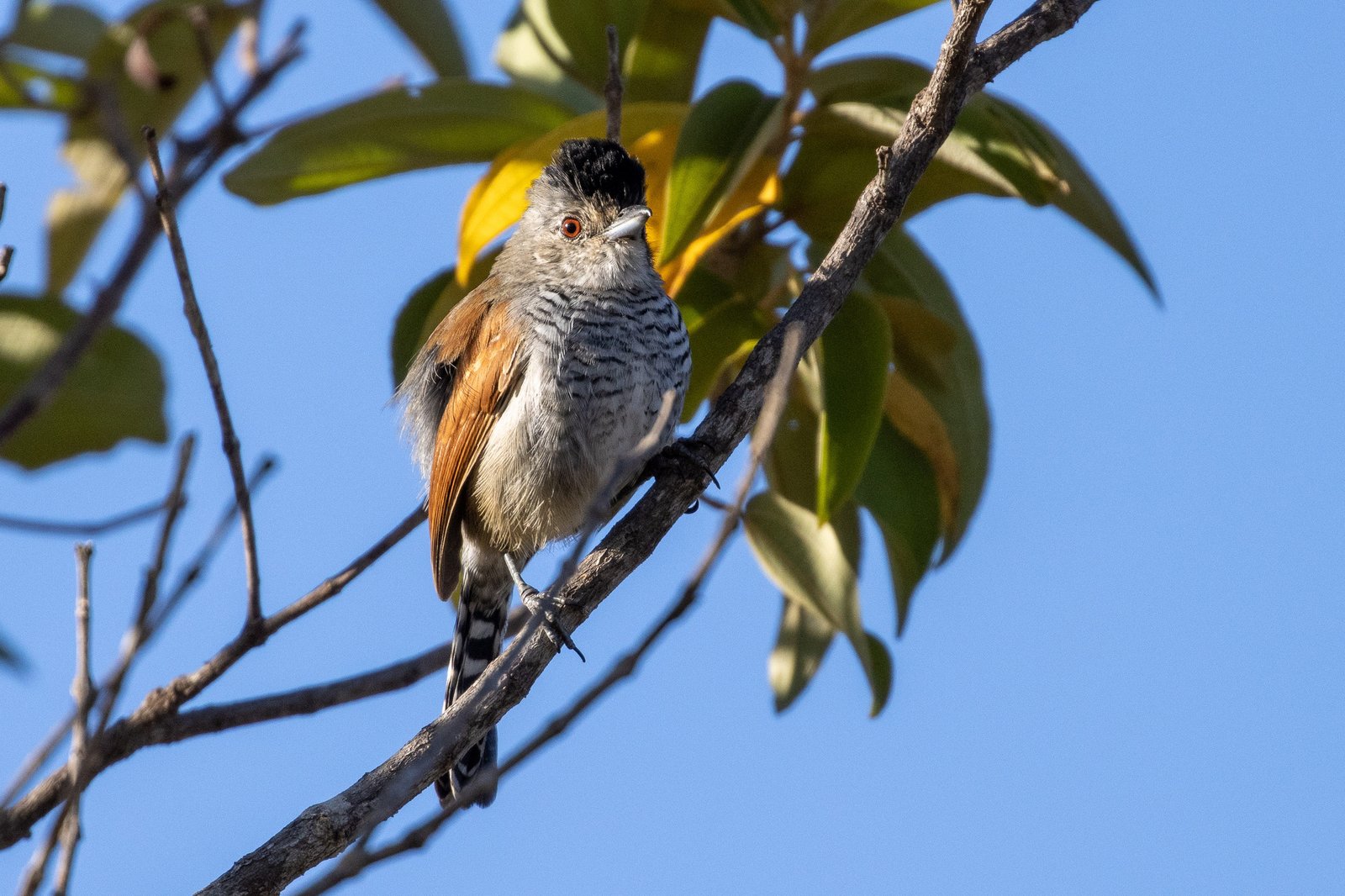
The Rufous-winged Antshrike is a small antshrike with rufous wings of the cerrado and scrub of central South America. The male has a black crown and a barred throat and breast. In the guide area it occurs only in eastern Bolivia.
Voice
The song is an accelerating series of nasal notes with a short, slightly lower ending, similar to that of related antshrikes. Also short, growling calls.
Recording: Robson Silva e Silva — CC BY-NC-SA 4.0 · xeno-canto
Identification
14 cm. Both sexes have rufous wings. The male has a black crown, a greyish-brown back, a black tail with white bars and whitish underparts with black barring on the throat and breast. The female has a rufous crown and buff underparts with little barring.
Confusion species
Rufous-capped Antshrike Thamnophilus ruficapillus lives higher in the Andes; the male too has a rufous crown, and the wings are less rufous. Barred Antshrike Thamnophilus doliatus has no rufous wings; the male is also barred on the back. Variable Antshrike Thamnophilus caerulescens lacks the rufous wings and lives in more humid forest.
Habitat
Cerrado, scrub, forest edges, gallery forest and dry, semi-open woodland on sandy or rocky soils; in Bolivia up to about 1000 m. It searches low in dense shrubs for insects, usually in pairs. The nest is a small cup in a fork.
Where the bird is most at home, classified by the vegetation units of the Andes and the west coast.


Range and movements
Bolivia: only in the east, in the cerrado and scrub of Santa Cruz department, among other places in the Noel Kempff Mercado region. Absent from Colombia, Ecuador, Peru and the Galápagos. Outside the guide area in eastern and central Brazil, mainly in the cerrado and caatinga, and locally in Paraguay.
- Resident
- dark = core range, pale = thinly spread
How and when to look
Search cerrado and scrub in eastern Santa Cruz for pairs low in the shrubs; the song usually reveals the birds first.
Conservation status
Least Concern. The cerrado is being converted to farmland on a large scale, but the species is widespread and tolerates scrub.
Scientific name
Thamnophilus torquatus | Swainson, 1825
Swainson described the species in 1825 and placed it straight away in the genus where it still stands. The genus Thamnophilus was introduced in 1816 by Vieillot. The genus name comes from Greek thamnos, 'bush', and philos, 'loving': bush-lover. The species name comes from Latin torquatus, 'collared'. The specimen the first description was based on came from Urupé, Bahia, Brazil.