All species › Cranes, rails and allies › Rails, gallinules and coots › Russet-crowned Crake
Russet-crowned Crake | Rufirallus viridis
Roestkapral | Polluela coronirrojiza | Sanã-castanha
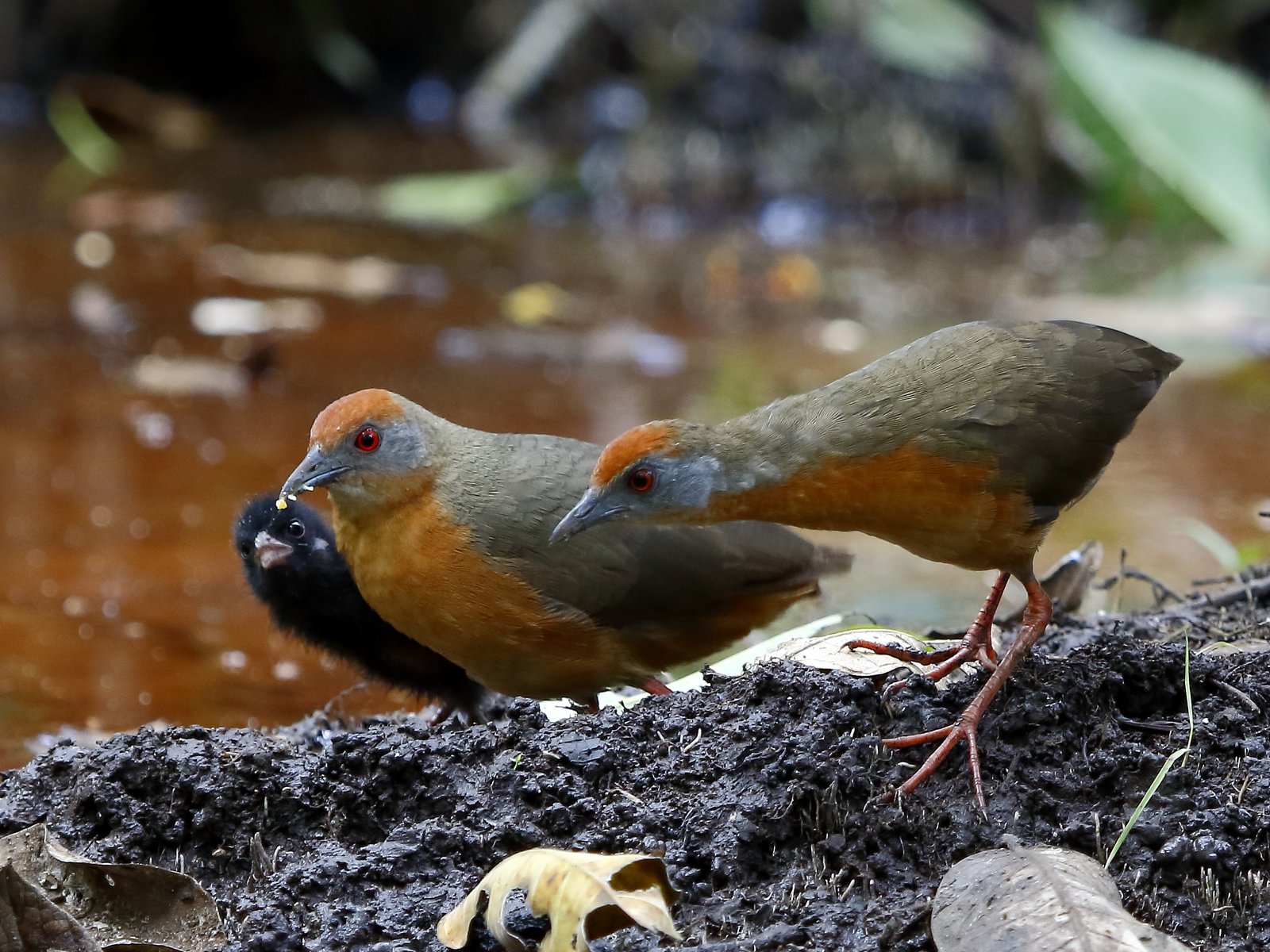
The Russet-crowned Crake is a small rail of grassy, shrubby terrain in the lowlands east of the Andes. Unlike many relatives it is not tied to water and also lives in dry thickets, abandoned fields and roadsides. Its unbarred, rufous underparts set it apart from most other small rails in the guide area.
Voice
A long, rattling trill that gradually descends and slows, often in duet; also short, sharp chik calls.
Recording: JAYRSON ARAUJO DE OLIVEIRA — CC BY-NC-SA 4.0 · xeno-canto
Identification
16–18 cm, with a short tail. Crown and forehead are rufous, the face around the eye and cheek grey. The upperparts are plain olive-brown. Throat, breast, flanks and belly are warm cinnamon to rufous, without barring, the throat slightly paler. The bill is dark, the iris red and the legs red. The sexes are alike. Juveniles are duller, with a greyer crown and dark eyes.
Confusion species
Black-banded Crake Rufirallus fasciatus has an entirely rufous head and breast and boldly black-and-rufous barred flanks and belly. Rufous-sided Crake Laterallus melanophaius has a white throat and centre of breast and black-and-white barred flanks. Grey-breasted Crake Laterallus exilis has a grey head and breast and a rufous nape. Chestnut-headed Crake Anurolimnas castaneiceps is larger, with a chestnut head and breast, a dark body and a greenish-yellow bill, and lives in forest.
Habitat
Tall grass, thickets, scrub, abandoned fields and pastures, edges of sugar-cane fields, roadsides and savanna, both dry and damp, from the lowlands up to about 1500 m in the valleys of the eastern slope. It searches the ground for insects, other invertebrates and seeds. The nest is a domed cup of grass close to the ground.
Where the bird is most at home, classified by the vegetation units of the Andes and the west coast.


Range and movements
In Colombia mainly east of the Andes, locally. In Ecuador locally in the Amazonian lowlands. In Peru in the Amazonian lowlands and in the valleys at the foot of the eastern slope. In Bolivia in the lowlands of the north and east. Absent from the Galápagos. Outside the guide area in Venezuela, the Guianas, Brazil and north-eastern Argentina.
- Resident
- dark = core range, pale = thinly spread
How and when to look
Listen along overgrown roadsides and abandoned fields in the lowlands and low valleys on the eastern side of the Andes; birds respond to each other's trill, but usually stay in the grass.
Conservation status
Least Concern. The species benefits from deforestation and the spread of rank, grassy terrain.
Scientific name
Rufirallus viridis | (Müller, 1776) (GBIF: Anurolimnas viridis)
Müller described the species in 1776 as Rallus viridis; because it was later moved to another genus, the author and year stand in brackets. The genus Rufirallus was introduced in 1856 by Bonaparte. The genus name combines Latin rufus, 'rufous', with the genus Rallus. The species name is Latin viridis, 'green'. The specimen the first description was based on came from Cayenne, French Guiana.