All species › Passerines › Tanagers and allies › Scrub Tanager
Scrub Tanager | Stilpnia vitriolina
Roodkruintangare | Tangara matorralera | Saíra-do-matagal
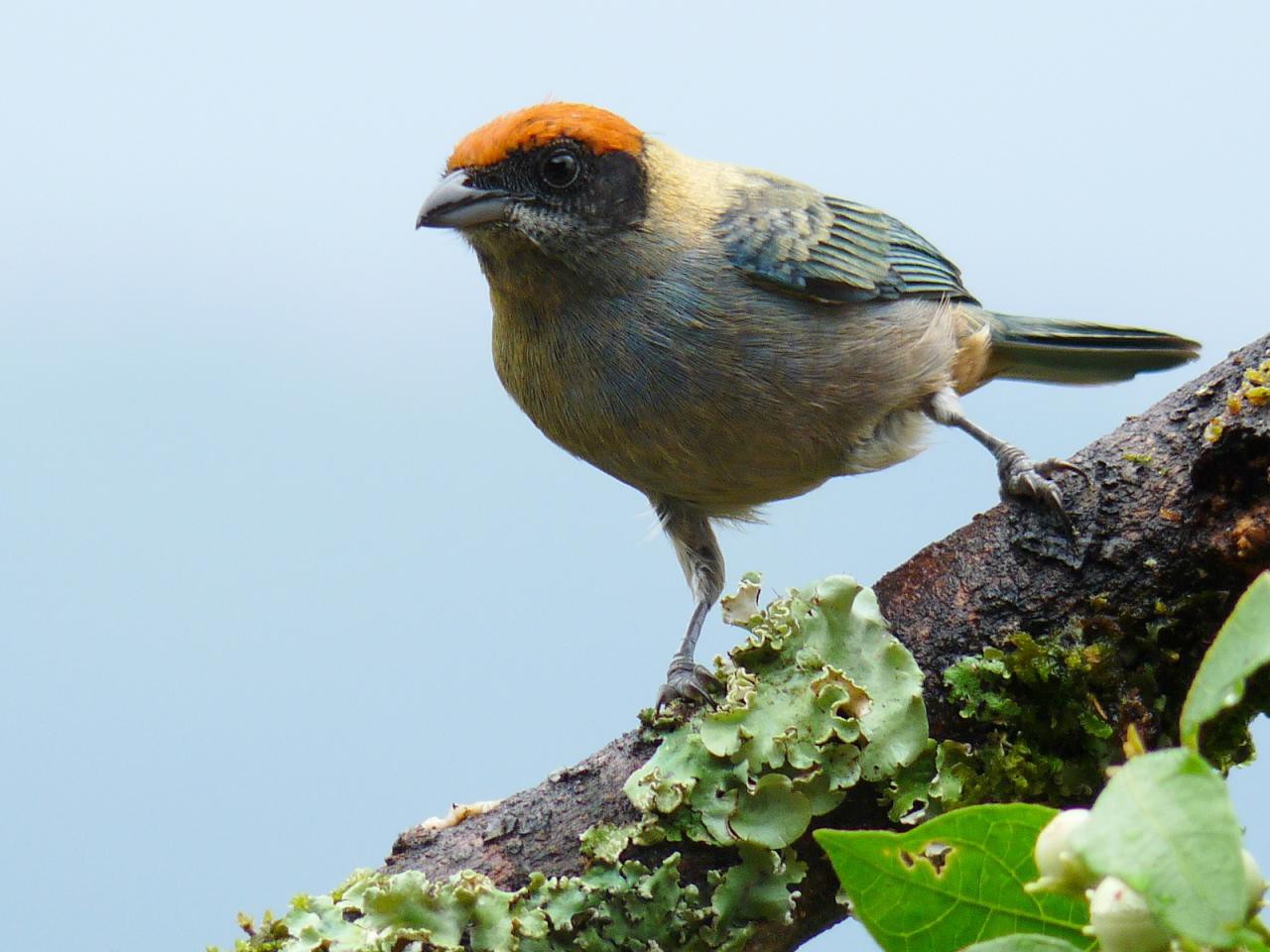
The Scrub Tanager is a tanager of dry and semi-open country in the valleys and on the slopes of the Andes in Colombia and northern Ecuador. It is silvery green-grey with a rufous crown and a black mask, and often lives close to people, in scrub, coffee plantations, gardens and parks.
Voice
High, sharp tseet calls and a dry, hurried chipping; the song is a short, thin series of notes.
Recording: Juan Freile — CC BY-NC-SA 4.0 · xeno-canto
Identification
14 cm. The crown is rufous and the mask, from lores to ear-coverts, is black. Upperparts silvery green-grey with a slight sheen; wings and tail dark with green-blue edges. The underparts are paler grey-green, becoming pale buff on the belly. The sexes are similar; the female is slightly duller, with a dull brown crown. Juveniles are greyer and largely lack the rufous crown.
Confusion species
Burnished-buff Tanager Stilpnia cayana also has a rufous crown and a black mask, but is pale buff and lives in the lowlands east of the Andes. The female Black-capped Tanager Stilpnia heinei is green with a grey head, without a rufous crown or mask. Bay-headed Tanager Tangara gyrola is green with an all-rufous head and lives in humid forest.
Habitat
Dry and semi-humid scrub, forest edges, open woodland, coffee plantations, hedgerows, gardens and city parks, roughly between 500 and 2700 m, most numerous at middle elevations. It eats fruit and searches branches and leaves for insects, in pairs or small groups, sometimes in mixed flocks. The cup nest is placed in a shrub or tree.
Where the bird is most at home, classified by the vegetation units of the Andes and the west coast.


Range and movements
In Colombia in the Andes, mainly in the Cauca and Magdalena valleys and on the slopes of the Central and Eastern Andes. In Ecuador in the north, in the dry inter-Andean valleys of Carchi, Imbabura and Pichincha. Does not occur in Peru, Bolivia or on the Galápagos. Not known outside the guide area.
- Resident
- dark = core range, pale = thinly spread
How and when to look
Search gardens, parks and coffee plantations at middle elevations in the Colombian Andes, for example around Cali and Medellín, and in the dry valleys north of Quito; the birds often perch low in shrubs and hedges.
Conservation status
Least Concern. Common and widespread within its range; it benefits from semi-open, human-modified landscape.
Scientific name
Stilpnia vitriolina | (Cabanis, 1851)
Cabanis described the species in 1851 as C[allispiza] vitriolina; because it was later moved to another genus, the author and year stand in brackets. The genus Stilpnia was introduced in 2016 by Burns, Unitt & Mason. The genus name comes from Greek stilpnos, 'glittering' or 'glistening'. The specific name comes from Latin vitriolum, 'vitriol', referring to the greenish, glassy colour of the plumage. The specimen the first description was based on came from Colombia.