All species › Waterfowl › Ducks, swans and geese › Snow Goose
Snow Goose | Anser caerulescens
Sneeuwgans | Ánsar nival | Ganso-das-neves
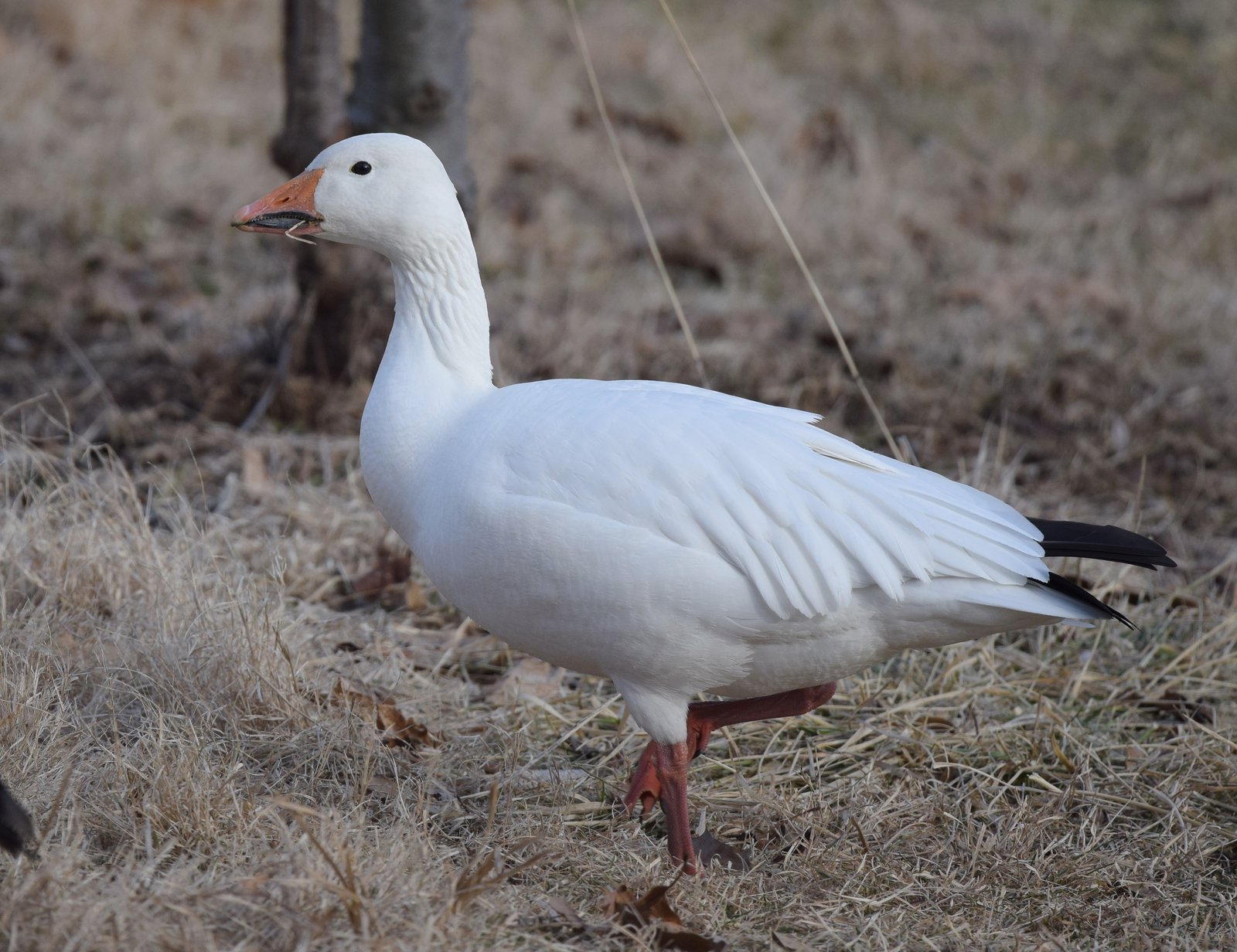
The Snow Goose is a medium-sized goose that breeds on the Arctic tundra of North America and north-eastern Siberia and winters in the United States and Mexico. There are two colour morphs: a white one and a dark one, the so-called blue morph. In the guide area the species is a very rare vagrant.
Voice
A high, nasal, barking houk; flocks call a lot, also in flight.
Recording: Stanislas Wroza — CC BY-NC-SA 4.0 · xeno-canto
Identification
64–79 cm. The white morph is entirely white, with black primaries. The bill is pink, with a black 'grin patch' along the cutting edges; the legs are pink. The head is sometimes stained rusty by iron-rich water. The blue morph has a white head and neck and a dark grey-brown body. Juveniles of the white morph are dingy greyish white, with a dark bill; juveniles of the blue morph are uniformly dark. The sexes are alike.
Confusion species
Coscoroba Swan Coscoroba coscoroba, also a very rare vagrant, is larger, with a red bill without a 'grin patch' and almost entirely white wings. White domestic geese are heavier, with an orange bill and without black primaries. Wood Stork Mycteria americana also shows white wings with black flight feathers in flight, but has a bare, dark head, long legs and a heavy, decurved bill.
Habitat
In the wintering range shallow marshes, lakes, flooded grassland and fields, where it grazes on grasses, roots and grain. Vagrants in the guide area are to be expected on marshes, lakes and pastures, sometimes among other waterbirds.
Where the bird is most at home, classified by the vegetation units of the Andes and the west coast.


Range and movements
In the guide area recorded only as a very rare vagrant, with a few records in Colombia. Not known from Ecuador, Peru, Bolivia or the Galápagos. It breeds on the tundra of Alaska, northern Canada, north-western Greenland and north-eastern Siberia, and winters in the United States and northern Mexico.
How and when to look
Vagrants are to be expected between October and April, in the northern winter. Compare any white goose in the guide area carefully with domestic geese, which occur there far more often.
Conservation status
Least Concern. Numbers have increased strongly in recent decades, partly because of the food available on farmland in the wintering areas.
Scientific name
Anser caerulescens | (Linnaeus, 1758)
Linnaeus described the species in 1758 as Anas caerulescens; because it was later moved to another genus, the author and year stand in brackets. The genus Anser was introduced in 1760 by Brisson. The genus name is from Latin anser, 'goose'. Latin caerulescens means 'bluish', after the blue morph on which the description was based. The specimen the first description was based on came from Hudson Bay, Canada.