All species › Passerines › Tyrant flycatchers and allies › Sooty Tyrannulet
Sooty Tyrannulet | Serpophaga nigricans
Roettachuri | Piojito gris | João-pobre
The Sooty Tyrannulet is a dark grey tyrant of banks, marshes and scrub near water in south-eastern South America. It perches low by the water, often on rocks, branches or the ground, constantly moving its tail. In the guide area it reaches only southern Bolivia.
Voice
The song is a series of short notes followed by higher, somewhat canary-like notes. The call is a sharp teek; pairs give soft trills and chatters.
Recording: Robson Silva e Silva — CC BY-NC-SA 4.0 · xeno-canto
Identification
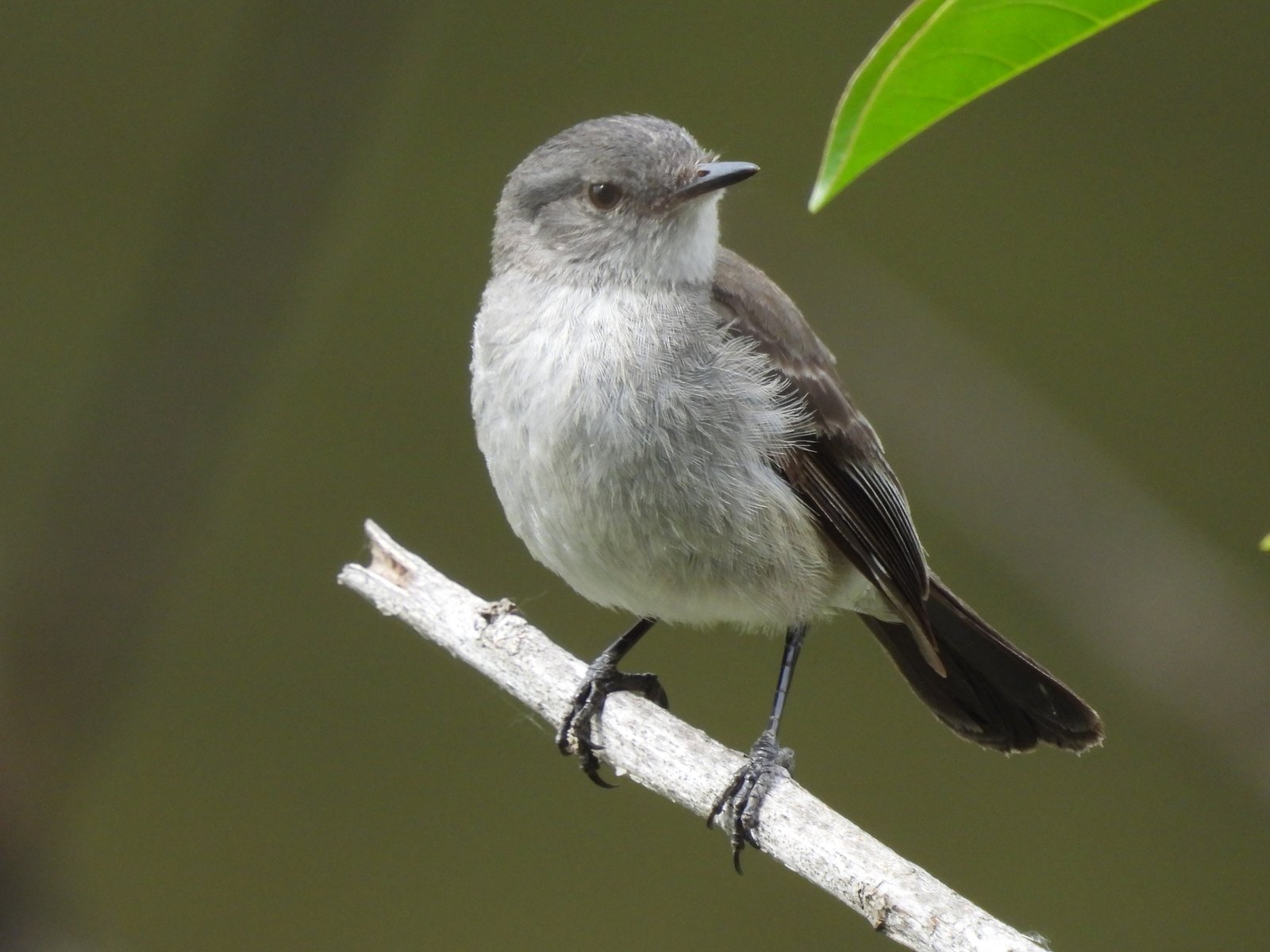
12 cm, with a short black bill. The plumage is mostly dark slate-grey, with a brownish tinge above and slightly paler below. The crown is darker, with a white crown stripe that is usually only partly visible; the chin is whitish. The wings have two pale grey wing bars and whitish edges to the inner flight feathers. The tail is black. The sexes are alike.
Confusion species
Torrent Tyrannulet Serpophaga cinerea has a black head contrasting with a pale grey back and a white belly, and lives along mountain streams in the north. Black Phoebe Sayornis nigricans is larger and blacker, with a sharply defined white belly. Cinereous Tyrant Knipolegus striaticeps is smaller, perches higher in shrubs, and the male has a red eye.
Habitat
Banks of streams, rivers, ponds and marshes with shrubs, also in farmland and at bridges, from sea level to about 1000 m. It catches insects on the ground and low over the water. The nest is a deep cup of roots and grass, lined with feathers, often on a branch under an overhang.
Where the bird is most at home, classified by the vegetation units of the Andes and the west coast.


Range and movements
In Bolivia only in the south, mainly in Tarija, with a small extension into the south-east. Absent from Colombia, Ecuador, Peru and the Galápagos. Outside the guide area in southern and south-eastern Brazil, Paraguay, Uruguay and northern and central Argentina.
- Resident
- dark = core range, pale = thinly spread
How and when to look
Search along streams and riverbanks with scrub in southern Tarija; birds perch low by the water and pump their tails.
Conservation status
Least Concern. The species has a large range and a stable population; it adapts well to banks altered by people.
Scientific name
Serpophaga nigricans | (Vieillot, 1817)
Vieillot described the species in 1817 as Sylvia nigricans; because it was later moved to another genus, the author and year stand in brackets. The genus Serpophaga was introduced in 1839 by Gould. The genus name comes from Greek serphos, 'gnat, small insect', and -phagos, '-eating'. The species name comes from Latin nigricans, 'blackish'. The specimen the first description was based on came from Paraguay.