All species › Passerines › Antpittas › Spotted Antpitta
Spotted Antpitta | Hylopezus macularius
Roodflankmierpitta | Tororoí moteado | Torom-carijó
The Spotted Antpitta is a small antpitta of Amazonia north of the Amazon, which in the guide area occurs only in the far south-east of Colombia and in north-eastern Peru. In this part of its range the species is little studied. The classification of the group has been revised: related forms south of the Amazon and in Bolivia are now treated as separate species.
Voice
The song is a short series of about six hollow whistled notes, hoo hoo hoo-hoo hoo-hoo. In the guide area the series is shorter than in birds from the Guianas and Venezuela.
Recording: Fabrice Schmitt — CC BY-NC-SA 4.0 · xeno-canto
Identification
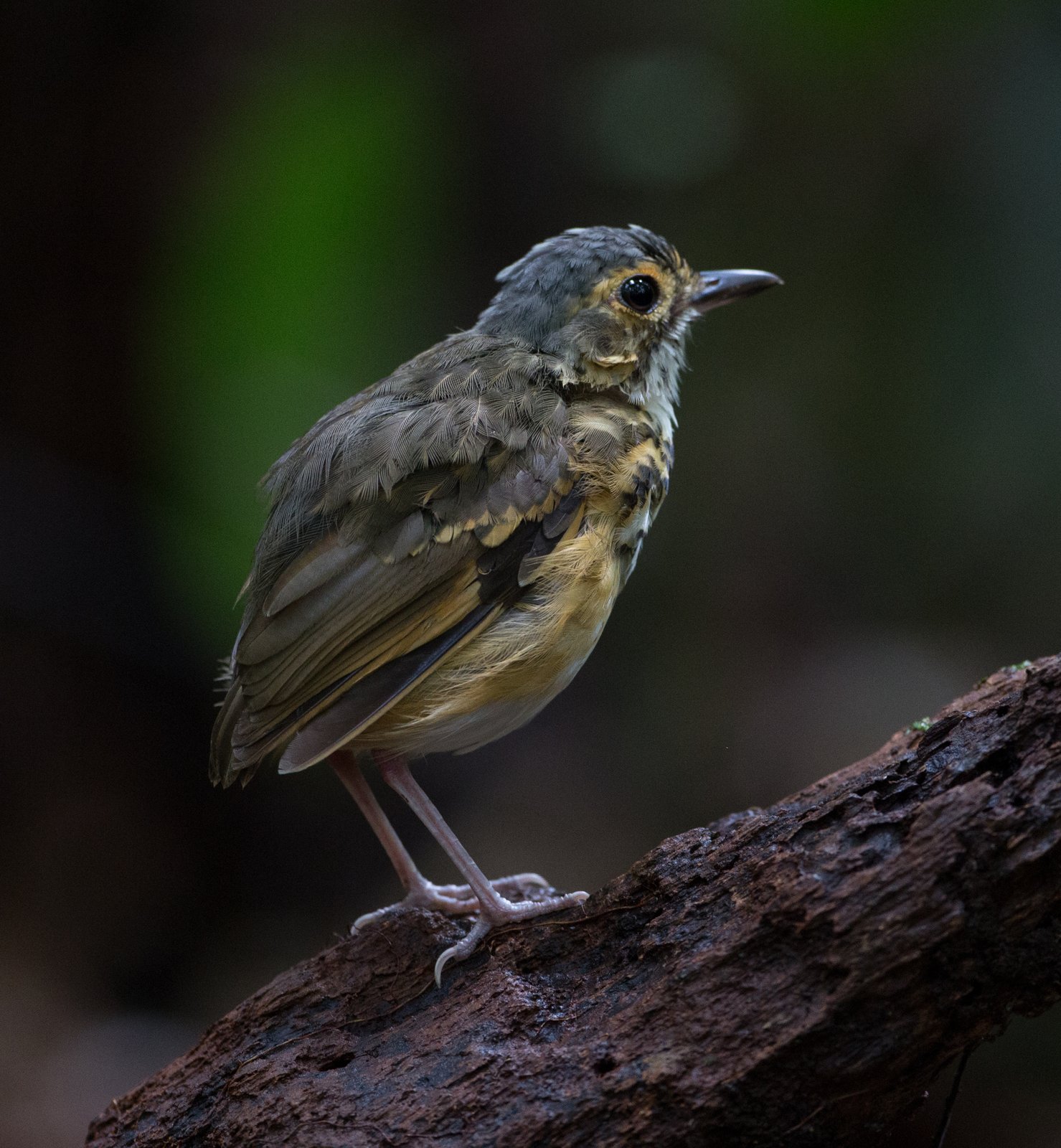
14 cm, round and almost tailless on long, pinkish-grey legs. The crown and nape are grey, the upperparts olive-brown. A buff eye-ring and lores form spectacles; a black malar stripe borders the white throat. The breast is buff with a band of black teardrop spots, the belly white and the flanks warm ochre-brown. The sexes are alike.
Confusion species
Thrush-like Antpitta Myrmothera campanisona has a brown crown, no spectacles and a breast faintly streaked brown instead of black spots. White-lored Antpitta Myrmothera fulviventris has a grey head with white lores and grey streaks on the breast, and lives in thickets along rivers. Streak-chested Antpitta Hylopezus perspicillatus is very similar but occurs only west of the Andes.
Habitat
The floor and understorey of tall lowland forest, both terra firme and gallery forest, in Colombia up to about 300 m. It keeps to dense patches, such as around fallen trees. Diet and nest are barely described in the guide area; elsewhere the species eats insects and other invertebrates of the forest floor.
Where the bird is most at home, classified by the vegetation units of the Andes and the west coast.


Range and movements
In Colombia only in the far south-east. In Peru in the north-east, north of the Amazon in Loreto. Absent from Ecuador, Bolivia and the Galápagos. Outside the guide area in southern Venezuela, the Guianas and northern Brazil.
- Resident
- dark = core range, pale = thinly spread
How and when to look
Listen in the early morning for the short, hollow song in tall terra firme forest north of the Amazon in Loreto. The bird sings from the ground or a low branch in dense growth and stays in cover.
Conservation status
Not Evaluated under this taxonomic treatment. Its habitat in north-western Amazonia is largely intact; deforestation plays a local role.
Scientific name
Hylopezus macularius | (Temminck, 1830)
Temminck described the species in 1830 as Pitta macularia; because it was later moved to another genus, the author and year stand in brackets. The genus Hylopezus was introduced in 1909 by Ridgway. The genus name comes from Ancient Greek hulē, 'forest', and pezos, 'walking'. The species name comes from Latin macula, 'spot', and means 'spotted'. The specimen the first description was based on came from Cayenne, French Guiana.