All species › Passerines › New World warblers › Swainson's Warbler
Swainson's Warbler | Limnothlypis swainsonii
Swainsons zanger | Reinita de Swainson | Mariquita-de-swainson
Swainson's Warbler is a plainly coloured, brown warbler of dense undergrowth that breeds in the south-eastern United States and winters in the Caribbean and on the Yucatán Peninsula. In the guide area it is an exceptional vagrant.
Voice
A loud, metallic chip. The song consists of a few clear, descending whistles followed by a rapid, emphatic final phrase.
Recording: Sue Riffe — CC BY-NC-SA 4.0 · xeno-canto
Identification
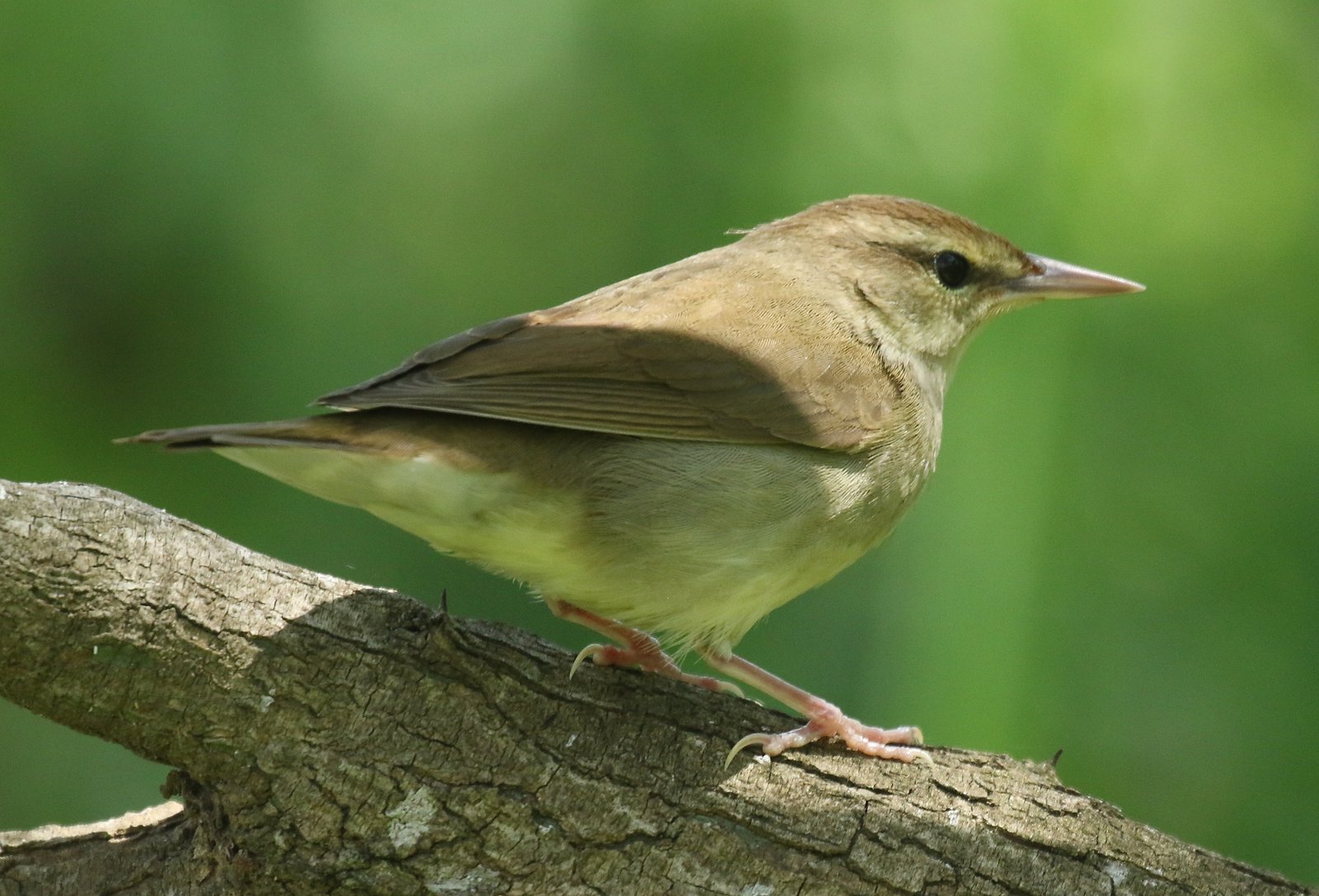
13–14 cm, with a fairly long, pointed, pale bill and a flat head. The crown is warm rufous-brown, with a pale supercilium and a dark eye-line. The upperparts are plain olive-brown without wing bars, the underparts dull white with a yellowish or greyish tone. The legs are pink. The sexes are alike.
Confusion species
Worm-eating Warbler Helmitheros vermivorum has a buff head with black stripes. Ovenbird Seiurus aurocapilla and the waterthrushes of the genus Parkesia have streaked underparts.
Habitat
Dense undergrowth in humid forest, thickets and bamboo, often in swampy or wet areas. It walks on the ground and flips leaves over with its bill in search of insects and spiders.
Where the bird is most at home, classified by the vegetation units of the Andes and the west coast.


Range and movements
Vagrant. In the guide area recorded only exceptionally, in northern Colombia; not known from Ecuador, Peru, Bolivia or the Galápagos. Breeds in the south-eastern United States and winters in the Caribbean (mainly Cuba and Jamaica), on the Yucatán Peninsula and in Belize.
How and when to look
A vagrant may turn up in the northern winter in dense, wet undergrowth in northern Colombia; watch for a brown warbler flipping leaves on the ground.
Conservation status
Least Concern. The population is small and scattered; loss of swamp forest and cane (Arundinaria) on the breeding grounds and deforestation on the wintering grounds are threats.
Scientific name
Limnothlypis swainsonii | (Audubon, 1834)
Audubon described the species in 1834 as Sylvia Swainsonii; because it was later moved to another genus, the author and year stand in brackets. The genus Limnothlypis was introduced in 1914 by Stone. The genus name combines Greek limnē, 'marsh', with thlupis, an unidentified small bird. The species name honours William Swainson (1789–1855), English ornithologist and naturalist. The specimen the first description was based on came from Edisto River near Charleston, South Carolina, United States.