All species › Passerines › Tityras, becards and allies › Varzea Schiffornis
Varzea Schiffornis | Schiffornis major
Grote schiffornis | Llorón de várzea | Flautim-ruivo
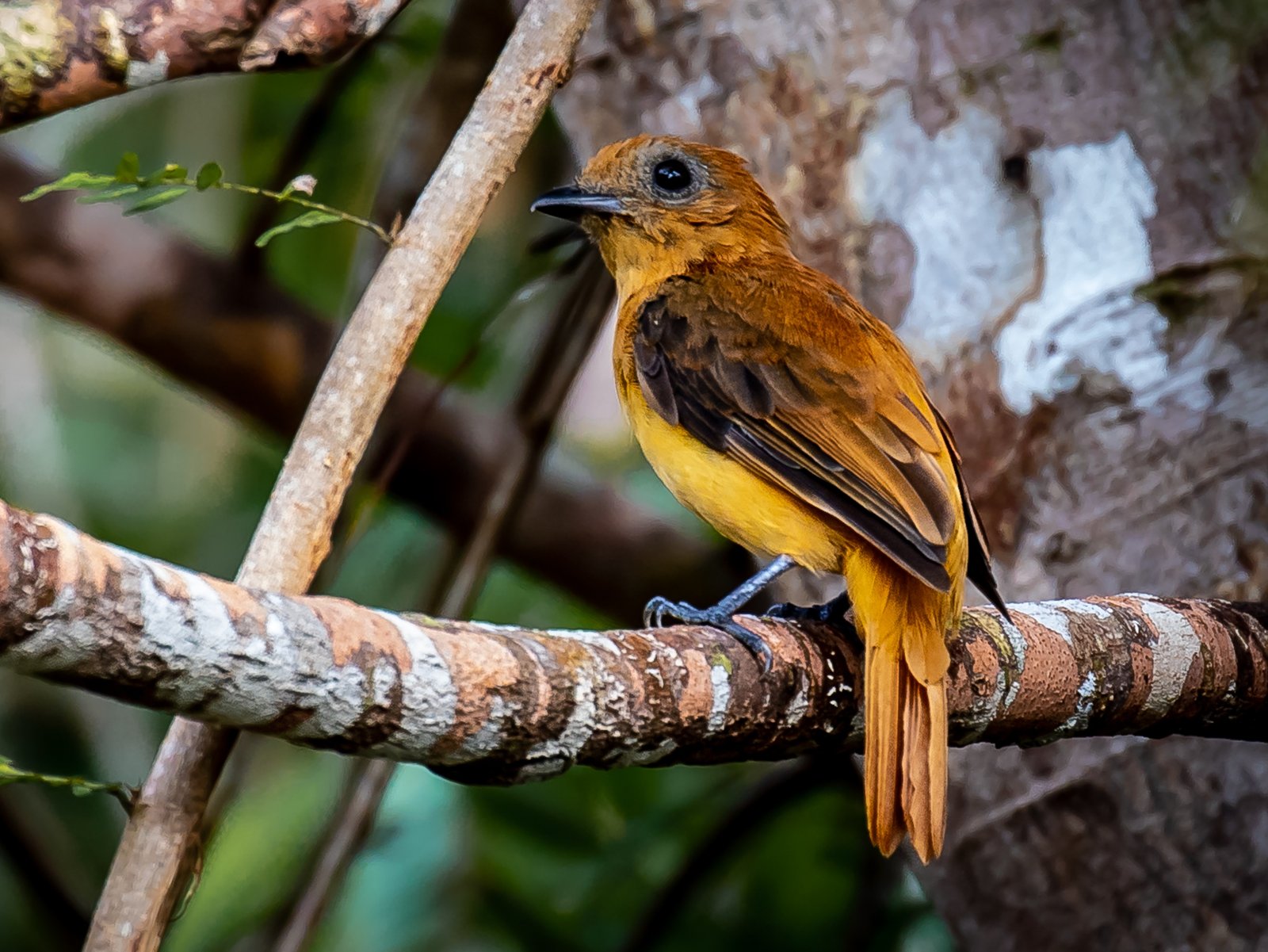
The Varzea Schiffornis is a small, cinnamon-brown bird of flooded forest along the large rivers of Amazonia. It lives hidden in the lower part of the forest and is mainly noticed by its whistled song. Of the schiffornises in the guide area it is the one most tied to várzea and igapó.
Voice
A short series of clear, rather slow whistles, often three or four, rising and falling in pitch; mainly in the early morning.
Recording: JAYRSON ARAUJO DE OLIVEIRA — CC BY-NC-SA 4.0 · xeno-canto
Identification
15–16 cm, with a rounded head, large dark eyes and a fairly long tail. Mainly warm cinnamon-brown, the rump and tail brighter rufous, the belly paler. Some birds have a greyish head and throat, especially around the eye. The sexes are alike.
Confusion species
Brown-winged Schiffornis Schiffornis turdina is darker olive-brown, without a cinnamon tone, and lives in terra firme forest. Cinnamon Attila Attila cinnamomeus is larger, with a heavier hooked bill and dark wings, and sits higher in the forest. Rufous Casiornis Casiornis rufus is slimmer, with a pale throat, and lives mainly in drier forest.
Habitat
Undergrowth and lower level of seasonally flooded forest (várzea and igapó) and forest on river islands in the Amazonian lowlands, mostly below 300 m. It eats fruit and insects. Little is known about the nest.
Where the bird is most at home, classified by the vegetation units of the Andes and the west coast.


Range and movements
In Colombia in the far south-east, along the Amazon. In Ecuador in the eastern lowlands along the large rivers. In Peru widespread in the Amazonian lowlands. In Bolivia in the northern and central lowlands. Absent from the Galápagos. Outside the guide area in southern Venezuela and Brazilian Amazonia.
- Resident
- dark = core range, pale = thinly spread
How and when to look
Visit flooded forest along large rivers by boat or on boardwalks and listen in the early morning for the whistled song low in the forest.
Conservation status
Least Concern. Flooded forest along the rivers is still widely present in large parts of the guide area.
Scientific name
Schiffornis major | des Murs, 1856
Des Murs described the species in 1856 and placed it straight away in the genus where it still stands. The genus Schiffornis was introduced in 1854 by Bonaparte. The genus name combines the surname of the German physiologist Moritz Schiff (1823–1896) with Greek ornis, 'bird'. The species name is Latin major, 'larger'. The specimen the first description was based on came from Sarayacu, Peru.