All species › Passerines › Antpittas › Watkins's Antpitta
Watkins's Antpitta | Grallaria watkinsi
Watkins' mierpitta | Tororoí de Watkins | Tovacuçu-de-watkins
Watkins's Antpitta is an antpitta of the dry and semi-deciduous forests of the Tumbesian region in south-western Ecuador and north-western Peru. It resembles Chestnut-crowned Antpitta, but lives in a much drier landscape and at lower elevations. It sings mainly in the rainy season.
Voice
A series of short whistled notes that rises and ends in one or two long, drawn-out notes. Heard mainly in the rainy season, most often at dawn.
Recording: Juan Freile — CC BY-NC-SA 4.0 · xeno-canto
Identification
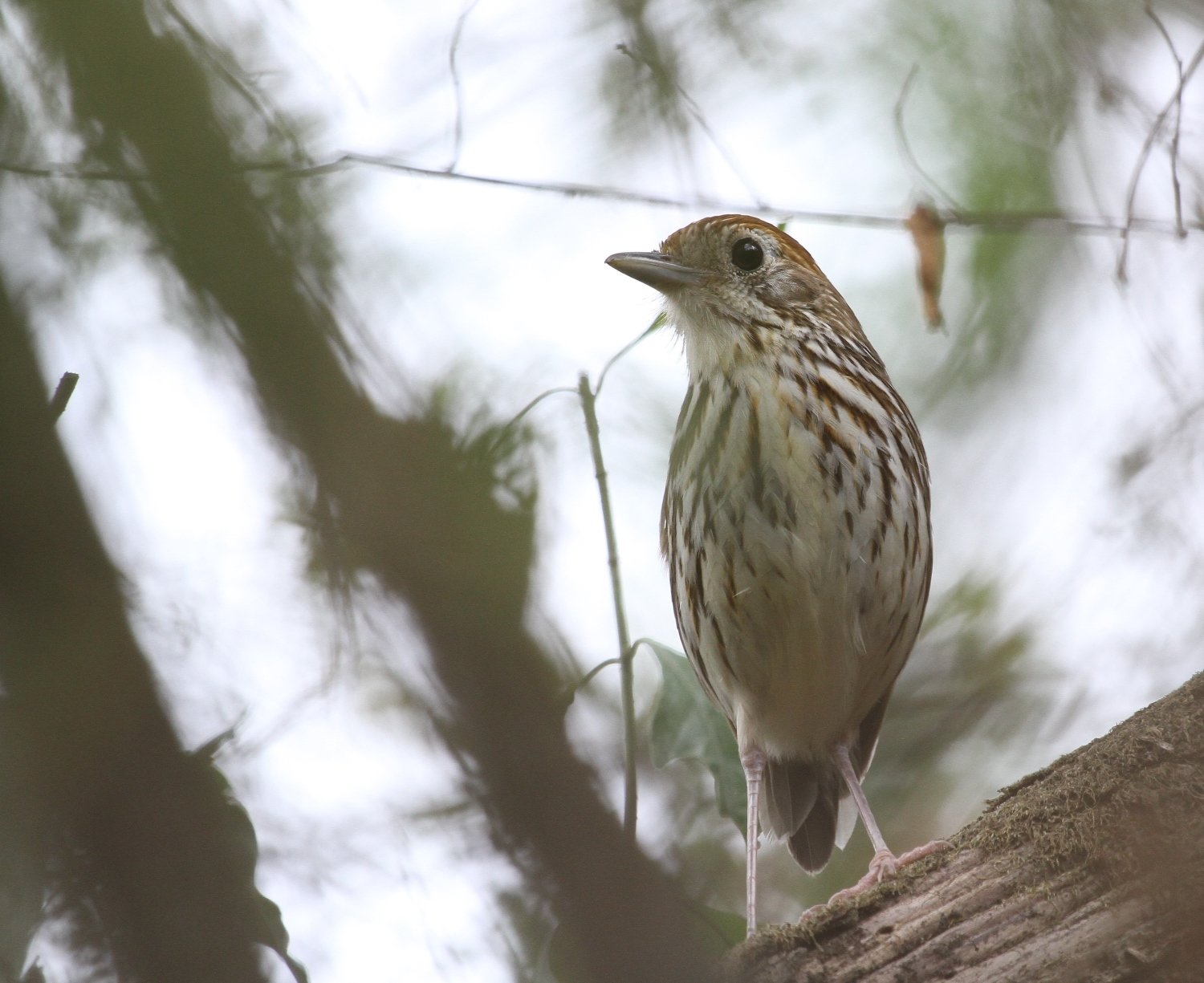
17–18 cm, round and short-tailed, on long pinkish-grey legs. The crown and nape are rufous, but duller and less contrasting than in Chestnut-crowned Antpitta; the sides of the head are paler ochre-brown. The back and wings are olive-brown. The throat is white; the breast and flanks are white with narrow dark streaks, and the belly is white. The sexes are alike.
Confusion species
Chestnut-crowned Antpitta Grallaria ruficapilla lives higher in humid montane forest and has a brighter rufous head, grey legs and a three-note whistle. Scaled Antpitta Grallaria guatimalensis has scaled upperparts and unstreaked rufous-brown underparts.
Habitat
Dry and semi-deciduous forest, more humid forest in ravines and on mountain slopes, and dense scrub, at roughly 400 to 1900 m. It forages on the ground for insects and other invertebrates. It breeds mainly in the rainy season.
Where the bird is most at home, classified by the vegetation units of the Andes and the west coast.


Range and movements
In Ecuador in the west and south-west, in the Tumbesian region, mainly in El Oro and Loja. In Peru in the north-west, in Tumbes and Piura. Absent from Colombia, Bolivia and the Galápagos. Does not occur outside the guide area.
- Resident
- dark = core range, pale = thinly spread
How and when to look
In the rainy season (roughly January to April), listen in the dry forests of Loja, for example at the Jorupe reserve near Macará, for the rising whistled series with its long final notes. In the dry season the species sings little.
Conservation status
Near Threatened. The dry forest of the Tumbesian region is heavily fragmented by logging, grazing and agriculture.
Scientific name
Grallaria watkinsi | Chapman, 1919
Chapman described the species in 1919 and placed it straight away in the genus where it still stands. The genus Grallaria was introduced in 1816 by Vieillot. The genus name comes from New Latin grallarius, 'stilt-walker', referring to the long legs. The species name honours Henry George Watkins, English collector who collected the first specimens in Peru. The specimen the first description was based on came from Milagros, Piura, Peru.