All species › Pigeons and doves › Doves and pigeons › Yungas Dove
Yungas Dove | Leptotila megalura
Witwangduif | Paloma montaraz de las Yungas | Juriti-das-yungas
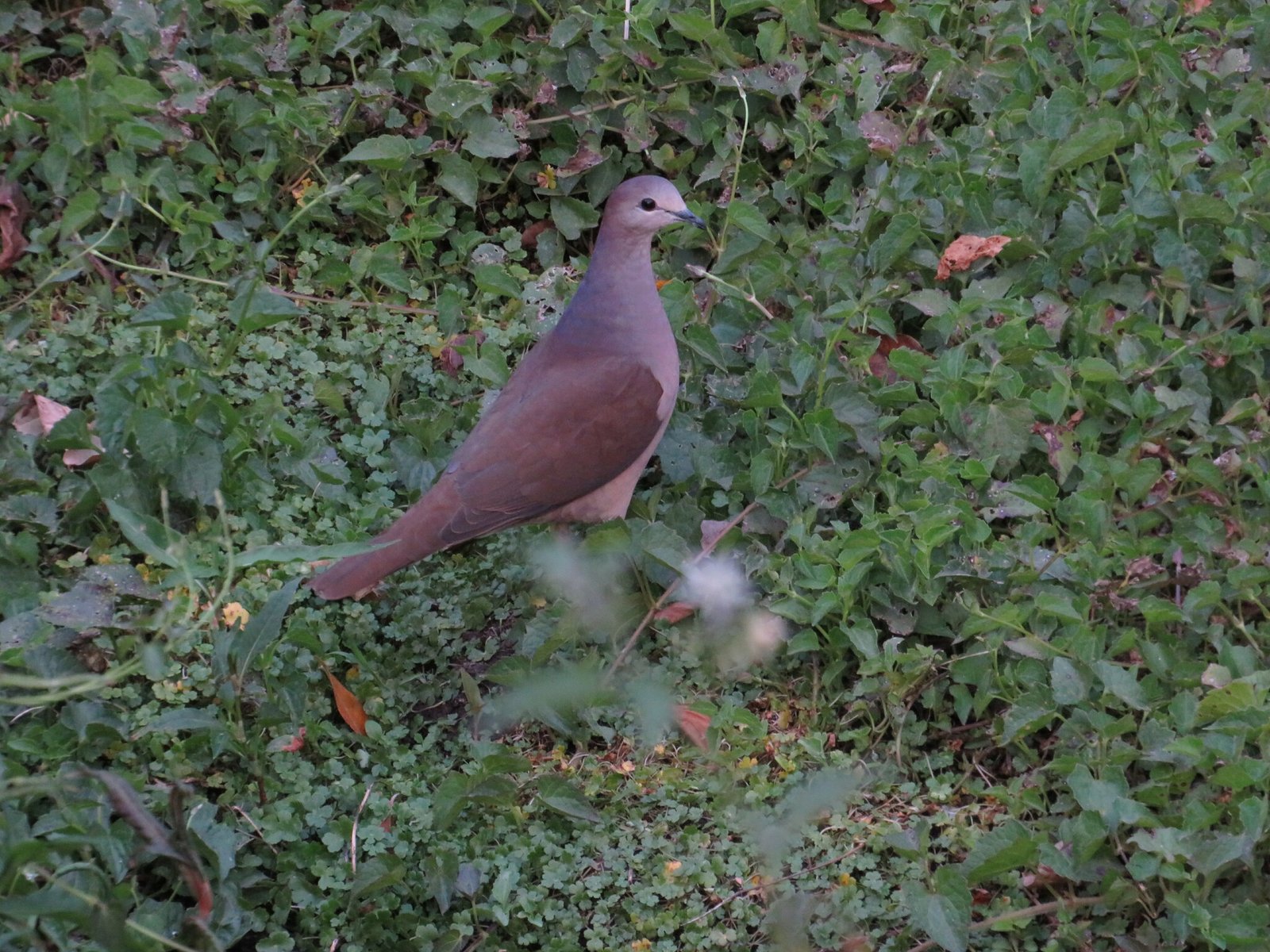
The Yungas Dove is the largest Leptotila in the guide area, a long-tailed dove of the montane Yungas forests of Bolivia and north-western Argentina. The pale, whitish face contrasts with the grey crown and warm brown upperparts. It walks on the forest floor and along forest tracks, and when disturbed flies off with clattering wings.
Voice
A deep, hollow, two-part coo, woo-ooo, the second part longer and falling, repeated at intervals, often from a branch in the mid-canopy.
Recording: Rosendo Fraga — CC BY-NC-SA 4.0 · xeno-canto
Identification
28–32 cm, with a long, rounded tail. Forehead and cheeks whitish, crown and nape grey with a purplish gloss on the nape. The bare skin around the eye is red. Upperparts olive-brown; throat white, breast pinkish brown, belly white. The underwing is rufous. The outer tail feathers have broad white tips. Legs red. The sexes are alike; young birds are duller, with pale feather fringes.
Confusion species
White-tipped Dove Leptotila verreauxi lives mainly lower and in drier terrain, is smaller and shorter-tailed, and has a less white face and in Bolivia usually blue skin around the eye. Grey-fronted Dove Leptotila rufaxilla lives in the lowlands, is smaller and has a blue-grey crown and a pale forehead. Eared Dove Zenaida auriculata has small black marks on the head and wings and a more pointed tail, and lives in open country.
Habitat
Humid and semi-humid montane forest of the Yungas and the Tucumán-Bolivian forests, alder woodland, forest edges, wooded ravines and older secondary growth, roughly between 1000 and 3000 m. It forages on the ground for seeds, fallen fruit and invertebrates. The nest is a platform of twigs in a shrub or tree.
Where the bird is most at home, classified by the vegetation units of the Andes and the west coast.


Range and movements
In Bolivia on the east slope of the Andes, from La Paz south through Cochabamba, Santa Cruz and Chuquisaca to Tarija. Absent from Colombia, Ecuador, Peru and the Galápagos. Outside the guide area in north-western Argentina.
- Resident
- dark = core range, pale = thinly spread
How and when to look
Walk forest trails and dirt roads through montane forest in southern Bolivia in the early morning, for example in Tarija, where it often walks on the road and flies off low.
Conservation status
Least Concern. Locally fairly common in little-disturbed forest; deforestation in the Yungas is a local threat.
Scientific name
Leptotila megalura | Sclater & Salvin, 1879
Sclater & Salvin described the species in 1879 and placed it straight away in the genus where it still stands. The genus Leptotila was introduced in 1837 by Swainson. The genus name (originally Leptoptila) combines Greek leptos, 'delicate, slender', with ptilon, 'feather'. The species name combines Greek megas, 'large', with oura, 'tail'. The specimen the first description was based on came from Tilotilo, Yungas, Bolivia.