Todas as espécies › Passerines › Crescentchests
Crescentchests | Melanopareiidae
Maansluipers | Crescentchests | Pecholunas
Four species occur in this guide, all in the genus Melanopareia: the Elegant Crescentchest in the dry scrub and deciduous forest of southwestern Ecuador and northwestern Peru, the Marañón Crescentchest, found only in the dry valley of the Marañón and adjacent valleys, and the Olive-crowned Crescentchest in scrub and grassland on the Andean slopes of Bolivia. The family's fourth species, the Collared Crescentchest, lives in the cerrado. For a long time crescentchests were placed with the tapaculos, but genetic studies showed that they form a distinct, ancient branch among the South American songbirds. They are small, stocky birds with a fairly long tail and strong legs, and with a striking pattern: a pale eyebrow, a dark head and a black, crescent-shaped band across the breast, set off against the ochre or chestnut underparts. They live hidden low in dense vegetation, searching there for insects and other small invertebrates. In the breeding season the males sing a series of repeated, dry notes from an exposed perch, and often that is the only sign of their presence. The Marañón Crescentchest is vulnerable because of the clearance of its small range.
Espécies nativas 4 espécies
Espécies que ocorrem aqui naturalmente: reprodutoras, visitantes de inverno e migrantes de passagem. Estão organizadas por gênero, na sequência da lista.
Melanopareia 4 espécies
-
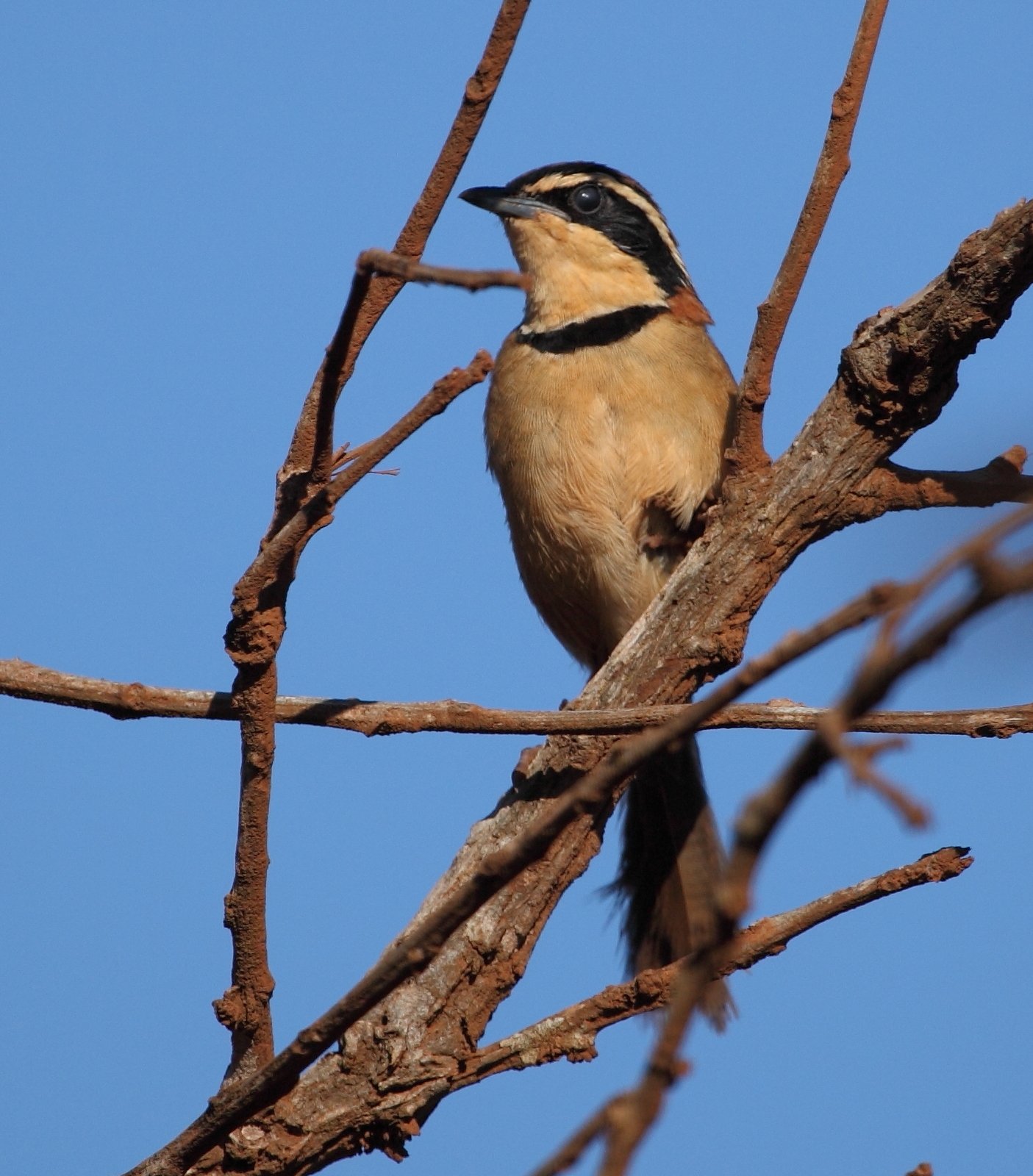
Tapaculo-de-colarinho
Melanopareia torquata Beni savanna and cerrado
 Chiquitano dry forest and Chaco
-
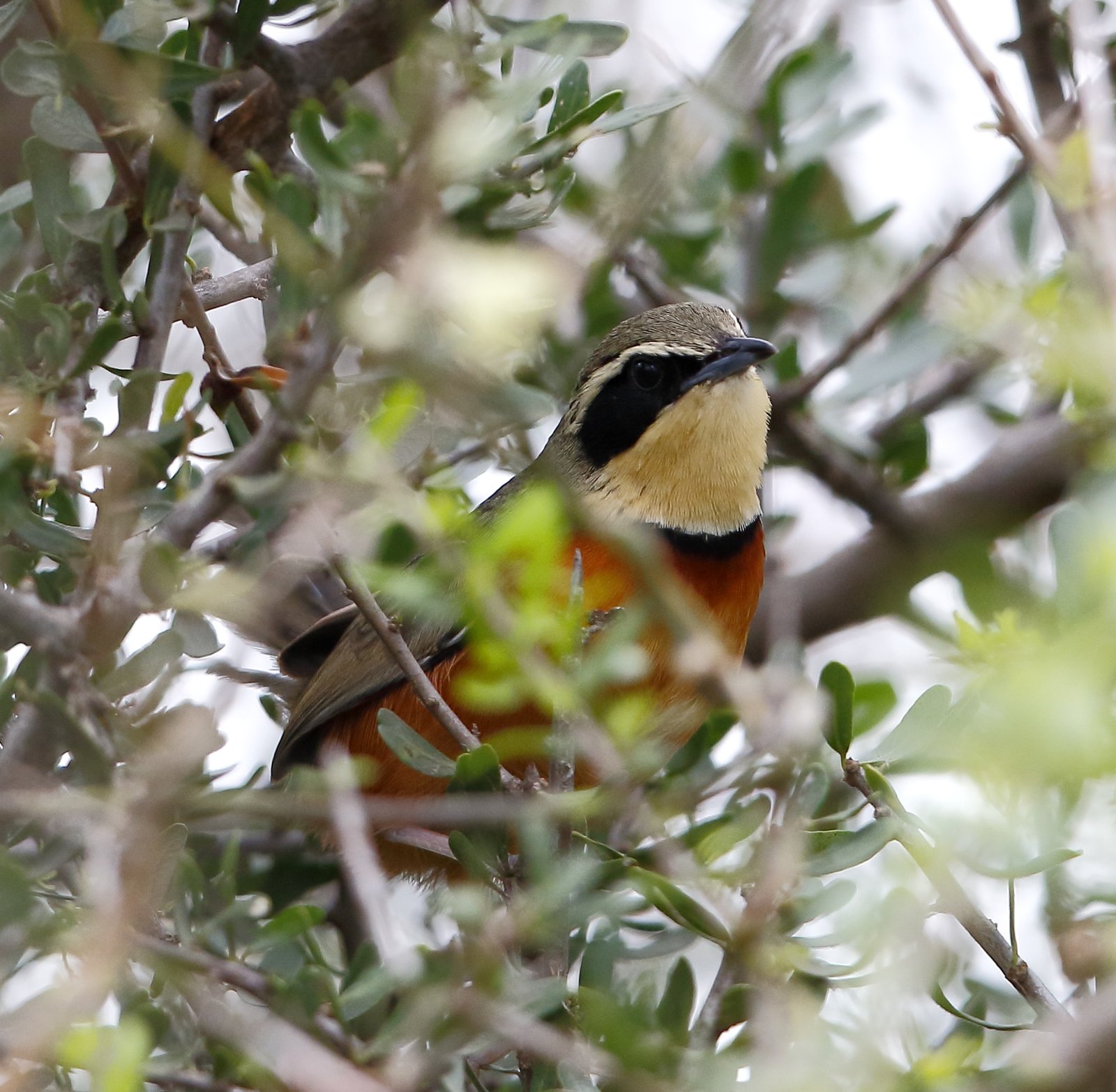
Tapaculo-de-coroa-oliva
Melanopareia maximiliani Central Andean dry valleys
- Chiquitano dry forest and Chaco
 Humid puna
 Upper Yungas cloud forest
-
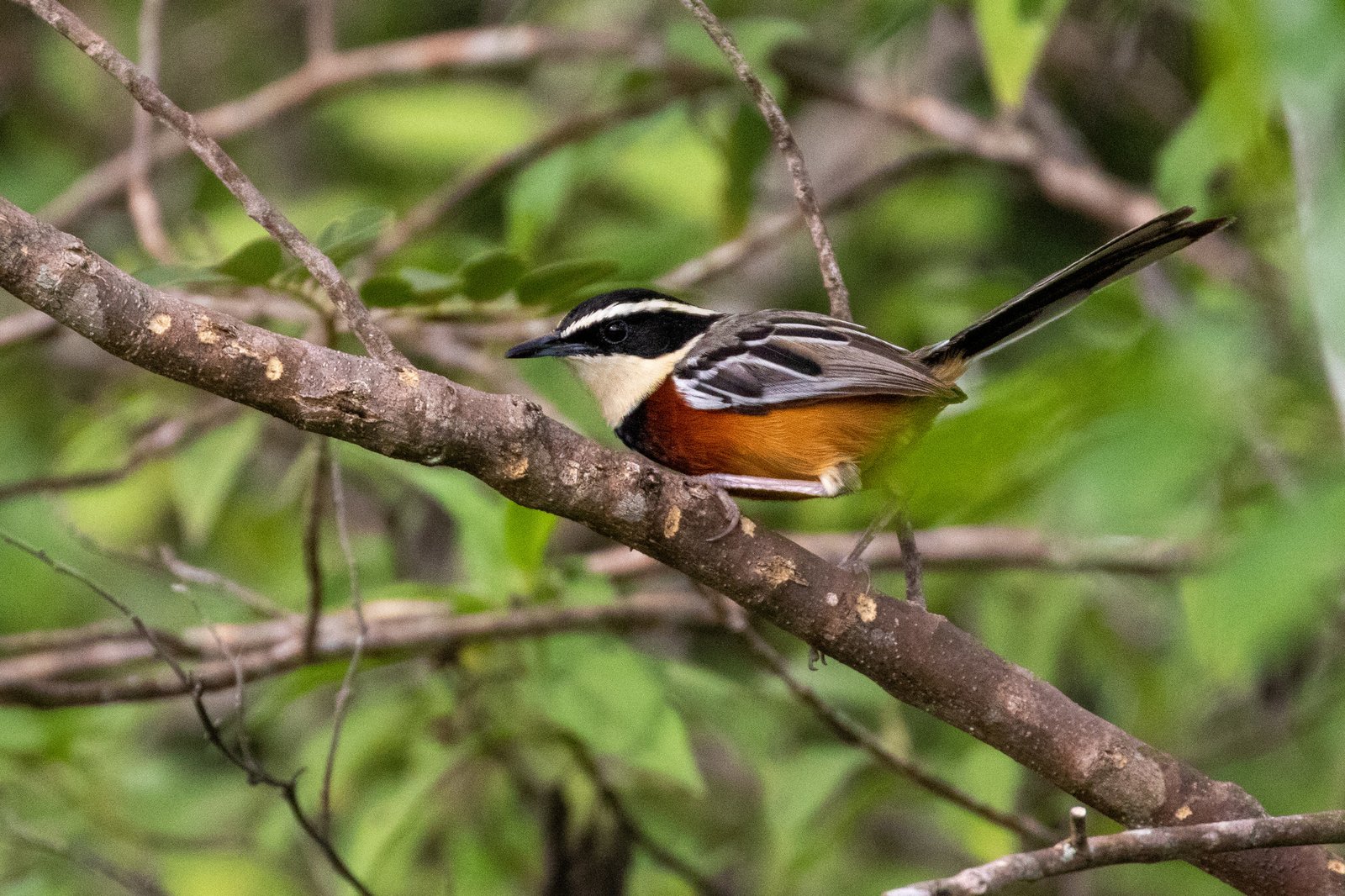
Tapaculo-do-marañón
Melanopareia maranonica Marañón and northern inter-Andean dry forest
-
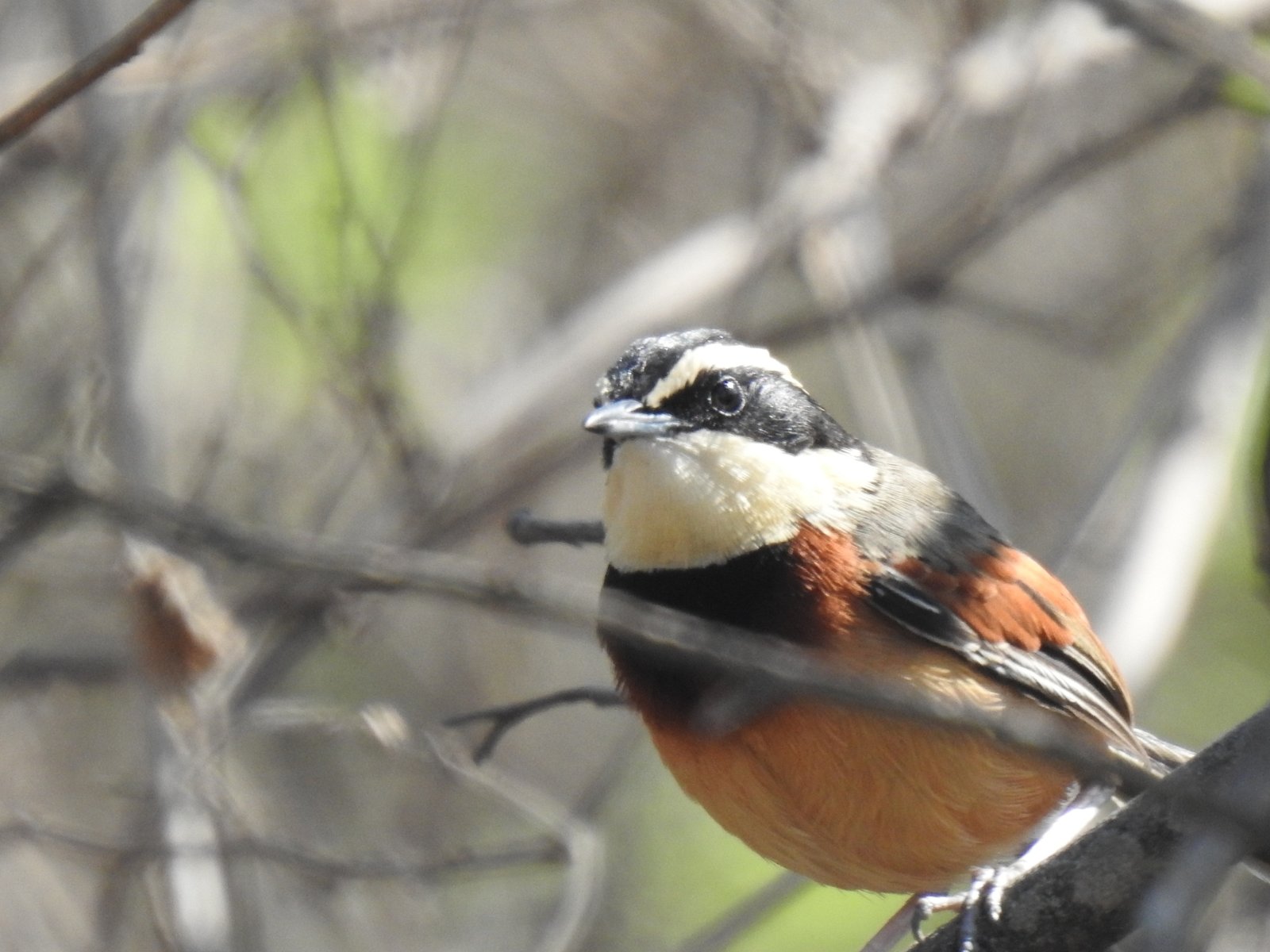
Tapaculo-de-tumbes
Melanopareia elegans Tumbesian dry forest and thorn scrub
- Marañón and northern inter-Andean dry forest
 Secondary forest and forest edge