All species › Pelicans, herons and ibises › Pelicans
Pelicans | Pelecanidae
Pelikanen | Pelícanos
All four toes are joined by webbing — heavy birds on short legs that swim exceptionally well. Slung under the lower mandible is an elastic pouch, not a larder but a dip net: the head goes under, the water drains away along the edges of the bill and the fish is swallowed at once, and in shallows groups drive fish together to do it. Air sacs beneath the skin keep the body riding high, and on very long broad wings they soar up on thermals and travel in formation. They breed packed close together in colonies, lay two or three chalky white eggs that are incubated on top of the webbed feet, and the young hatch naked.
Native species 2 species
Species that occur here by nature: breeding birds, winter visitors and passage migrants. They are arranged by genus, in the sequence of the list.
Pelecanus 2 species
-
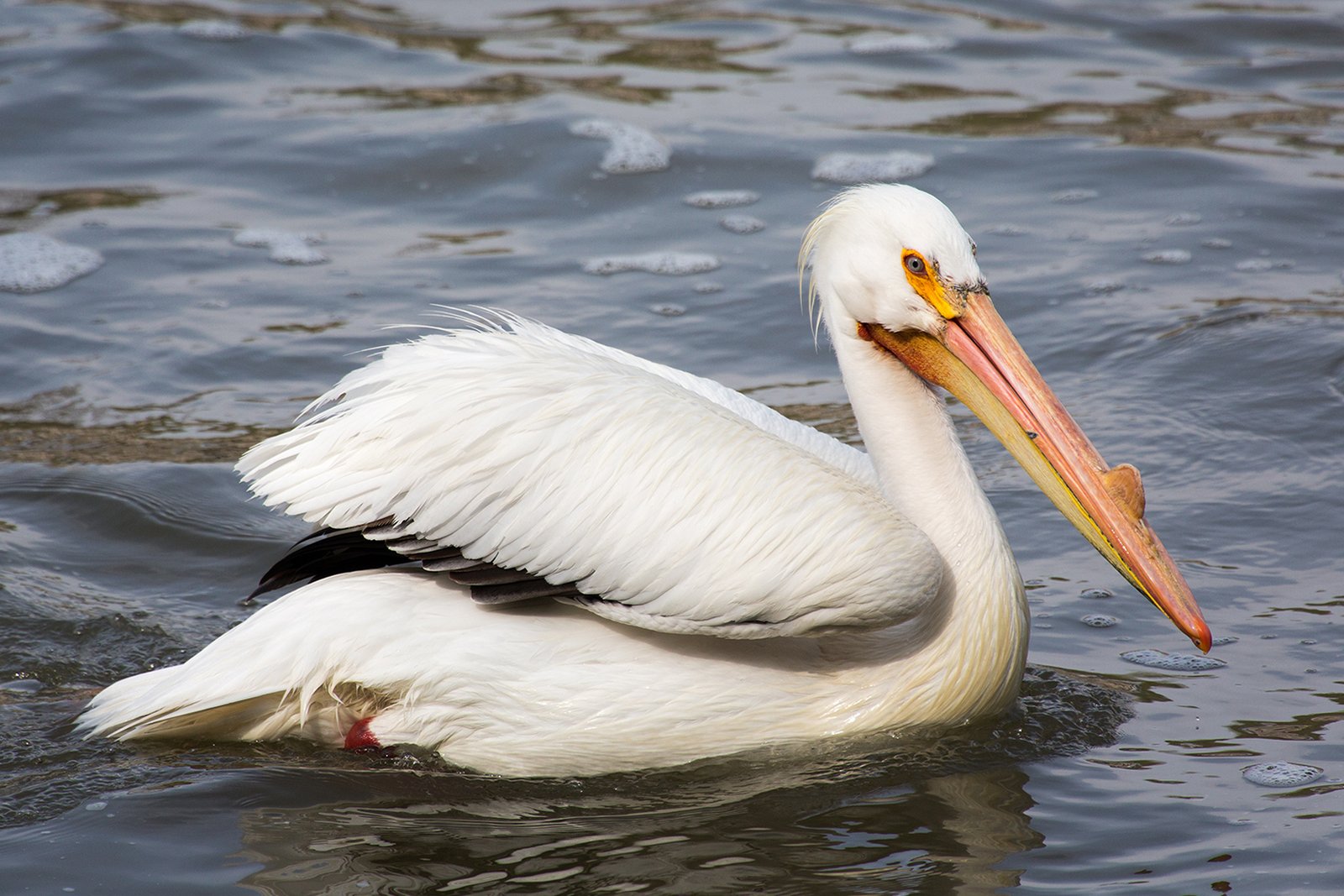
American White Pelican
Pelecanus erythrorhynchos Lakes and ponds
 Rice fields and fish ponds
 Saline lagoon and salt pan
 Inland brackish and saline lakes
 Seagrass beds and shallow bays
 Freshwater marsh with reeds and sedges
-

Brown Pelican
Pelecanus occidentalis Coastal waters and shelf
- Seagrass beds and shallow bays
 Mangrove
 Rocky islet and coral cay
 Harbours, airports and industry