All species › Waterfowl › Ducks and geese › American Wigeon
American Wigeon | Mareca americana
Amerikaanse smient | Silbón americano
The American Wigeon is a medium-sized dabbling duck with a short bill that grazes as much as it dabbles. In the Caribbean it is a winter visitor from North America and in the north of the island chain one of the commoner wintering ducks. In Cuba it is called pato lavanco.
Voice
The male gives a high, whistled three-note whee-whee-whew, all year round and also in flight; the female a hoarse, growling qua-arr. Flocks are often heard before they are seen.
Recording: Valerie Heemstra — CC BY-NC-SA 4.0 · converted to mono · xeno-canto
Identification
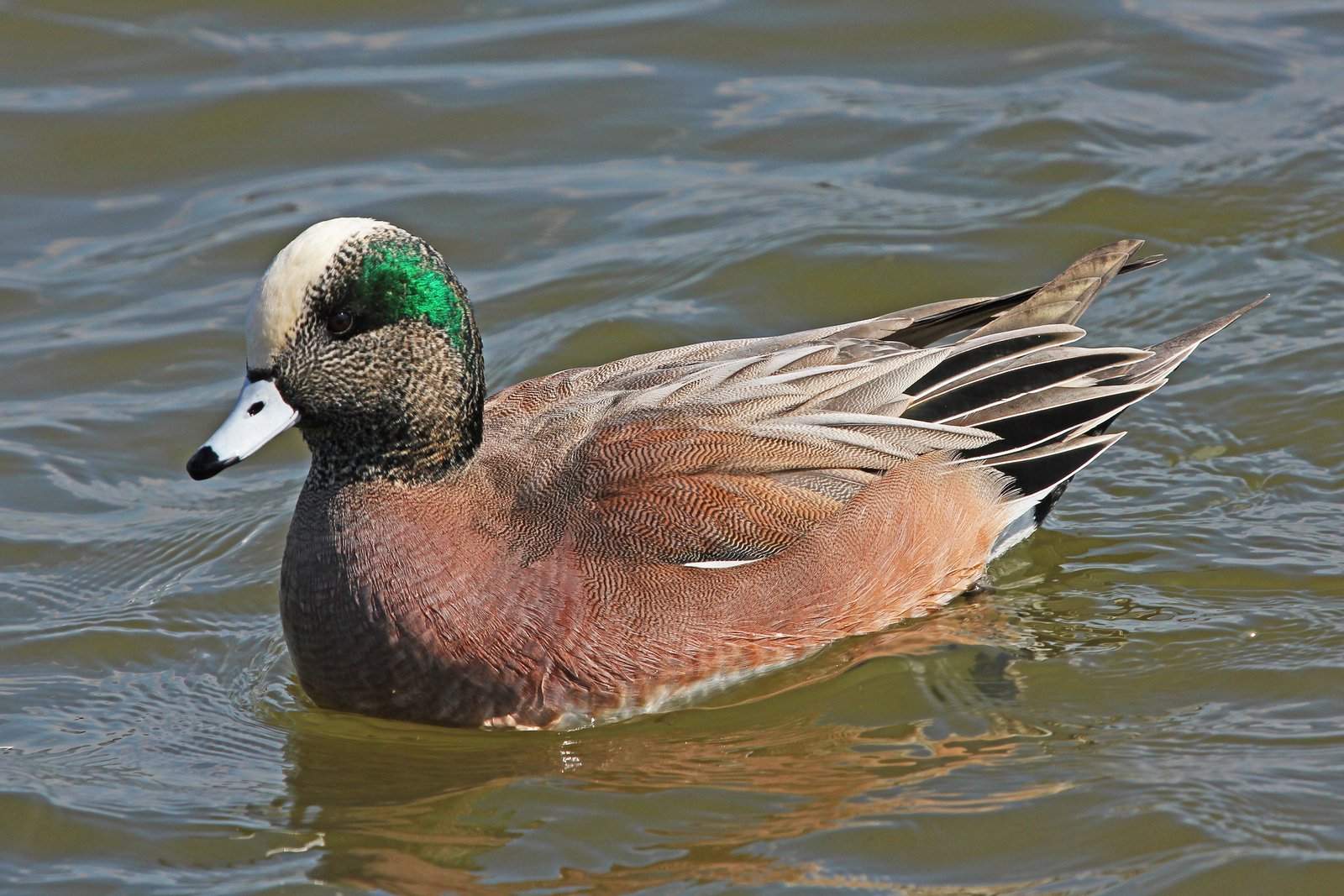
42–59 cm, with a round head, a short blue-grey bill with a black tip and a pointed tail. The male has a creamy-white crown, a broad glossy green band from the eye to the nape on a finely speckled grey head, pinkish-cinnamon breast and flanks, and a black rear end with a white patch in front of it. The female is warm orange-brown on the flanks, with a greyer head and a dark smudge around the eye. In flight the male shows a large white patch on the forewing and a green speculum; the axillaries are bright white in both sexes. In autumn some males are still in eclipse plumage.
Confusion species
Eurasian Wigeon Mareca penelope, a vagrant in the region, has a chestnut head with a creamy-yellow blaze in the male; the female has a warmer brown head and grey axillaries. Female Gadwall Mareca strepera has a thin bill with orange sides and a white patch on the inner wing. Female Mallard Anas platyrhynchos is larger, with a long orange bill.
Habitat
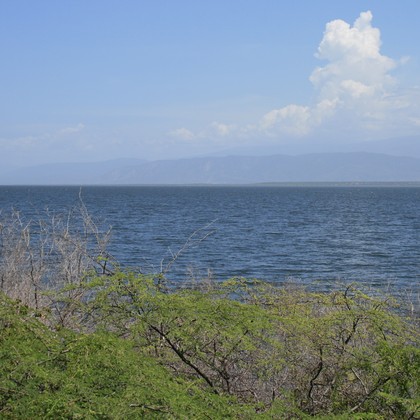
Shallow fresh and brackish lakes, ponds, lagoons and marshes with open water, also rice fields, reservoirs and sewage ponds. It eats mainly aquatic plants and grazes on wet grassland and lawns by water. It also takes plants brought to the surface by diving ducks and coots.
Where the bird is most at home, classified by the vegetation types of the Caribbean.




Range and movements
Regular in the north of the region, fairly common in Cuba, and elsewhere in the Bahamas, the other Greater Antilles and the Cayman Islands in varying numbers. Scarcer to the south-east; in the Lesser Antilles, Trinidad and Tobago and the ABC islands it is an irregular visitor in small numbers. Breeds in north-western North America, from Alaska to the prairies, and winters from the United States to Central America and north-western South America.
- Winter visitor (c. Apr–Sep)
- dark = core range, pale = thinly spread
How and when to look
On shallow lakes and lagoons with plenty of aquatic vegetation, often with Blue-winged Teals, Northern Shovelers and Northern Pintails. The males' whistles give a flock away before the birds come into view.
Conservation status
Least Concern. The North American population fluctuates with conditions on the breeding grounds. In the Caribbean the species is hunted, and wetland loss reduces the number of suitable wintering sites.
Scientific name
Mareca americana | (Gmelin, 1789)
Gmelin described the species in 1789 as Anas americana; because it was later moved to another genus, the author and year stand in brackets. The genus Mareca was introduced in 1824 by Stephens. Mareca comes from the Portuguese marreco, a word for a small duck. americana is Latin for 'American', after the North American breeding range. The specimen the first description was based on came from Louisiana and New York.