All species › Passerines › New World warblers › Barbuda Warbler
Barbuda Warbler | Setophaga subita
Barbudazanger | Reinita de Barbuda
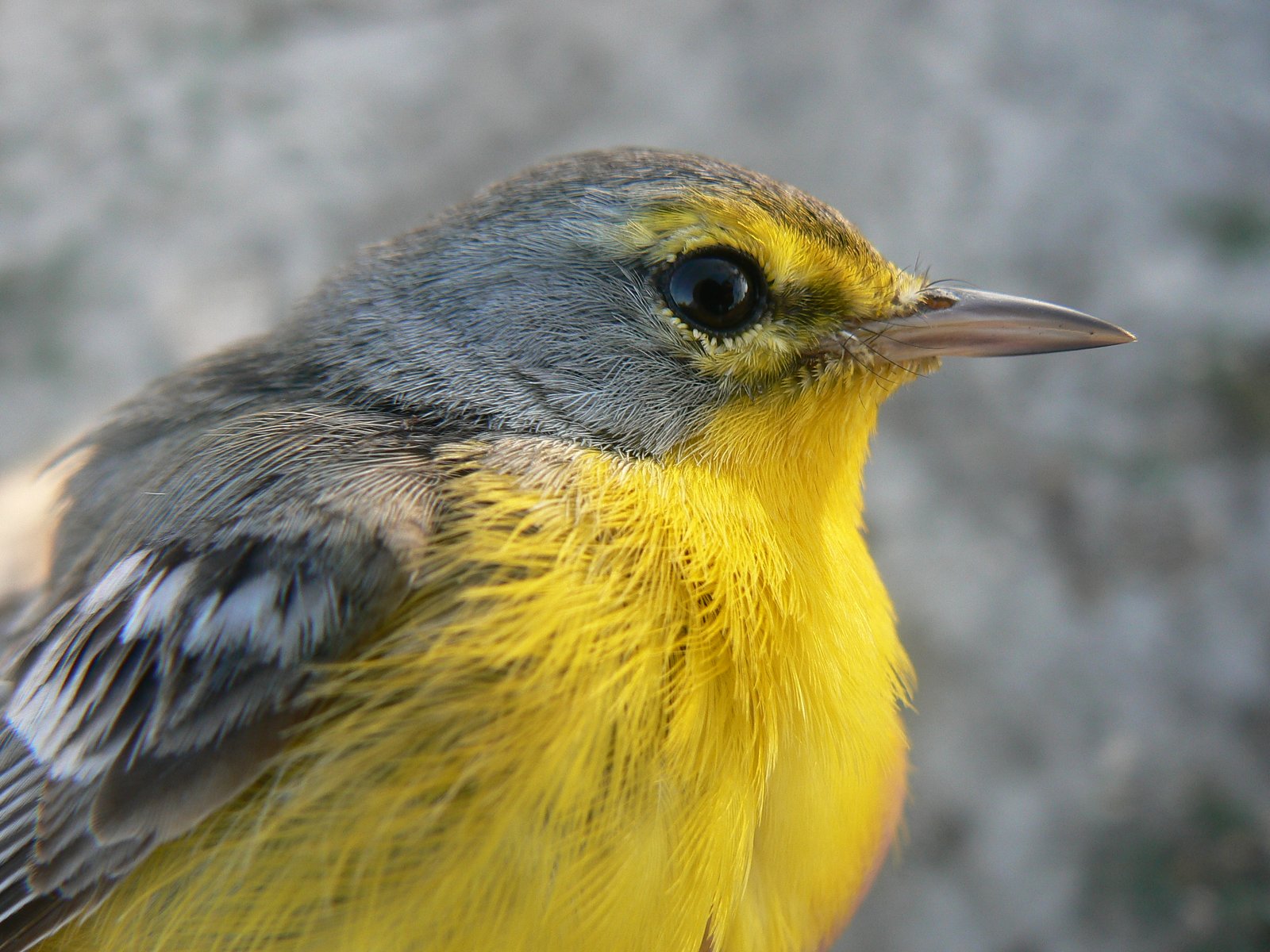
The Barbuda Warbler is a grey-and-yellow wood-warbler found only on Barbuda, the flat, dry island north of Antigua. For a long time it was treated as a subspecies of Adelaide's Warbler Setophaga adelaidae of Puerto Rico, together with the birds of St Lucia; since the split it has been Barbuda's only endemic bird species.
Voice
The song is a rapid, clear trill that may rise or fall in pitch, comparable to that of Adelaide's Warbler; it is heard all year. The call is a short chip.
No recording with a suitable Creative Commons licence is available for this species yet.
Identification
12–13.5 cm, with a fine, pointed bill. Upperparts are plain blue-grey, throat and breast yellow, belly whitish. A short yellow supercilium runs above the eye and a white crescent lies below it, forming a broken pale eye-ring. The wing has two white wing bars and the outer tail feathers have white spots. The sexes are nearly alike; females are slightly duller. Juveniles are greyer, with little yellow below.
Confusion species
Mangrove Warbler Setophaga petechia, which also breeds on Barbuda, is all yellow with an olive-yellow back, lacking grey upperparts and white wing bars. Among winter visitors, Prairie Warbler Setophaga discolor has an olive-green back, black streaks on the yellow flanks and a dark cheek stripe; Northern Parula Setophaga americana has a green patch on the mantle and a dark or rusty breast band, but no yellow supercilium. Adelaide's Warbler and St. Lucia Warbler Setophaga delicata are very similar to Barbuda Warbler but occur only on their own islands.
Habitat
Dry scrub and low dry deciduous woodland over almost the whole island, especially scrub near lagoons and other wetlands, and the edges of mangroves; also in vegetation around Codrington. It forages in shrubs and low trees for insects and spiders, often among the leaves of the outer branches. In counts after Hurricane Irma, Barbuda Warblers were found less often at points where Mangrove Warblers were present, which may indicate competition for food.
Where the bird is most at home, classified by the vegetation types of the Caribbean.



Range and movements
Only on Barbuda (Antigua and Barbuda), over most of the island. It does not occur outside Barbuda; no populations are known from Antigua.
- Resident
- dark = core range, pale = thinly spread
How and when to look
Scrub along the roads around Codrington and along the edges of Codrington Lagoon, early in the morning when the birds are singing. The song is the best clue; the bird itself often moves low in the scrub.
Conservation status
Vulnerable, because of its small range and exposure to hurricanes. Hurricane Irma destroyed much of the vegetation on Barbuda in September 2017. Counts in a 9,000-ha study area gave about 2,400 birds in October 2017 and about 3,600 in March 2019, indicating recovery. Further threats are unplanned housing development, garbage dumping and other habitat loss.
Scientific name
Setophaga subita | (Riley, 1904)
Riley described the species in 1904 as Dendroica subita; because it was later moved to another genus, the author and year stand in brackets. The genus Setophaga was introduced in 1827 by Swainson. Setophaga is Greek, from sēs, sētos 'moth' and -phagos '-eating': 'moth-eater'. subita is Latin, from subitus 'unexpected, sudden'. The specimen the first description was based on came from Barbuda.