All species › Nightjars › Nightjars and nighthawks › Buff-collared Nightjar
Position in the tree Birds Aves › Birds with a flexible palate Neognathae › All other modern birds Neoaves › Birds of the elements Elementaves › Nightjars and swifts Strisores
Buff-collared Nightjar | Antrostomus ridgwayi
Ridgways whippoorwill | Tapacaminos tucuchillo
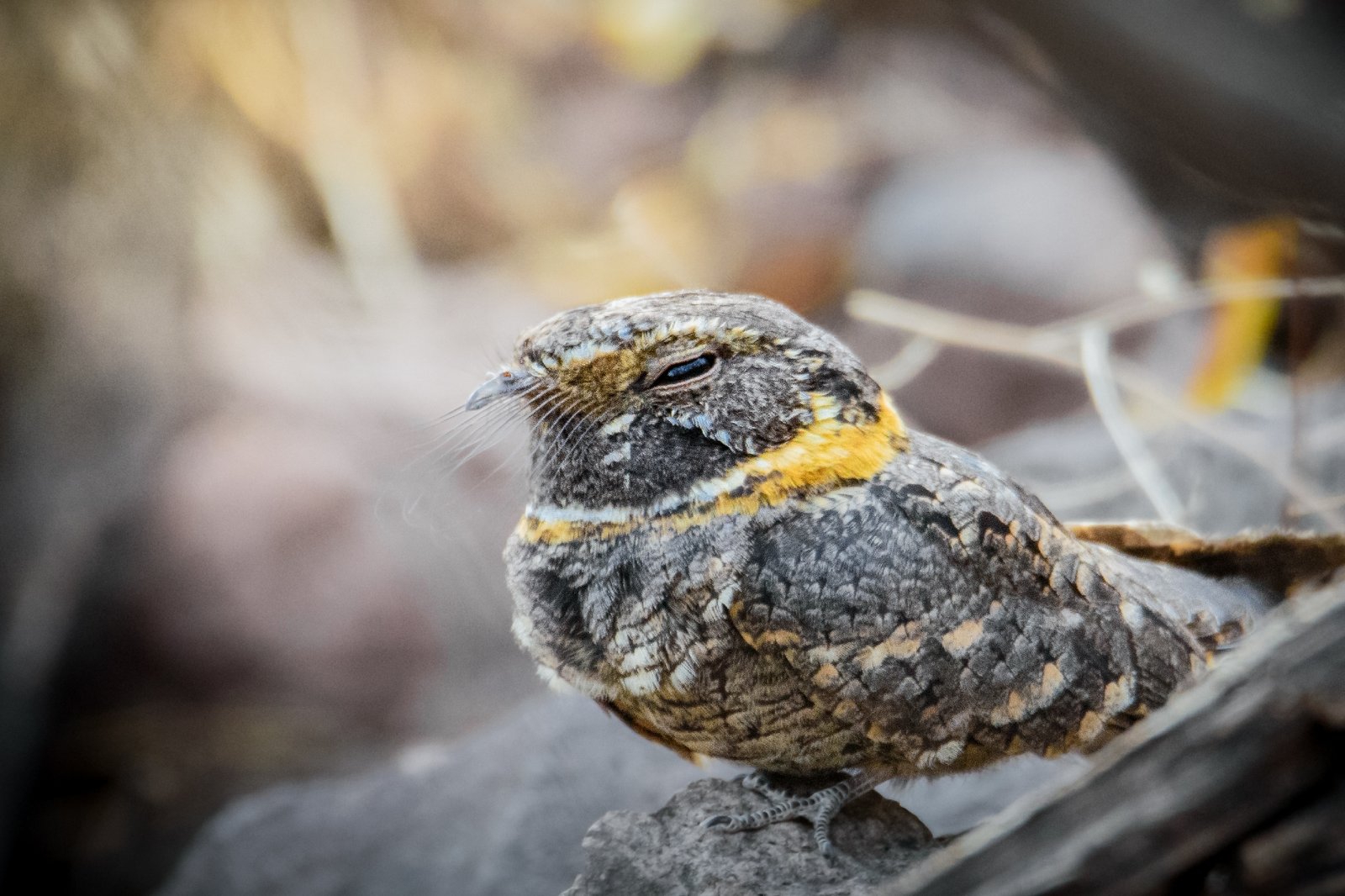
The Buff-collared Nightjar is a medium-sized nightjar of dry, scrubby slopes and ravines on the Pacific side of Mexico and in the dry interior valleys of northern Central America. Its Dutch name honours the American ornithologist Robert Ridgway. The species is marked by a buffy band across the nape and by a fast, accelerating song that ends in a rising flourish. By day it rests unseen on the ground or a low branch; at dusk it sings from a rock or branch.
Voice
The song is a series of short, dry ticks that speed up and end in a higher, upslurred final note, roughly tuk-tuk-tuk-tuk-tuk-tuk-ka-cheea. It sings mainly at dusk and by moonlight, most often in spring and early summer. Also short, hard tick calls.
Recording: Paul Marvin — CC BY-NC-SA 4.0 · converted to mono · xeno-canto
Identification
21–24 cm. A grey-brown nightjar with a large head, short bill with long bristles and rounded wings without a white wing band. The plumage is finely spotted and streaked in grey, brown and black; a distinct buff to pale brown collar crosses the hindneck. Below the cheeks lies a narrow pale throat band. The male has broad white tips to the three outer tail feathers, the female narrower, buff tips. Flight low and fluttering, with short glides.
Confusion species
The Mexican Whip-poor-will Antrostomus arizonae is slightly larger and greyer, lacks the distinct buff nape collar and lives mainly in higher pine-oak forest. The Common Poorwill Phalaenoptilus nuttallii is smaller, with a shorter tail, silvery-grey plumage and a sharply defined white throat band. The Tawny-collared Nightjar Antrostomus salvini and the Pauraque Nyctidromus albicollis are warmer brown; the Pauraque also has a white wing band and a long tail. With silent birds the song is the most reliable feature.
Habitat
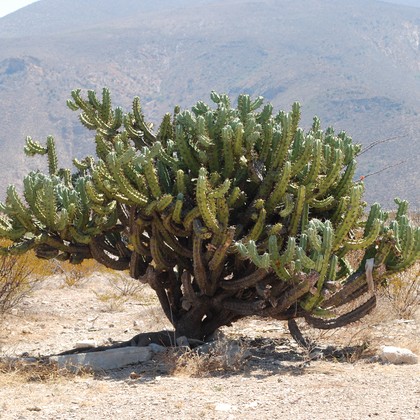
Dry thorn scrub, cactus forest and open dry forest on rocky slopes, in ravines and dry river valleys, often with loose stones and bare patches; mainly in the lowlands and foothills, up to about 1800 m. It hunts flying insects such as moths and beetles from the ground or a low perch. The eggs are laid without a nest on bare ground or among leaf litter, usually in the shade of a shrub.
Where the bird is most at home, classified by the vegetation units of Mexico and Central America.


Range and movements
In Mexico on the Pacific side from southern Sonora and south-western Chihuahua through Sinaloa, Nayarit, Jalisco, Colima and Michoacán to Guerrero, Oaxaca and Chiapas, and inland in the Balsas basin to Morelos and Puebla. Also in dry interior valleys of Guatemala and Honduras, and locally to northern Nicaragua. In the far north-west of Mexico the birds are present mainly in summer. Outside the guide area a small, irregular breeding population in south-eastern Arizona and south-western New Mexico.
- Resident
- Summer visitor (c. Apr–Sep)
- Winter visitor (c. Oct–Mar)
- Passage (Mar–Apr, Oct–Nov)
- dark = core range, pale = thinly spread
How and when to look
The song can be heard in the first half hour after sunset in ravines with thorn scrub, for example in the hills of Sinaloa and Nayarit, around the Balsas depression and in the dry Motagua valley in Guatemala. Driving slowly along dirt roads at dusk sometimes reveals birds sitting on the road, recognisable by their red eyeshine in the headlights.
Conservation status
Not threatened. Fairly common in suitable dry scrub, but poorly studied because of its secretive habits. Locally, habitat is lost as dry forest is converted to farmland.
Scientific name
Antrostomus ridgwayi | Nelson, 1897
Nelson described the species in 1897 and placed it straight away in the genus where it still stands. The genus Antrostomus was introduced in 1838 by Bonaparte. Antrostomus is Greek, from antron 'cave' and stoma 'mouth': 'cave-mouth', after the enormous gape. ridgwayi honours the American ornithologist Robert Ridgway (1850–1929). The specimen the first description was based on came from Tlalkisala, Guerrero, Mexico.