All species › Nightjars › Nightjars and nighthawks › Common Poorwill
Position in the tree Birds Aves › Birds with a flexible palate Neognathae › All other modern birds Neoaves › Birds of the elements Elementaves › Nightjars and swifts Strisores
Common Poorwill | Phalaenoptilus nuttallii
Poorwill | Tapacamino tevíi
The Common Poorwill is the smallest nightjar of North America, a grey, compact bird of dry, rocky country with scrub. In the guide area it lives in northern and central Mexico, from Baja California to the central plateau. The species is known because in cold weather and food shortage it can enter a deep state of torpor for days to weeks, something rare among birds.

Voice
The song is a repeated, whistled poor-will, which gives the species its name; at close range a soft third note is often audible, poor-will-oop. It sings mainly at dusk and by moonlight, most in the breeding season. A soft, short call is sometimes given when flushed.
Recording: Gregory Askew — CC BY-NC-SA 4.0 · converted to mono · xeno-canto
Identification
18–21 cm. A small nightjar with a large, round head, short, rounded wings and a short, rounded tail. The plumage is silvery grey to brownish grey, finely marbled with black; the crown and mantle have a silvery frosting. The throat is black with a broad white band below it; the breast is dark. The outer tail feathers have broad white corners in the male, narrower and more buffy ones in the female. In flight it looks short and round, with short wings lacking a white bar, and it flies low and fluttering like a large moth.
Confusion species
The Mexican Whip-poor-will Antrostomus arizonae and Buff-collared Nightjar Antrostomus ridgwayi are larger and browner with a much longer tail; the Buff-collared Nightjar has a buff hindneck collar. The Lesser Nighthawk Chordeiles acutipennis has long, pointed wings with a pale bar and hunts on the wing. The Eared Poorwill Nyctiphrynus mcleodii is warmer rufous-brown with small ear tufts and lives in pine-oak forest in western Mexico. The Pauraque Nyctidromus albicollis is larger and longer-tailed and the male has a white wing band.
Habitat
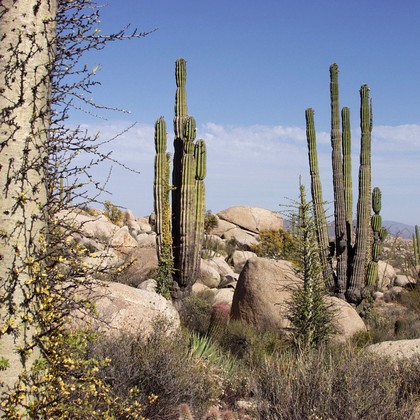
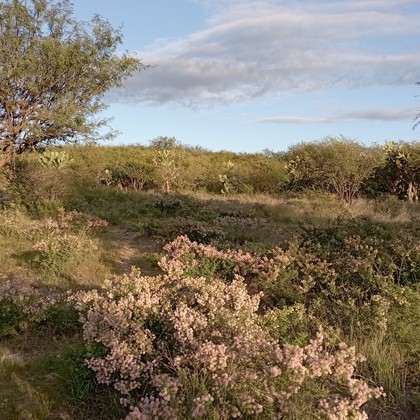
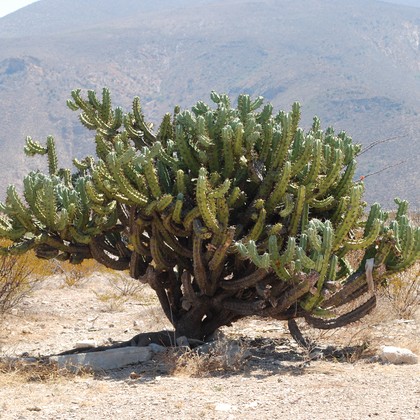
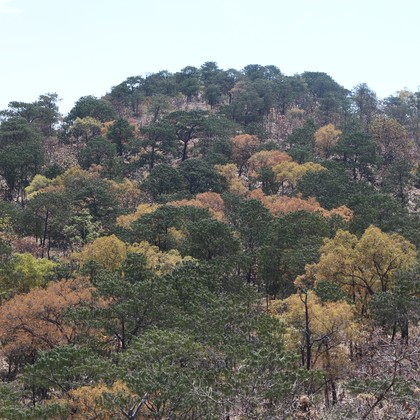
Dry, open landscapes with scrub and rocks: desert scrub, cactus forest, semi-desert grassland with scattered bushes, chaparral, dry slopes with oak and juniper, and rocky canyons; from sea level to about 2500 m. At night it sits on dirt roads, tracks and rocks and flies up from the ground at passing insects. The eggs are laid without a nest on bare ground, often under a bush or beside a rock.
Where the bird is most at home, classified by the vegetation units of Mexico and Central America.



Range and movements
In the guide area throughout Baja California, in Sonora and across the northern states and central plateau from Chihuahua, Coahuila, Nuevo León and Durango south to Zacatecas, San Luis Potosí, Aguascalientes, Jalisco, Guanajuato, Querétaro, Hidalgo and the State of México; a few records further south. In southern Baja California the subspecies is P. n. dickeyi. Outside the guide area in the western United States and south-western Canada; northern birds move away in winter, partly into northern Mexico.
- Resident
- Summer visitor (c. Apr–Sep)
- Winter visitor (c. Oct–Mar)
- Passage (Mar–Apr, Oct–Nov)
- dark = core range, pale = thinly spread
How and when to look
Driving slowly at night along dirt roads through desert and scrub gives the best chance, for example in Baja California Sur, Sonora and around Monterrey and Saltillo. The eye shines orange-red in torchlight. In spring and summer the song gives the bird away at dusk.
Conservation status
Not threatened. In the guide area locally common in dry regions. Many birds are killed by traffic when sitting on roads at night; loss of natural scrub to farming and building plays a part locally.
Scientific name
Phalaenoptilus nuttallii | (Audubon, 1844)
Audubon described the species in 1844 as Caprimulgus Nuttallii; because it was later moved to another genus, the author and year stand in brackets. The genus Phalaenoptilus was introduced in 1880 by Ridgway. Phalaenoptilus is Greek, from phalaina 'moth' and ptilon 'feather', after the soft, moth-like plumage. nuttallii honours the English botanist and ornithologist Thomas Nuttall (1786–1859). The specimen the first description was based on came from Upper Missouri between Fort Pierre and the mouth of the Cheyenne River, South Dakota.