All species › Owls › Owls › Fulvous Owl
Position in the tree Birds Aves › Birds with a flexible palate Neognathae › All other modern birds Neoaves › Landbirds Telluraves › Raptors, owls, kingfishers and woodpeckers Afroaves › Hawks and owls Hieraves
Fulvous Owl | Strix fulvescens
Vale bosuil | Búho leonado
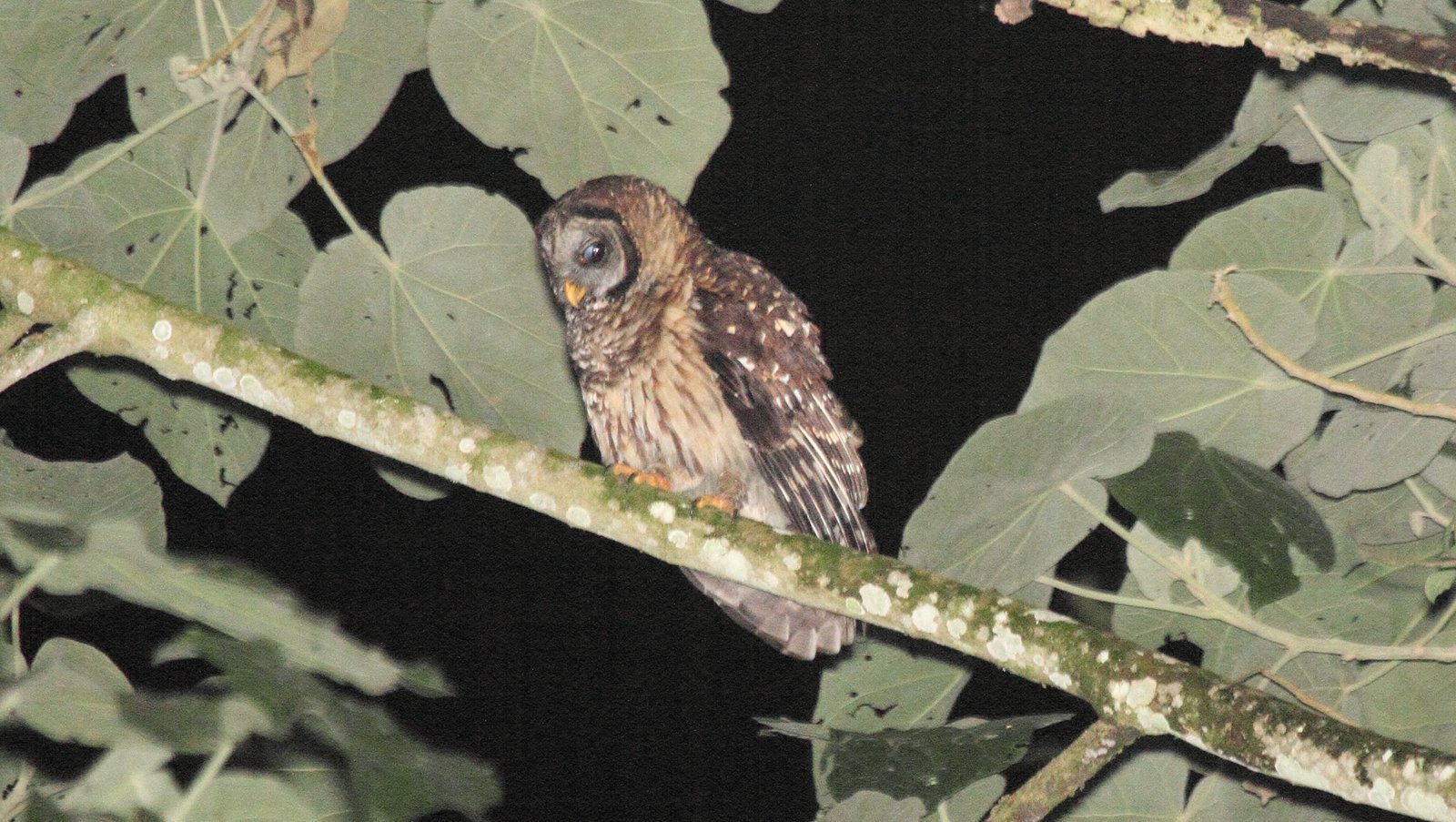
The Fulvous Owl is a fairly large, warm orange-brown forest owl with dark eyes and a round head without ear tufts. It lives only in the highlands of southern Mexico, Guatemala, El Salvador and Honduras, in cloud forest and pine-oak forest. It is closely related to the Barred Owl Strix varia and the Cinereous Owl Strix sartorii, but smaller and much warmer in colour. It is active at night.
Voice
The song is a series of four to ten short, deep hoots in a fixed, rapid rhythm, hoo-hoo hoo-hoo-hoo, swelling in volume. Pairs often call in duet, the female higher than the male. Also hoarse, groaning calls. Heard mainly at dusk and in the first hours after sunset, most often from January to April.
Recording: Zsombor Károlyi — CC BY-NC-SA 4.0 · converted to mono · xeno-canto
Identification
41–44 cm, with a round head without ear tufts and dark brown eyes. The plumage is warm buff to orange-brown. The facial disc is pale brown with dark concentric rings and a dark rim. Neck and upper breast are barred brown and buff; breast and belly are buff with dark brown streaks. The upperparts are rufous brown with buff bars and pale spots on the wings. The bill is yellow. Male and female are alike.
Confusion species
The Mottled Owl Strix virgata is smaller and darker brown and lacks bars on the upper breast. The Cinereous Owl Strix sartorii, found farther north, is larger and greyer. The Stygian Owl Asio stygius is darker, with ear tufts and yellow eyes. The Whiskered Screech Owl Megascops trichopsis is much smaller and has short ear tufts.
Habitat
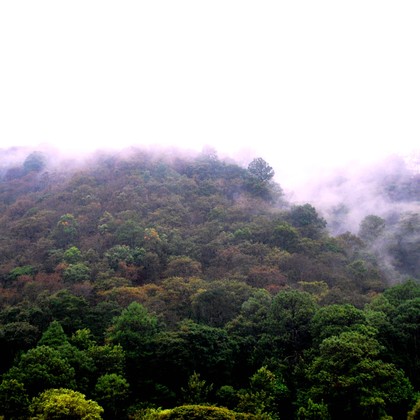
Humid cloud forest, pine-oak forest, oak forest and pine forest in the mountains, also forest edge, clearings and small woods among fields and coffee. It occurs from about 1,200 to 3,000 metres, mostly above 1,500 metres. It hunts small mammals, birds, frogs and large insects from a perch and nests in tree cavities.
Where the bird is most at home, classified by the vegetation units of Mexico and Central America.


Range and movements
Resident in the highlands of southern Mexico, in the Sierra Norte of Oaxaca and in Chiapas, and further in the mountains of Guatemala, El Salvador and Honduras. There are no confirmed records from Nicaragua. It does not occur outside these highlands.
- Resident
- dark = core range, pale = thinly spread
How and when to look
Around Lake Atitlán and in the highlands of Quetzaltenango in Guatemala, in the forests around San Cristóbal de las Casas in Chiapas and at La Cumbre in the Sierra Norte of Oaxaca the song is often heard at dusk, especially from January to April. It responds quickly to other owls in its territory and then sometimes perches in view on a bare branch at the forest edge.
Conservation status
Not threatened. The range is small and montane forest in the region is being lost to logging and clearing for fields, but the species can also live in fragmented forest and around farms with woodlots.
Scientific name
Strix fulvescens | (Sclater & Salvin, 1868)
Sclater & Salvin described the species in 1868 as Syrnium fulvescens; because it was later moved to another genus, the author and year stand in brackets. The genus Strix was introduced in 1758 by Linnaeus. Strix is the Latin word for 'owl'; in classical lore the strix was a night bird said to suck the blood of infants. fulvescens is Latin for 'tawny-ish', after the warm brown plumage. The specimen the first description was based on came from Guatemala.