All species › Waterfowl › Ducks, swans and geese › Mottled Duck
Position in the tree Birds Aves › Birds with a flexible palate Neognathae › Fowl Galloanserae
Mottled Duck | Anas fulvigula
Gevlekte eend | Pato tejano
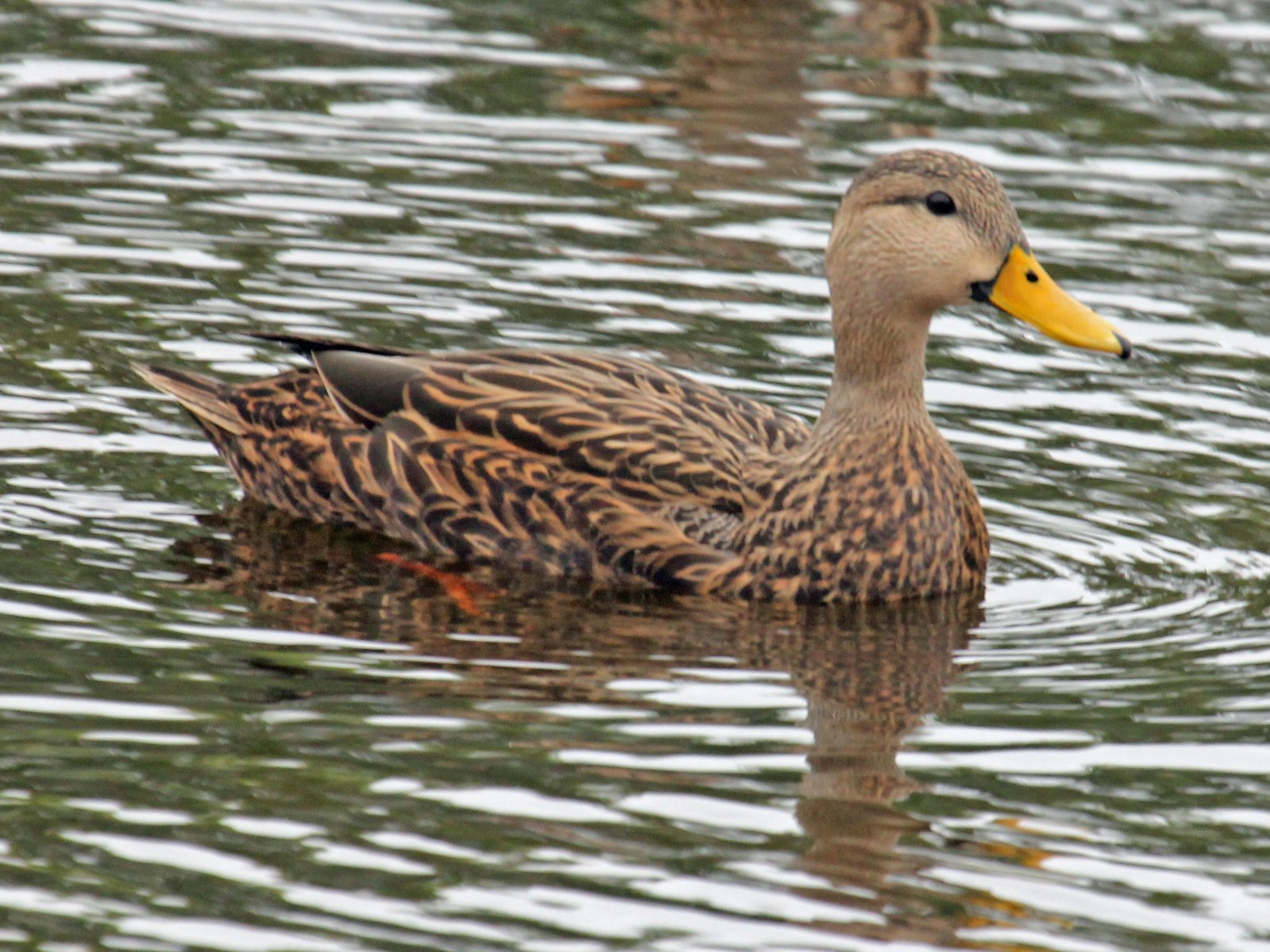
The Mottled Duck is a dark, brown relative of the Mallard of the coastal marshes around the Gulf of Mexico. In the guide area it reaches the southern limit of its range: it lives only on the coastal plain of Tamaulipas, in small numbers. As in Mexican Duck, the sexes look alike.
Voice
Like Mallard: the female gives a loud, descending quack-quack-quack, the male a soft, rasping raeb.
Recording: Paul Marvin — CC BY-NC-SA 4.0 · converted to mono · xeno-canto
Identification
44–61 cm. Dark mottled brown, with the plain, pale buff head and neck clearly paler than the body and almost unstreaked; only the crown and a narrow eye-stripe are dark. There is a small black spot at the gape. The male has a plain yellow to olive-yellow bill, the female an orangey bill with dark spots. The speculum is greenish-blue to purplish-blue, with no or a very narrow white leading edge and a narrow white trailing edge. The tail is dark and the underwings are white.
Confusion species
Mexican Duck Anas diazi has a finely streaked head and neck, no black spot at the gape and a distinct white leading edge to the speculum. The female Mallard Anas platyrhynchos is paler and more mottled, with a whitish tail, a streaked head and broad white borders to the speculum. The female Gadwall Mareca strepera is smaller, with a thinner bill and a white patch on the inner wing.
Habitat
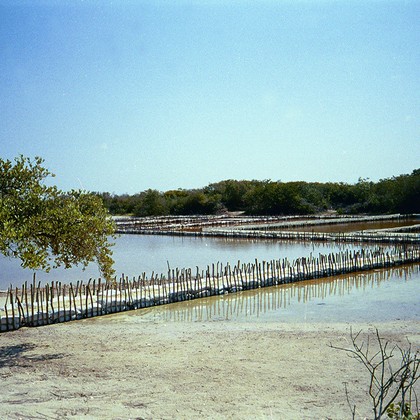
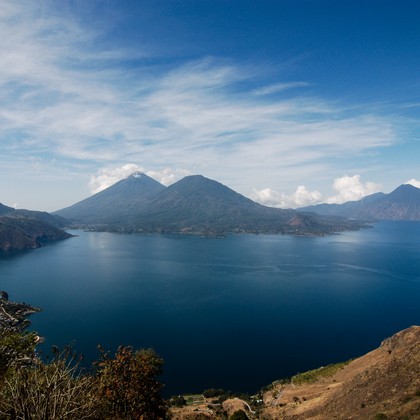
Fresh and brackish coastal marshes, wet grassland behind the coast, shallow lagoon margins and rice fields; rarely far from the coast. It nests on the ground in tall grass or marsh vegetation. It eats seeds, aquatic plants, snails and other invertebrates.
Where the bird is most at home, classified by the vegetation units of Mexico and Central America.



Range and movements
Only in north-eastern Mexico, mainly on the coastal plain of Tamaulipas along the Laguna Madre, with scattered records inland in Nuevo León; outside the breeding season sometimes further south into northern Veracruz. Outside the guide area along the Gulf coast of the United States, from Texas to Alabama, and as a separate population in Florida.
- Resident
- dark = core range, pale = thinly spread
How and when to look
In the coastal marshes and wet meadows around the Laguna Madre in Tamaulipas, usually in pairs or small groups. A dark duck with a plain pale head and a black spot at the gape is worth checking there.
Conservation status
Not threatened globally, but the population along the Gulf coast of the United States has declined sharply in recent decades through the loss of coastal marshes and interbreeding with Mallards. In Mexico it is a small population at the edge of the range.
Scientific name
Anas fulvigula | Ridgway, 1874
Ridgway described the species in 1874 and placed it straight away in the genus where it still stands. The genus Anas was introduced in 1758 by Linnaeus. Anas is the Latin word for 'duck'. fulvigula is Latin, from fulvus 'tawny' and gula 'throat', after the unmarked pale throat. The specimen the first description was based on came from St. Johns River, Florida.