All species › Nightjars › Nightjars and nighthawks › Spot-tailed Nightjar
Position in the tree Birds Aves › Birds with a flexible palate Neognathae › All other modern birds Neoaves › Birds of the elements Elementaves › Nightjars and swifts Strisores
Spot-tailed Nightjar | Antiurus maculicaudus
Vlekstaartnachtzwaluw | Chotacabras colipinto
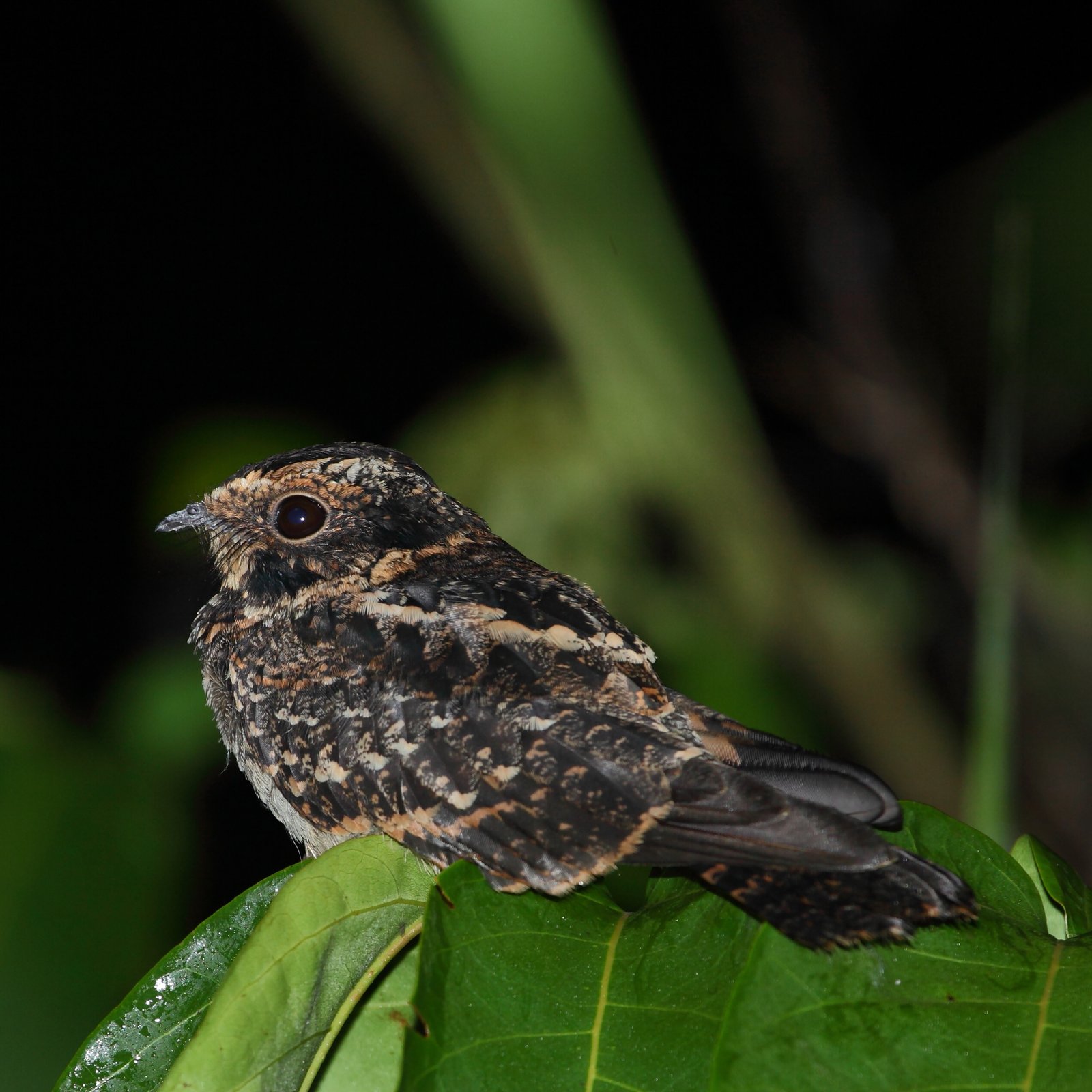
The Spot-tailed Nightjar is a small, pale nightjar of wet grasslands and pine savannas. In the guide area it lives in a few widely separated areas, in southern Mexico and in the Mosquitia of Honduras and Nicaragua, and it is little known there. Outside the breeding season it is rarely found.
Voice
The song is a very high, thin, insect-like pt-seeet or pit-sweet, repeated at short intervals. Because of its high pitch it is easily missed at a distance. Little is known about the calls from the guide area.
Recording: Jacob Wijpkema — CC BY-NC-SA 4.0 · shortened to the first 60 s, mono · xeno-canto
Identification
19–22 cm, with a fairly short, rounded tail. The crown is dark, almost blackish with fine streaks, and bordered by a conspicuous buff supercilium; on the nape lies a rufous to buff collar. The upperparts are brown and buff, with large black spots on the scapulars. The underparts are buff with fine dark barring. The male has broad white tips to the outer tail feathers and white spots on the underside of the tail, which give the species its name; the wing shows little or no white. In the female the white is lacking and the tail tips are buff.
Confusion species
Pauraque Nyctidromus albicollis is larger, with a longer tail and a white wing band. Eastern Whip-poor-will Antrostomus vociferus and Chuck-will's-widow Antrostomus carolinensis, which spend the winter in the guide area, are larger and darker, without the contrasting head pattern. Lesser Nighthawk Chordeiles acutipennis has pointed wings with a white band and hunts high in the air.
Habitat
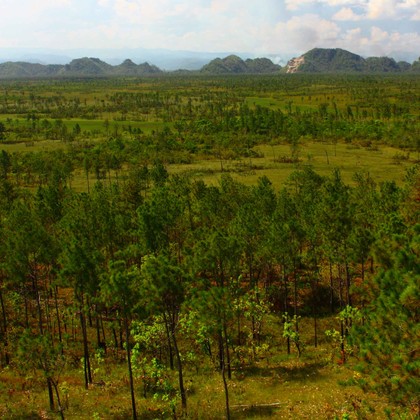
Wet grasslands, pine savannas with scattered pines and open, grassy ground near marshes and forest edges in the lowlands. It hunts in low flight or from the ground for insects. The egg is laid without a nest on the ground, among grass or in a bare patch.
Where the bird is most at home, classified by the vegetation units of Mexico and Central America.


Range and movements
Very local in the guide area. In Mexico in southern Veracruz and adjacent northern Oaxaca, with a few records from Chiapas; in the pine savannas of the Mosquitia in eastern Honduras and north-eastern Nicaragua. Records are scarce and the distribution is incompletely known. Outside the guide area locally in South America, from Colombia, Venezuela and the Guianas to Bolivia, Paraguay and south-eastern Brazil.
- Resident
- Summer visitor (c. Apr–Sep)
- Winter visitor (c. Oct–Mar)
- Passage (Mar–Apr, Oct–Nov)
- dark = core range, pale = thinly spread
How and when to look
The best chance is searching at dusk in spring, when males sing over wet grasslands and pine savannas. The high, thin song is the first sign; a torch then reveals the eyeshine on the ground.
Conservation status
Not threatened. The species has a large range in South America. In the guide area it is scarce and local, and conversion of wet grasslands and savannas to farmland reduces its habitat.
Scientific name
Antiurus maculicaudus | (Lawrence, 1862)
Lawrence described the species in 1862 as Stenopsis maculicaudus; because it was later moved to another genus, the author and year stand in brackets. The genus Antiurus was introduced in 1912 by Ridgway. Antiurus is Greek, from antios 'different' and oura 'tail', after the distinctive tail pattern. maculicaudus is Latin, from macula 'spot' and cauda 'tail', after the white spots in the male's tail. The specimen the first description was based on came from Pará, Brazil.