All species › Kingfishers, bee-eaters and rollers › Rollers › Abyssinian Roller
Abyssinian Roller | Coracias abyssinicus
Abessijnse scharrelaar | Carraca abisinia
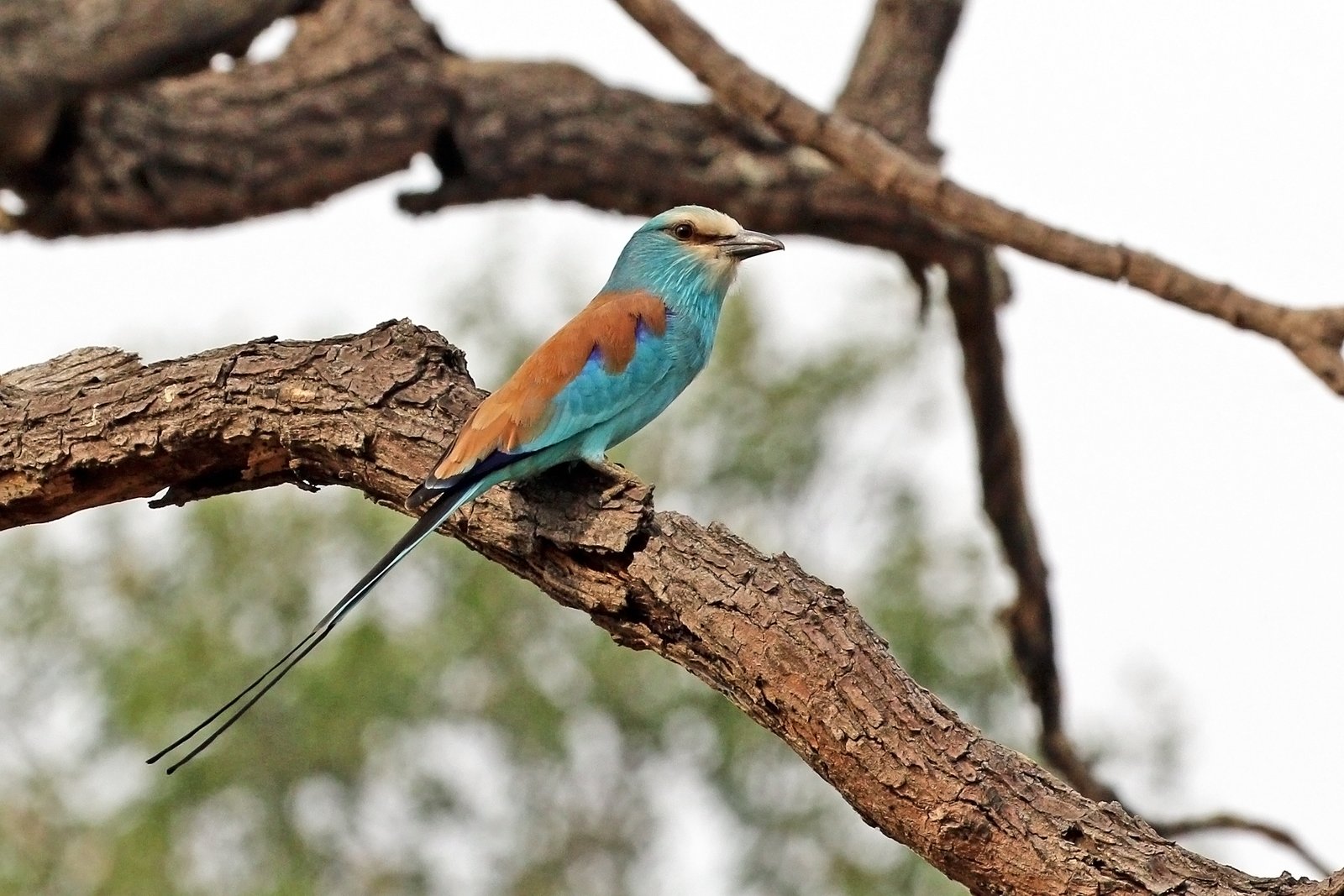
A slender, bright blue roller with two long tail streamers, which in the region is at home only in the Tihama and foothills of south-west Saudi Arabia and western Yemen. There it sits like a large shrike on wires and acacias along the roads; wanderers from the Sahel occasionally reach the southern edge of the Sahara.
Voice
A harsh, crow-like gak and a shrill, hoarse kraaaa; in display flight a rattling, rasping chatter as the bird tumbles and rolls.
Recording: Julien Birard — CC BY-NC-SA 4.0 · shortened to the first 60 s, mono · xeno-canto
Identification
Body about 28–30 cm, up to 45 cm including the streamers. Head, neck and underparts bright light blue to turquoise, with a whitish forehead and chin and a black eye stripe; back cinnamon-brown. In flight a deep violet-blue forewing and black flight feathers, as in European Roller. The outer tail feathers end in long, narrow, dark streamers; in juveniles these are missing or short, and the plumage is duller. Sexes alike.
Confusion species
European Roller (Coracias garrulus), which migrates through the same area, is slightly bulkier, has a square tail without streamers and no white forehead; young Abyssinian Rollers without streamers are tricky to separate and need a good view of the pale forehead and the slightly slimmer build. Indian Roller (Coracias benghalensis) has a brown breast and a pale wing band.
Habitat
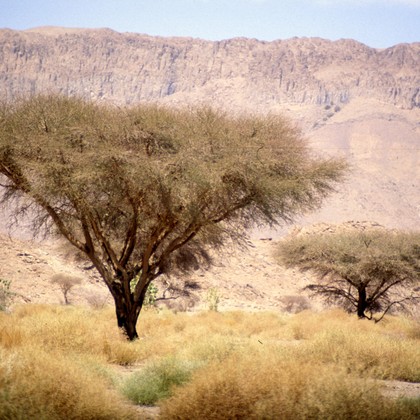
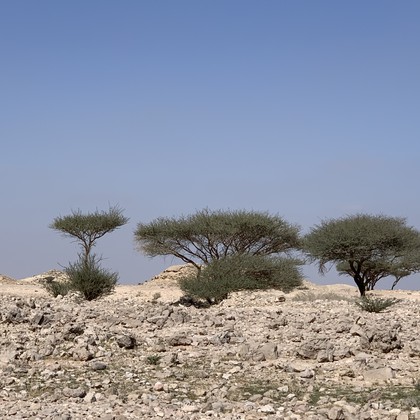
Dry, open country with scattered acacias: the thorn scrub and acacia savanna of the Tihama, farmland with wires and posts, village edges and the lower wadis of the western escarpment. Hunts large insects, lizards and small rodents from a high perch, and is attracted to bush fires to catch fleeing prey. Nests in holes in trees, termite mounds and buildings.
Where the bird is most at home, classified by the habitats of North Africa and the Middle East.

Range and movements
Resident in south-west Saudi Arabia, on the Tihama coastal plain and in the foothills of Asir and Jizan, and in western Yemen, from the Tihama into the lower wadis of the escarpment. Elsewhere in the region a vagrant from the Sahel: old specimens from Nubia and recent sightings in the far south of Algeria (Bordj Badji Mokhtar, 2025) and south-west Egypt (2026). Beyond the region across the whole Sahel and Sudan zone from Senegal and southern Mauritania to Ethiopia, Somalia and northern Kenya; the northernmost birds move south after the rains.
- Resident
- Winter visitor (c. Apr–Sep)
- Passage (Mar–Apr, Oct–Nov)
- dark = core range, pale = thinly spread
How and when to look
In the Tihama, for example around Jizan or between Al Hudaydah and Zabid, drive slowly past fields and acacia scrub and check the wires: the birds sit conspicuously and are easy to approach. Present all year, but noisiest in spring with its display flights.
Conservation status
Not globally threatened and common in Africa. In Arabia restricted to a narrow strip along the Red Sea, where it seems to do well in open farmland; little is known about numbers in Yemen because of the war.
Scientific name
Coracias abyssinicus | Hermann, 1783
Hermann described the species in 1783 and placed it straight away in the genus where it still stands. The genus Coracias was introduced in 1758 by Linnaeus. Coracias comes from Ancient Greek korakias, from korax 'raven, crow'; the Greeks used it of a corvid, probably the red-billed chough. abyssinicus means 'Abyssinian', after Abyssinia, the old name of Ethiopia. The specimen the first description was based on came from Ethiopia.