All species › Passerines › Crows and jays › Asir Magpie
Asir Magpie | Pica asirensis
Asirekster | Urraca de Asir
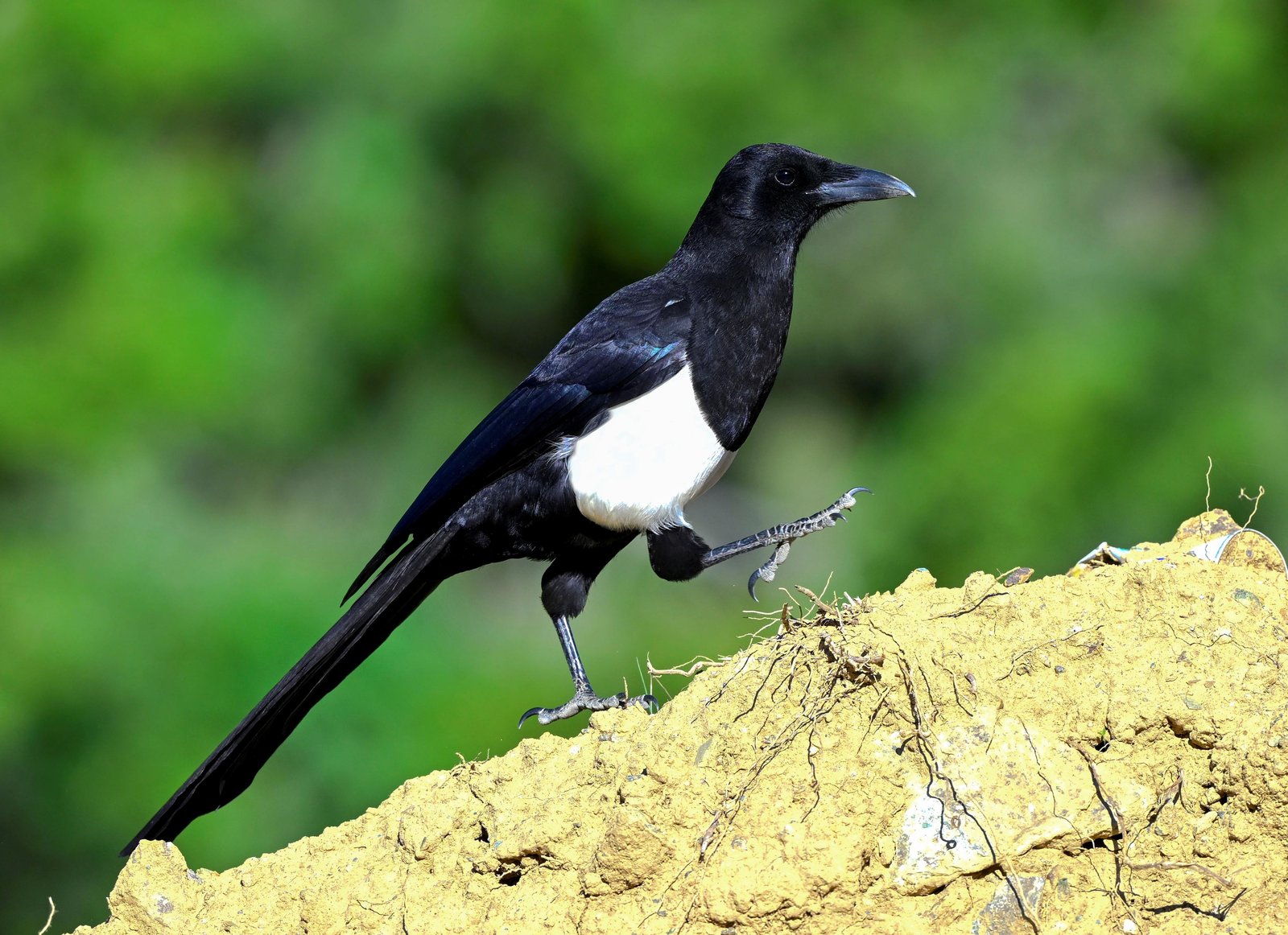
The only bird species found solely in Saudi Arabia: a dark magpie of the juniper forests of the Asir mountains, with an estimated population of only about 135 pairs. Long treated as a subspecies of Eurasian Magpie, it is now a separate, threatened species.
Voice
A mournful, drawn-out screech and a loud, nasal quaynk-quaynk, clearly different from the rattling chak-chak of Eurasian Magpie.
Recording: Mohannad Baghlaf — CC BY-NC-SA 4.0 · converted to mono · xeno-canto
Identification
45–46 cm. Built like a magpie with a long, graduated tail, but darker and heavier: the white on the scapulars is restricted, the rump is black, the bill is longer and stouter and the legs are sturdier. Belly and flanks white, otherwise black with a blue to purplish gloss on wings and tail. Sexes alike; juveniles are duller, with a shorter tail.
Confusion species
No other magpie occurs in south-west Arabia; Eurasian Magpie (Pica pica) is only a rare vagrant in eastern Arabia. Pied Crow (Corvus albus) is also black and white, but is a stocky crow with a short tail, a white breast and a white collar.
Habitat
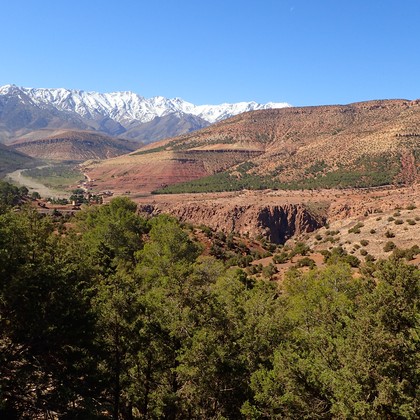
Dense, shady forest of African juniper and mixed juniper and acacia woodland in valleys and wadis, mostly between 2,400 and 3,000 m, sometimes down to 1,800 m. Avoids slopes steeper than about 30 degrees. Feeds on the ground and in the shrub layer; also attracted to scraps at picnic sites and rubbish bins.
Where the bird is most at home, classified by the habitats of North Africa and the Middle East.
Range and movements
Only in the Asir mountains of south-western Saudi Arabia. Formerly spread over some 400 km from Taif in the north to beyond Abha in the south; today most of the population lives in a narrow strip of highland forest about 37 km long between An-Namas and Billasmar. There are no confirmed records from adjacent Yemen.
- Winter visitor (c. Apr–Sep)
- dark = core range, pale = thinly spread
How and when to look
Look for it early in the morning in the juniper forests along the road between An-Namas and Billasmar, where small groups forage along forest edges and picnic sites. Keep away from nests and follow the advice of local managers: every pair counts.
Conservation status
Endangered (EN, BirdLife International 2022). The population is estimated at about 135 pairs and declining. Threats are the loss of juniper forest (which barely regenerates), fragmentation by tourism, roads and urban growth, climate change, and poor nutrition of young through dependence on human waste.
Scientific name
Pica asirensis | Bates, 1936
Bates described the species in 1936 and placed it straight away in the genus where it still stands. The genus Pica was introduced in 1760 by Brisson. Pica is the Latin word for the magpie. asirensis refers to Asir, the mountain region of southwestern Saudi Arabia. The specimen the first description was based on came from the Asir Mountains, Saudi Arabia.