All species › Passerines › Chats and flycatchers › Black Scrub Robin
Black Scrub Robin | Cercotrichas podobe
Zwarte waaierstaart | Alzacola negro
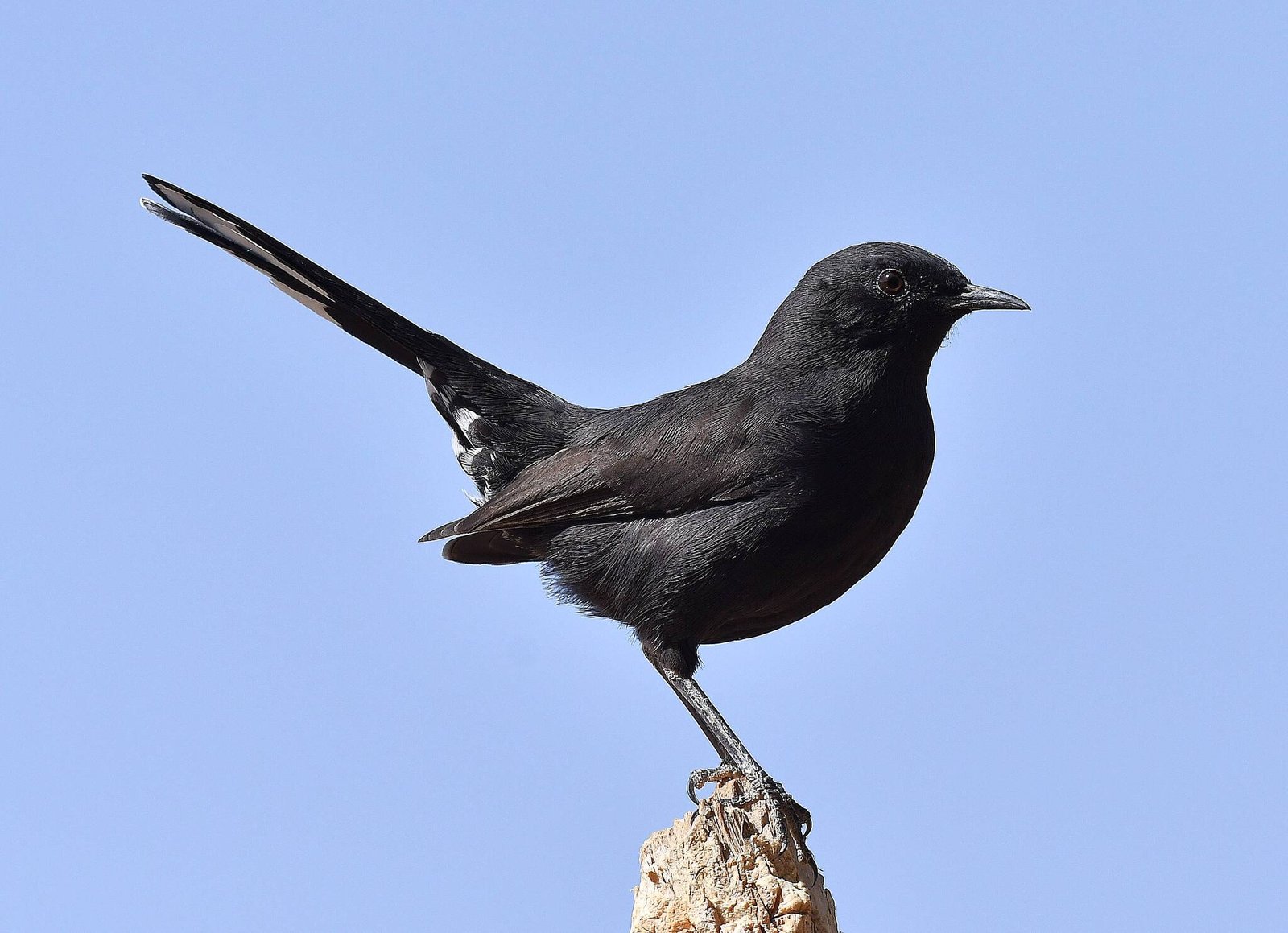
The Black Scrub Robin is a slim, all-dark songbird with a long tail that it constantly cocks, fans and lays over its back. It belongs to the acacia scrub of the Sahel and of the Arabian coastal plains along the Red Sea, and turns up increasingly as a vagrant in Egypt and Israel.
Voice
The song is a varied, melodious series of thrush-like whistles and short phrases, with mimicry, often from a high perch and also at dusk. Calls are a hard tchek and a harsh rattling trrr.
Recording: Zsombor Károlyi — CC BY-NC-SA 4.0 · converted to mono · xeno-canto
Identification
20–22 cm, almost half of it tail. The entire plumage is dull black to blackish-brown, with narrow white tips to the outer tail feathers that show mainly when the tail is fanned. In flight it shows rufous-brown bases to the primaries, a feature of the Arabian subspecies melanoptera that is often hidden on perched birds. The bill is fine and black, the legs long and dark. Sexes are alike; juveniles are browner and duller. It often perches conspicuously on top of a bush or a post and runs or hops briskly on the ground, always with its tail raised and fanned.
Confusion species
Its long, constantly cocked tail makes it hard to confuse. Black Wheatear (Oenanthe leucura) and White-crowned Wheatear (Oenanthe leucopyga) are also black, but have a white rump and much white in the tail and are stockier. A male Black Redstart (Phoenicurus ochruros) has an orange-red tail and is smaller. Blackstart (Oenanthe melanura) also fans its tail but is grey with a black tail.
Habitat
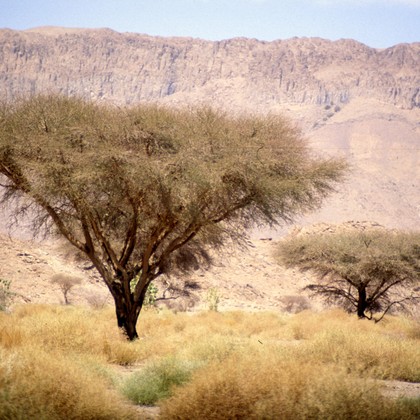
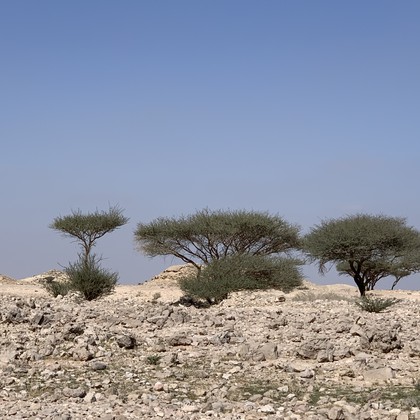
Dry acacia and thorn scrub on coastal plains, in wadis and at the foot of the mountains, often near villages, field edges, gardens and Prosopis hedges. Avoids the closed juniper woodland of the high summits. Vagrants in Egypt and Israel favour hotel and park gardens. Feeds on insects taken from the ground.
Where the bird is most at home, classified by the habitats of North Africa and the Middle East.

Range and movements
In the region resident in western and south-western Saudi Arabia: along the whole Tihamah and Red Sea coast north to about Yanbu, in the Hejaz and the lower parts of the Asir, and inland regularly to Riyadh; very rare but possibly spreading in the Eastern Province. Also in western and southern Yemen. On the Egyptian Red Sea coast (El Gouna, Marsa Alam, Berenice, Gebel Elba) a rare, erratic visitor since 2000, mainly in winter and spring; at Eilat in Israel almost annual with one or two birds in March and April. Only two records in Kuwait (2006 and 2010). Beyond the region resident in the Sahel from Senegal to Sudan and Eritrea, moving slightly further south to Ethiopia and Somalia in winter.
- Resident
- Summer visitor (c. Apr–Sep)
- Winter visitor (c. Oct–Mar)
- Passage (Mar–Apr, Oct–Nov)
- dark = core range, pale = thinly spread
How and when to look
In the Tihamah of Saudi Arabia or Yemen in any roadside acacia scrub: look for a black bird cocking and fanning its tail on top of a bush. In Israel in March–April at the Eilat ringing station, Holland Park and the fields of Yotvata and Lotan.
Conservation status
Not globally threatened. In Arabia it appears to be spreading north and east, and the growing number of records in Egypt and Israel also points to a slight northward expansion.
Scientific name
Cercotrichas podobe | (Müller, 1776)
Müller described the species in 1776 as Turdus podobe; because it was later moved to another genus, the author and year stand in brackets. The genus Cercotrichas was introduced in 1831 by Boie. Cercotrichas is Greek, from kerkos 'tail' and trikhas 'thrush'. No reliable explanation of podobe has been found. The specimen the first description was based on came from Senegal.