All species › Passerines › Buntings › Corn Bunting
Corn Bunting | Emberiza calandra
Grauwe gors | Triguero
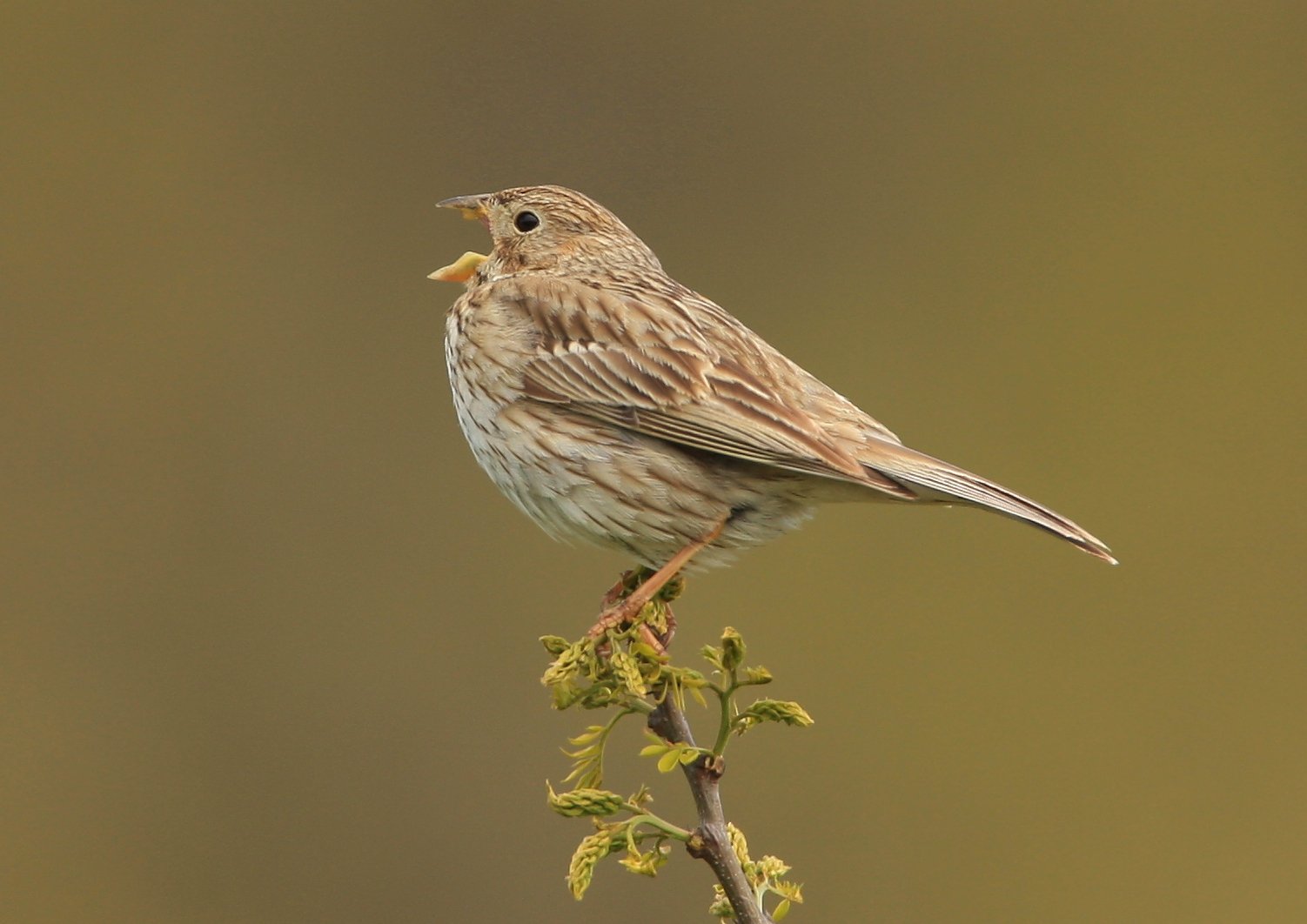
Corn Bunting is the big, inconspicuously grey-brown bunting of cereal country, delivering its jangling key-bunch song from every wire and thistle. In the Maghreb and the Levant it is one of the commonest birds of farmland; in winter northern birds move south as far as Egypt, northern Arabia and the Gulf states.
Voice
The song starts with a few hesitant ticks that accelerate into a dry, glassy jangle, like a bunch of keys: tik… tik-tik-tsississississ. It sings from February into July, even in the heat of the day, from a wire, post, thistle or stone. The call is a short, hard kwit or tchip, often repeated in a short series in flight.
Recording: João Ferreira Tomás — CC BY-NC-SA 4.0 · converted to mono · xeno-canto
Identification
16–19 cm. Bulky and heavy, with a thick pale conical bill and a large, almost unmarked head. Plain grey-brown to sandy brown with dark streaks on back, breast and flanks, often merging into a vague spot in the centre of the breast; the belly is off-white. No white in the tail. Sexes alike, the male larger. Flies heavily and low, often with dangling legs, especially in a short display flight.
Confusion species
The lack of white in the tail sets it apart from most buntings; only Black-headed Bunting (Emberiza melanocephala) and Red-headed Bunting (Emberiza bruniceps) share it, but they are slimmer, unstreaked below and yellow under the tail. Calandra Lark (Melanocorypha calandra) is just as bulky and sandy, but has a black neck patch and a white trailing edge to the wing. Eurasian Skylark (Alauda arvensis) and Crested Lark (Galerida cristata) have a thin bill and a short or long crest. A female House Sparrow (Passer domesticus) or Spanish Sparrow (Passer hispaniolensis) is smaller, shorter-tailed and does not sit singing on a wire for hours.
Habitat
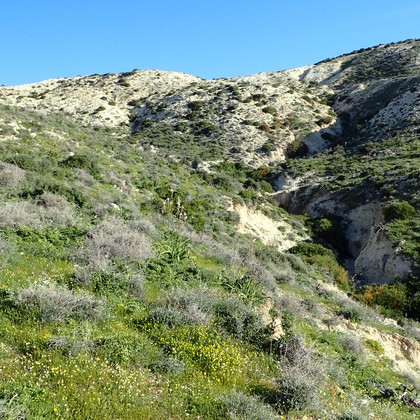
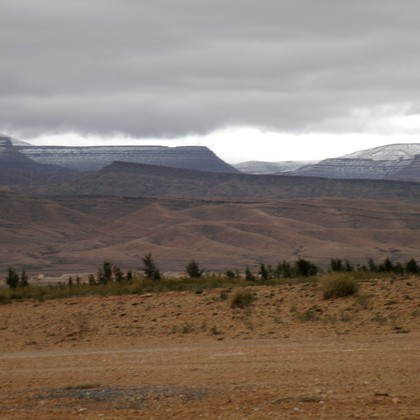
Open farmland with cereals and fallow, meadows, alfalfa and irrigated land, rough verges and dry herbaceous steppe and alfa-grass plateaux, up to about 2,000 m in the Atlas. In winter in flocks on stubble and in irrigated land at the desert edge.
Where the bird is most at home, classified by the habitats of North Africa and the Middle East.

Range and movements
Year-round in Morocco, northern Algeria, Tunisia and northern Libya (Tripolitania and Cyrenaica), in Israel, Samaria and Judea, Lebanon, Syria, northern and western Jordan and Iraq. In winter northern birds join them, and it occurs as a winter visitor in Egypt (mainly the Nile Delta and the north coast), northern Saudi Arabia, Kuwait and Bahrain; in Qatar, the United Arab Emirates and Oman it is rare. Beyond the region it breeds from western Europe and the Canary Islands to Central Asia.
- Resident
- Summer visitor (c. Oct–Mar)
- Winter visitor (c. Apr–Sep)
- Passage (Mar–Apr, Oct–Nov)
- dark = core range, pale = thinly spread
How and when to look
In spring and summer there is no need to search: drive past cereal fields in Morocco or the Levant and listen for the key-bunch jangle from the wires. In winter look for flocks on stubble, often with larks and sparrows.
Conservation status
Not globally threatened (IUCN: Least Concern). Locally common in the region, but, as in Europe, sensitive to agricultural intensification and the loss of fallow land and field margins.
Scientific name
Emberiza calandra | Linnaeus, 1758
Linnaeus described the species in 1758 and placed it straight away in the genus where it still stands. He introduced the genus Emberiza in that same work. Emberiza comes from Old German Embritz, a name for a bunting. calandra is from Ancient Greek kalandros, the calandra lark. The specimen the first description was based on came from Sweden.