All species › Hoopoes and hornbills › Hoopoes › Eurasian Hoopoe
Eurasian Hoopoe | Upupa epops
Hop | Abubilla
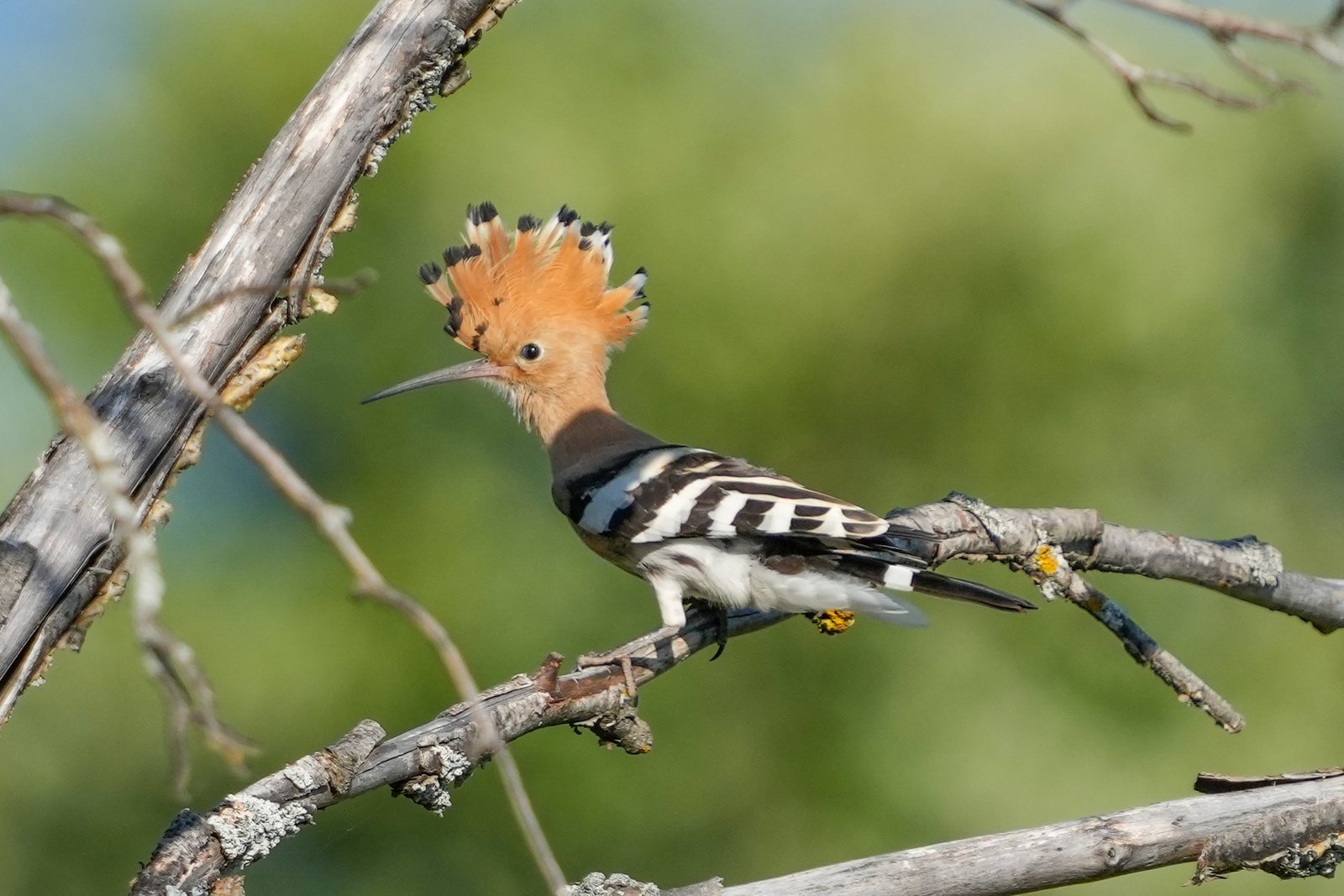
An unmistakable orange-pink bird with a fan-shaped crest and black-and-white barred wings, found throughout the region wherever there are a few trees or walls: from the olive groves of Morocco to the date gardens of Arabian oases. It is resident in Egypt and Arabia, mainly a summer visitor in the Maghreb and the Levant, and in spring it crosses the Sahara and passes through the Jordan Valley in large numbers. It is the national bird of Israel.
Voice
The song is a soft, far-carrying, hollow poop-poop-poop, usually three (sometimes two or four) syllables, often repeated endlessly from a roof or branch; its name in many languages derives from it. Also a hoarse, cat-like shaar and a dry chatter when excited.
Recording: Zsombor Károlyi — CC BY-NC-SA 4.0 · converted to mono · xeno-canto
Identification
Head, neck and breast warm orange-pink to cinnamon, with a long crest of black-tipped orange feathers that usually lies flat and is raised like a fan when excited. Back, wings and tail are boldly barred black and white; the tail is black with a single white band. The bill is long, thin and slightly decurved. The sexes are alike; the female is a little duller. Striking in flight: broad, rounded black-and-white wings and a butterfly-like, undulating flight with irregular wingbeats. The resident birds of the Nile Valley (subspecies major) are larger and longer-billed, with somewhat deeper-coloured plumage.
Confusion species
Hardly confusable in the region. Greater Hoopoe-Lark (Alaemon alaudipes) also has a long decurved bill and black-and-white wings in flight, but is sandy, lacks the crest and runs upright like a wheatear. A flying Eurasian Jay (Garrulus glandarius) also shows a white rump and undulating flight, but has a blue wing patch and no barred wings.
Habitat
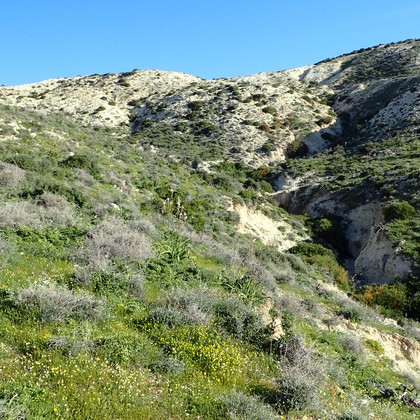
Open, warm country with scattered trees and bare or short-grassed ground: olive and fruit orchards, date gardens and oases, garrigue, steppe with scattered trees, wadis, villages, parks and gardens, far into the desert where there is water and shade. It feeds on the ground, probing the soil with its long bill for larvae, crickets and beetles. Nests in holes in trees, walls, rocks and buildings.
Where the bird is most at home, classified by the habitats of North Africa and the Middle East.


Range and movements
Breeds throughout northern Morocco, Algeria and Tunisia, from the coastal plains to high in the Atlas and on the high plateaux, and in the oases on the northern edge of the Sahara; also along the Libyan coast and in Cyrenaica. In Egypt a common resident in the Nile Valley, the Delta and the oases of the Western Desert. In the east it breeds in Israel, the Palestinian territories, Jordan, Lebanon, Syria and Iraq, and patchily across Arabia: in the western mountains of Saudi Arabia, in Yemen, in Oman and in the oases and gardens of the Emirates; in Kuwait, Qatar and Bahrain mainly a passage migrant and winter visitor, with a few breeding records. On passage (February – April and August – October) everywhere, including the heart of the Sahara, and in large numbers at Eilat and in the Jordan Valley. Also breeds across almost all of Europe and temperate and southern Asia; northern birds winter in the Sahel and East Africa.
- Resident
- Summer visitor (c. Oct–Mar)
- Winter visitor (c. Apr–Sep)
- Passage (Mar–Apr, Oct–Nov)
- dark = core range, pale = thinly spread
How and when to look
In March and April migrants turn up on every lawn and in every date garden along the Saharan fringe and in the Negev; listen for the song, which carries for hundreds of metres. In Egypt they are in the gardens and fields along the Nile all year round, even in central Cairo and Luxor.
Conservation status
Not globally threatened and widespread in the region. Locally declining through agricultural intensification, the loss of old trees and walls with nest holes, and pesticide use; in gardens and villages it benefits from irrigation and planting.
Scientific name
Upupa epops | Linnaeus, 1758
Linnaeus described the species in 1758 and placed it straight away in the genus where it still stands. He introduced the genus Upupa in that same work. Upupa is the Latin name of the hoopoe, formed in imitation of its call oop-oop-oop. epops is the Greek word for the hoopoe, likewise formed in imitation of the call. The specimen the first description was based on came from Sweden.