All species › Birds of prey › Hawks, eagles and kites › Lesser Spotted Eagle
Lesser Spotted Eagle | Clanga pomarina
Schreeuwarend | Águila pomerana
The Lesser Spotted Eagle is a medium-sized brown eagle whose world population migrates almost entirely through the Levant to its winter quarters in southern Africa. At the end of September tens of thousands of birds sometimes stream over northern and central Israel in a single day, one of the greatest raptor spectacles on earth.

Voice
Usually silent on migration. In the breeding area a high, dog-like yapping, kyeep-kyeep or yep-yep.
Recording: Uku Paal — CC BY-NC-SA 4.0 · shortened to the first 60 s, mono · xeno-canto
Identification
55–65 cm, wingspan 145–168 cm. Smaller and slimmer than Greater Spotted Eagle, with somewhat narrower wings. The adult is mid-brown with a paler, tawny head and paler wing coverts; from below in flight the coverts are paler than the dark flight feathers, often with a double pale comma at the carpal. From above a pale patch at the base of the primaries and a narrow white U above the tail. The juvenile is darker chocolate brown with a creamy nape patch, a single row of small white spots on the greater coverts and a narrow white trailing edge. Glides with the hands slightly drooped.
Confusion species
Greater Spotted Eagle (Clanga clanga) is larger and darker, with underwing coverts as dark as or darker than the flight feathers and, in juveniles, large rows of white drops. Steppe Eagle (Aquila nipalensis) is larger, with longer wings and a yellow gape reaching behind the eye. Common Buzzard (Buteo buteo), especially the migratory subspecies vulpinus, has a shorter neck, black carpal patches and a barred tail; Black Kite (Milvus migrans) has a forked tail.
Habitat
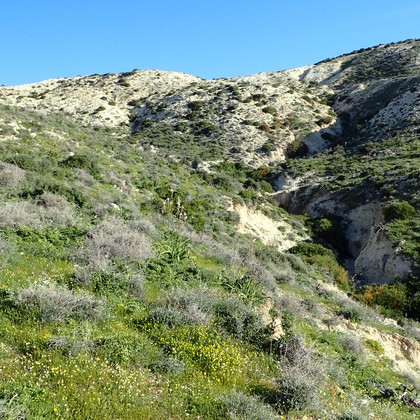
Breeds in forests interspersed with meadows and fields. On migration over hills and valleys; rests and feeds on fields, in orchards and riverine woodland.
Where the bird is most at home, classified by the habitats of North Africa and the Middle East.


Range and movements
A numerous passage migrant in the Levant: in Israel between mid-September and mid-October tens of thousands to more than a hundred thousand birds pass every autumn, mainly over the hills of Galilee, Samaria and the coastal plain; in spring thousands pass at Eilat. Also numerous over Lebanon and Syria, and across Sinai and the Gulf of Suez along the Egyptian Red Sea coast south to Sudan. Less numerous in Jordan and north-west Saudi Arabia; rare in the Gulf states, Oman and Yemen. Rare in the Maghreb, with a few birds a year at the Strait of Gibraltar. Breeds from Germany and the Balkans to Russia, Turkey and the Caucasus; winters in East and southern Africa.
- Resident
- Summer visitor (c. Oct–Mar)
- Winter visitor (c. Apr–Sep)
- Passage (Mar–Apr, Oct–Nov)
- dark = core range, pale = thinly spread
How and when to look
In the last days of September go to a count site in northern or central Israel, such as Kfar Qasem; around midday huge kettles of eagles circle on the thermals. In spring the mountains north of Eilat are best.
Conservation status
Not globally threatened. The species is vulnerable to shooting on migration, particularly in Lebanon and Syria, to electrocution and to the loss of extensively managed grassland and old forest in the breeding range.
Scientific name
Clanga pomarina | (Brehm, 1831) (GBIF: Aquila pomarina)
Brehm described the species in 1831 as Aquila Pomarina; because it was later moved to another genus, the author and year stand in brackets. The genus Clanga was introduced in 1857 by Adamowicz. Clanga is from Ancient Greek klangos, a kind of eagle mentioned by Aristotle; others derive it from klangē, 'scream'. pomarina refers to Pomerania, the former Prussian province the type specimen came from. The specimen the first description was based on came from Pomerania.