All species › Pelicans, herons and ibises › Herons and bitterns › Medium Egret
Medium Egret | Ardea intermedia
Middelste zilverreiger | Garceta intermedia
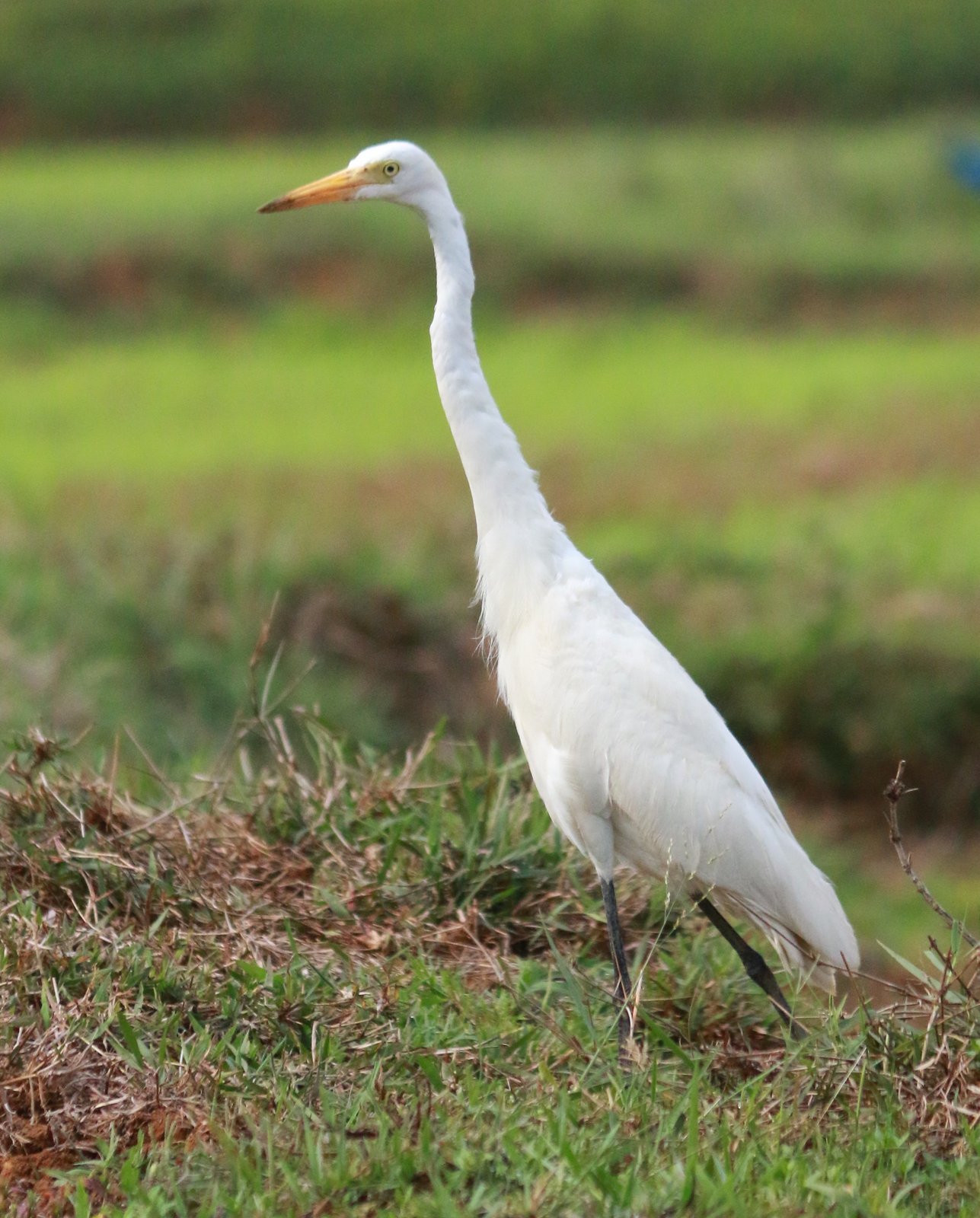
A medium-sized white heron from South and East Asia that appears regularly in the region only in the south-east corner. It is easily overlooked among Great and Little Egrets; pay attention above all to head shape and gape line.
Voice
Usually silent; when flushed a dry, short kwark or krak.
Recording: Stanislas Wroza — CC BY-NC-SA 4.0 · converted to mono · xeno-canto
Identification
All white, smaller and more compact than Great Egret, with a rounder head, a shorter, thicker bill and a less strongly kinked neck, often held in a soft S-shape. Outside the breeding season the bill is yellow, often with a dark tip, and the legs are black. The gape line ends below or just behind the eye, not far behind it as in Great Egret. In breeding plumage it carries long lacy plumes on the back and breast, and in this Asian form the bill becomes largely black.
Confusion species
Great Egret (Ardea alba) is larger, with a longer, dagger-shaped bill, an angular head, a strongly kinked, very long neck and a gape line extending well behind the eye. Little Egret (Egretta garzetta) is smaller, with a slender black bill and yellow feet. Cattle Egret (Ardea ibis) is smaller and stocky, with a short neck and short legs. The African Yellow-billed Egret (Ardea brachyrhyncha), which may reach south-west Arabia, is hardly separable in the field and keeps a yellow bill in breeding plumage.
Habitat
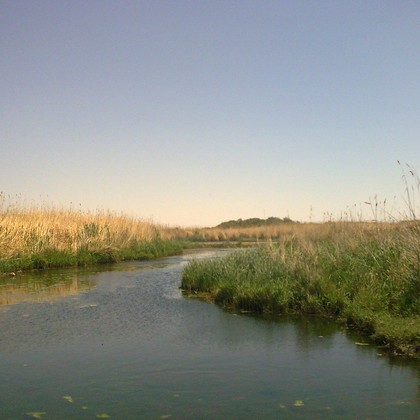
Fresh and brackish water with shallow margins: sewage ponds, pools, creeks, mangrove edges, flooded fields and rice paddies. Usually hunts alone, standing or slowly stalking.
Where the bird is most at home, classified by the habitats of North Africa and the Middle East.


Range and movements
In Oman a scarce but regular winter visitor, especially in Dhofar (the khawrs around Salalah), where numbers are increasing, and also on the Batinah coast; scarce in the United Arab Emirates. Rare elsewhere in Arabia: records from south-west Saudi Arabia and Yemen are now mostly attributed to the African Yellow-billed Egret, though the Asian species is not ruled out there. No certain records are known from the north of the region. Beyond the region it breeds from Pakistan and India through South-East Asia to China and Japan.
- Resident
- Winter visitor (c. Apr–Sep)
- dark = core range, pale = thinly spread
How and when to look
In Dhofar in winter, check the groups of white herons in the khawrs, such as Khawr Rawri and Khawr Taqah: a Medium Egret stands out by its round head and short bill next to Great Egrets. Side-on photographs of the head show the length of the gape line best.
Conservation status
Not globally threatened. In the region a small, probably increasing winter visitor; because of the taxonomic split into an Asian species and African and Australian ones, the identity of older records in Arabia is often uncertain.
Scientific name
Ardea intermedia | Wagler, 1829 (GBIF: Egretta intermedia)
Wagler described the species in 1829 and placed it straight away in the genus where it still stands. The genus Ardea was introduced in 1758 by Linnaeus. Ardea is the Latin word for 'heron'. intermedia is Latin for 'intermediate', for its size between that of the great egret and the little egret. The specimen the first description was based on came from Java, Indonesia.