All species › Falcons › Falcons › Peregrine Falcon
Peregrine Falcon | Falco peregrinus
Slechtvalk | Halcón peregrino
In North Africa and the Middle East the Peregrine Falcon is above all a falcon of cliffs, gorges and sea cliffs. Many of the breeding birds in the region belong to the small, pale Barbary Falcon (F. p. pelegrinoides), formerly treated as a separate species and now regarded as a subspecies of the Peregrine; the dark Mediterranean form brookei also breeds in the Maghreb, and northern Peregrines arrive in winter.
Voice
At the nest a loud, harsh and sustained kek-kek-kek; the Barbary Falcon sounds higher and sharper, rek-rek-rek. A plaintive ee-chip during food passes. Usually silent outside the breeding season.
Recording: Frantz Barrault — CC BY-NC-SA 4.0 · converted to mono · xeno-canto
Identification
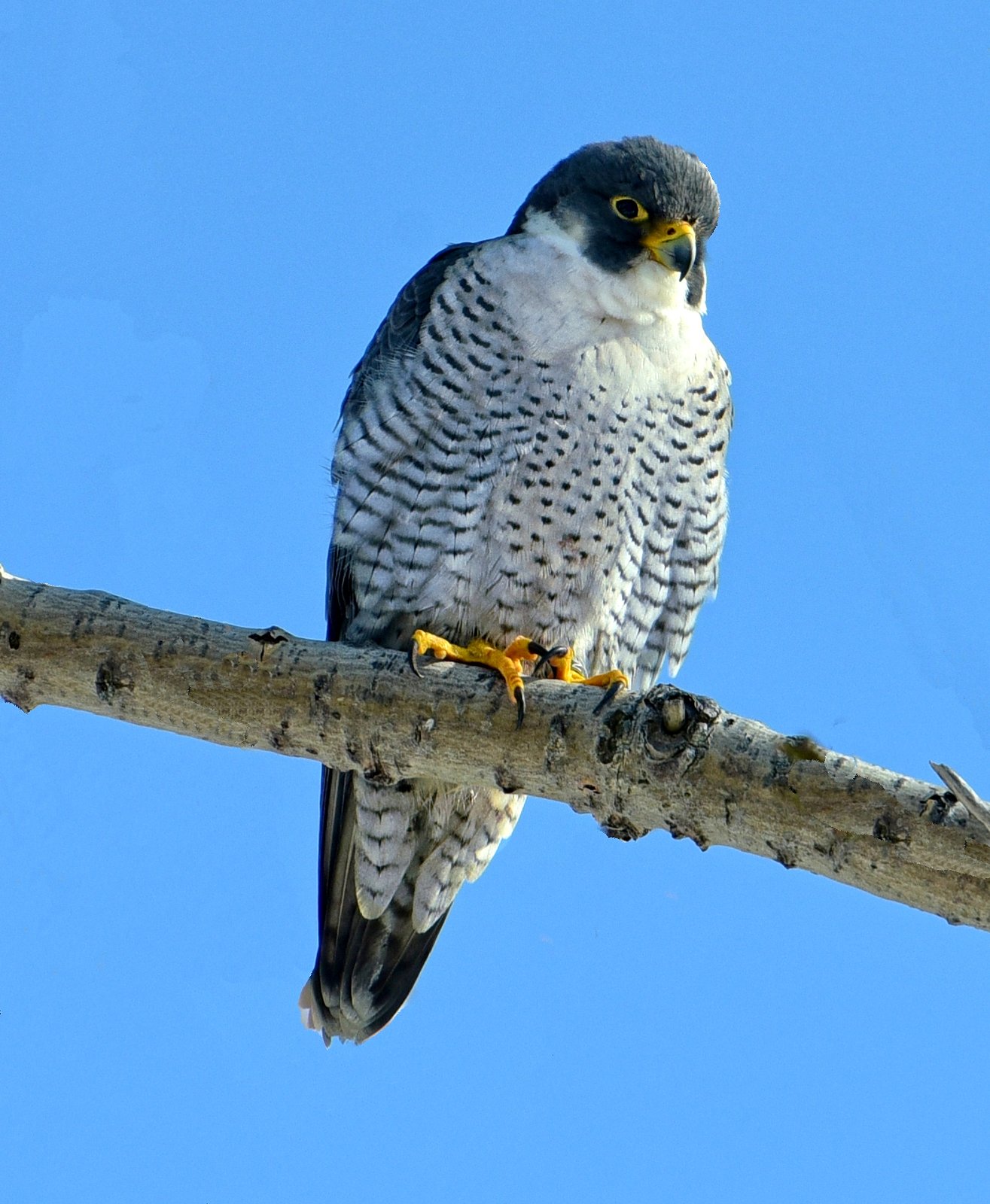
33–51 cm, wingspan 76–113 cm; the female is clearly larger than the male. A compact, heavily built falcon with a broad chest, fairly short tail and broad, pointed wings. The adult is slate-grey to blue-grey above and white to cream below with fine barring, with a broad black moustache on a white cheek. The Barbary Falcon is smaller and paler blue-grey above, with a rufous nape and hindcrown, a narrower moustache and a buff wash with sparse barring below. The North African brookei is dark slate-grey with a pinkish-buff wash below and often a rufous nape patch. Juveniles are brown above and streaked rather than barred below; young Barbary Falcons are more finely and lightly streaked.
Confusion species
Lanner Falcon (Falco biarmicus) is slimmer and longer-tailed, with a rufous or creamy crown, a thin moustache, spotted rather than barred underparts and a slower, more gliding flight; the Barbary Falcon with its rufous nape in particular is confused with Lanner, but has a dark crown and a more compact flight silhouette. Saker Falcon (Falco cherrug) is larger, browner and has a pale head without a clear moustache. Sooty Falcon (Falco concolor) and Eleonora's Falcon (Falco eleonorae) are slimmer, with longer wings and tail. Eurasian Hobby (Falco subbuteo) is smaller, with rufous thighs and heavy streaking.
Habitat
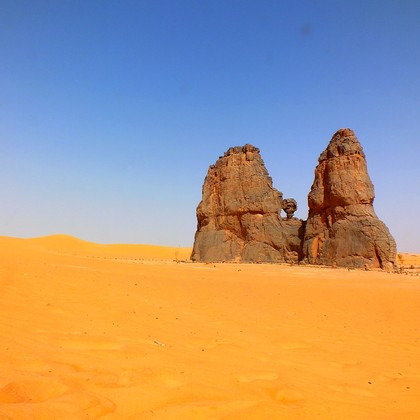
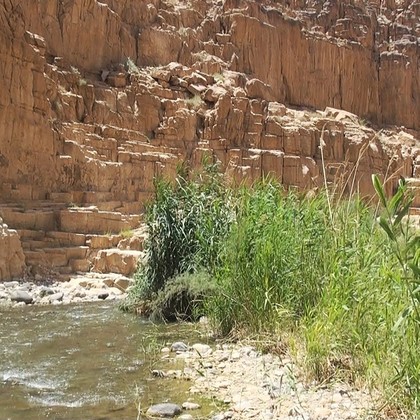
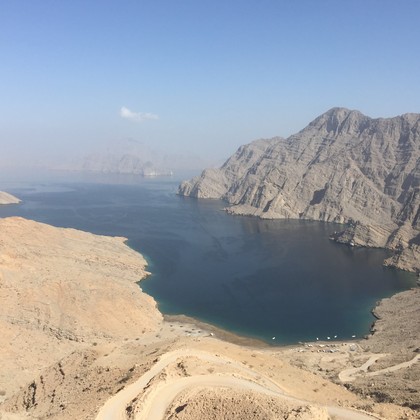
Cliffs, gorges and canyons in mountains and desert, sea cliffs and rocky islands; the Barbary Falcon mainly in semi-desert and dry hills with steep cliffs, also along the cliffs of the Nile valley. Increasingly nests on tall buildings, minarets and pylons. Hunts over open ground for pigeons, sandgrouse, waders and migrants. Wintering birds hunt at lagoons, tidal flats, coastal marshes and salt pans along the Mediterranean, the Red Sea and the Persian Gulf.
Where the bird is most at home, classified by the habitats of North Africa and the Middle East.
Range and movements
The Mediterranean form brookei breeds in the Rif, the Middle and High Atlas and along the coast of Morocco, and in northern Algeria and Tunisia. The Barbary Falcon breeds patchily from the Anti-Atlas and Western Sahara through the Algerian Sahara (Hoggar, Tassili) and Libya to Egypt, where it occurs in Sinai, the mountains of the Eastern Desert and along the Nile valley; further in Israel (Negev, Judean Desert, Arava), Jordan (including Wadi Rum and Petra) and Syria, and scarcely in the mountains of Saudi Arabia. Only a vagrant in Lebanon and Qatar; breeding data for Yemen, Oman and the UAE are scant. Northern Peregrines (calidus) pass through the whole region in autumn and winter along the coasts and at wetlands, from Morocco and the Nile Delta to Iraq and the Gulf states. Beyond the region almost worldwide; the Barbary Falcon also in the Canary Islands and in the Sahel to Sudan and Somalia.
- Resident
- Summer visitor (c. Oct–Mar)
- Winter visitor (c. Apr–Sep)
- Passage (Mar–Apr, Oct–Nov)
- dark = core range, pale = thinly spread
How and when to look
In Morocco search the gorges of the Anti-Atlas and High Atlas, in Israel the cliffs along the Dead Sea and in the Negev, in Jordan Wadi Rum. A pair often shows on a regular lookout at the edge of the cliff. In winter visit a coastal lagoon or salt pan at high tide, when waders suddenly take flight and bunch together.
Conservation status
Not globally threatened. It declined strongly in the twentieth century through DDT and other pesticides and has since recovered in many countries. In the region the main threats are nest robbing and trapping for falconry, poisoning and disturbance at the breeding cliff; the Barbary Falcon is scarce and poorly studied over much of its range.
Scientific name
Falco peregrinus | Tunstall, 1771
Tunstall described the species in 1771 and placed it straight away in the genus where it still stands. The genus Falco was introduced in 1758 by Linnaeus. Falco is Late Latin for 'falcon', from falx, falcis 'sickle', after the sickle-shaped claws of the bird. peregrinus is Latin for 'wanderer, one from abroad'; young birds were taken on migration for falconry rather than from the nest. The specimen the first description was based on came from Northamptonshire, England.