All species › Passerines › Accentors › Radde's Accentor
Radde's Accentor | Prunella ocularis
Steenheggenmus | Acentor de Radde
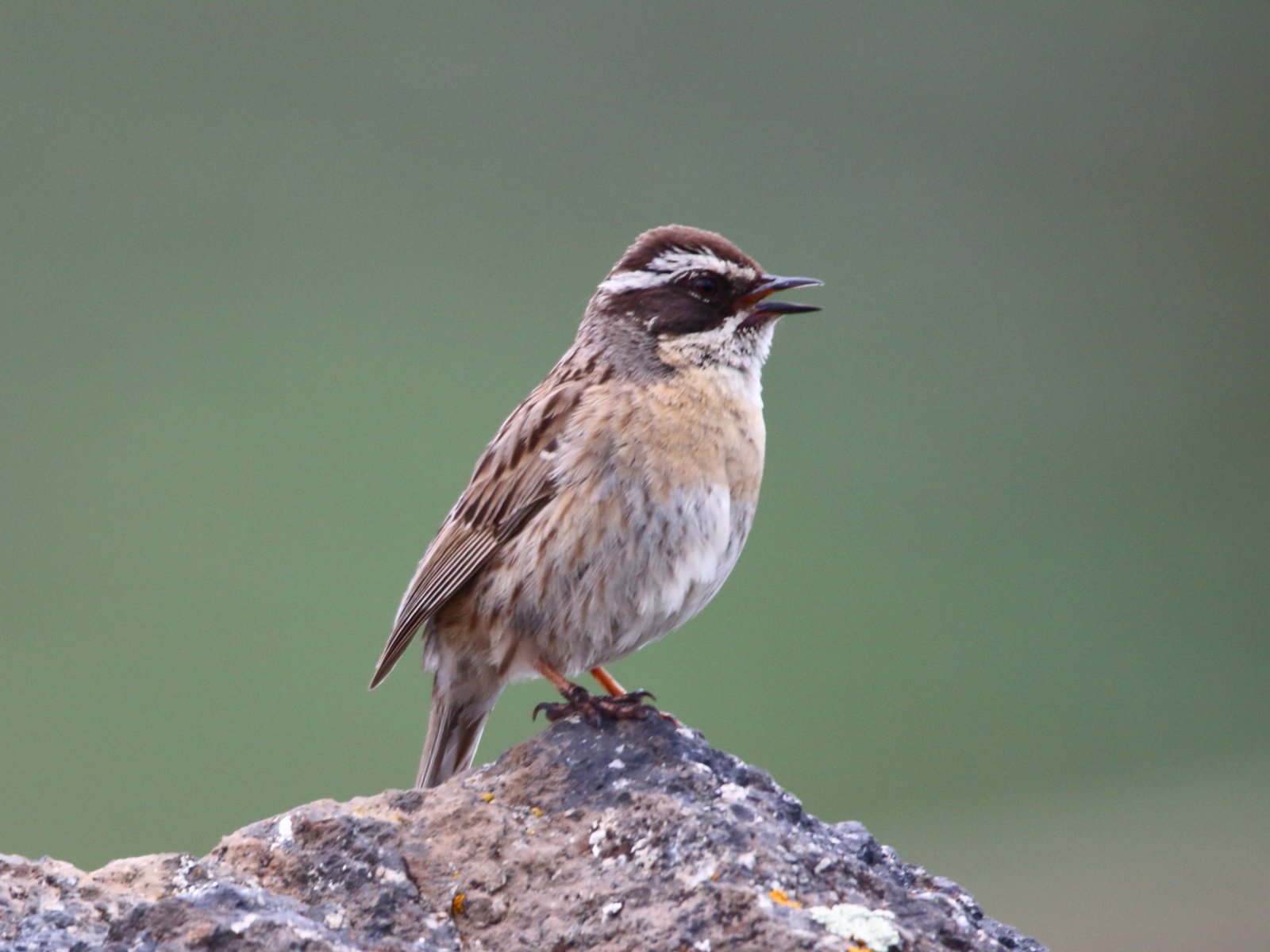
Radde's Accentor is an accentor of dry, rocky mountain slopes with a strikingly striped head. The region holds two separate populations: in summer in the high mountains of Kurdistan, and year-round the endemic form fagani on the highest mountains of western Yemen, long treated as a separate species, Arabian Accentor.
Voice
The song is a short, fast phrase of clear jingling notes, thinner and less rolling than Alpine Accentor's, from a bush top or boulder. Calls are a fine, high tsi-tsi-tsi and a short trill. Judging by the few recordings, the song of fagani sounds virtually the same.
Recording: GABRIEL LEITE — CC BY-NC-SA 4.0 · converted to mono · xeno-canto
Identification
14.5–15 cm. Dunnock-sized, but far more contrasting about the head: crown and ear-coverts dark grey-brown to blackish-brown, separated by a broad, long creamy-white supercilium reaching well behind the eye. Throat creamy white, breast and flanks pale ochre-buff with dark streaks on the flanks, belly off-white; back grey-brown with dark streaks. Bill thin and pointed, legs reddish-brown. Sexes alike. The Yemeni form fagani is slightly smaller and above all paler and greyer on crown and ear-coverts, so the supercilium stands out less. Shuffles over the ground among stones and bushes and drops into a bush when disturbed.
Confusion species
Dunnock (Prunella modularis) lacks the pale supercilium, is grey on head and breast and has a red-brown eye. Alpine Accentor (Prunella collaris) is larger, with a grey head, a spotted throat and chestnut flanks. Rock Bunting (Emberiza cia) in Kurdistan and Cinnamon-breasted Bunting (Emberiza tahapisi) in Yemen also have striped heads, but black and white, with a thick conical bill and plain rufous underparts; the fine pointed accentor bill settles it.
Habitat
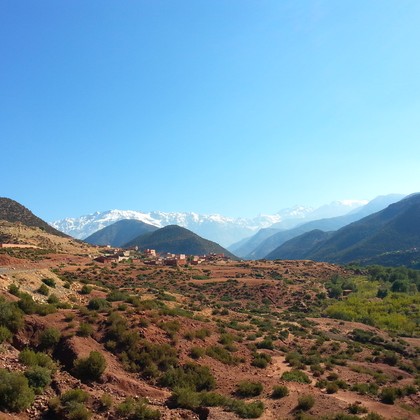
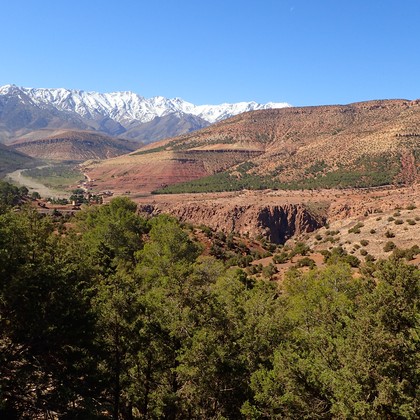
Dry, sunny mountain slopes with scattered thorn scrub, juniper and cushion plants, broken by boulder fields and rocks, in Kurdistan mostly above 2000 m, with a preference for scrub along mountain streams and springs. In Yemen on rocky slopes with scrub and juniper and along the edges of terraced fields on the highest summits, around 2400–3000 m. In winter in lower gorges and stream valleys with dense scrub.
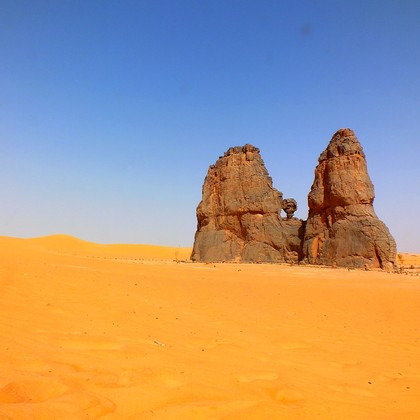
Where the bird is most at home, classified by the habitats of North Africa and the Middle East.
Range and movements
The form ocularis breeds in the highest mountains of Iraqi Kurdistan, at the edge of a range extending from eastern Turkey and the Caucasus through Iran to Turkmenistan; in winter it moves downhill, and a few birds then reach Lebanon, Syria and Mount Hermon in northern Israel, where it is a rare winter visitor. The form fagani is resident with a small range on the highest summits of the western Yemen highlands, north and west of Sana'a; no comparable bird is known elsewhere in Arabia.
- Resident
- Summer visitor (c. Oct–Mar)
- Winter visitor (c. Apr–Sep)
- Passage (Mar–Apr, Oct–Nov)
- dark = core range, pale = thinly spread
How and when to look
In Yemen in the mountains above Sana'a, on rocky slopes with terraced fields and juniper scrub above 2500 m; early in the morning birds sing from bush tops. In Kurdistan in June and July along mountain streams with scrub above the last villages. On Mount Hermon in winter it is a matter of searching dense scrub by water; look for the white supercilium across a dark head.
Conservation status
Not globally threatened, but scarce and poorly studied in this region. The Yemeni form fagani has a very small range and is still treated by the IOC as a separate species, Arabian Accentor; morphology and song, however, point to a single species (Kirwan, Collar & Boesman 2021). Overgrazing of mountain scrub and, in Yemen, disturbance from the conflict are the main concerns; recent data from both areas are largely lacking.
Scientific name
Prunella ocularis | (Radde, 1884)
Radde described the species in 1884 as Accentor ocularis; because it was later moved to another genus, the author and year stand in brackets. The genus Prunella was introduced in 1816 by Vieillot. Prunella comes from the German Braunelle, the name for the dunnock, a diminutive of braun 'brown'. ocularis is Latin for 'of the eye', from oculus 'eye', after the pale supercilium. The specimen the first description was based on came from the Talysh Mountains, Azerbaijan.