All species › Woodpeckers and allies › African barbets › Acacia Pied Barbet
Acacia Pied Barbet | Tricholaema leucomelas
Kaapse baardvogel | Barbudo Pío
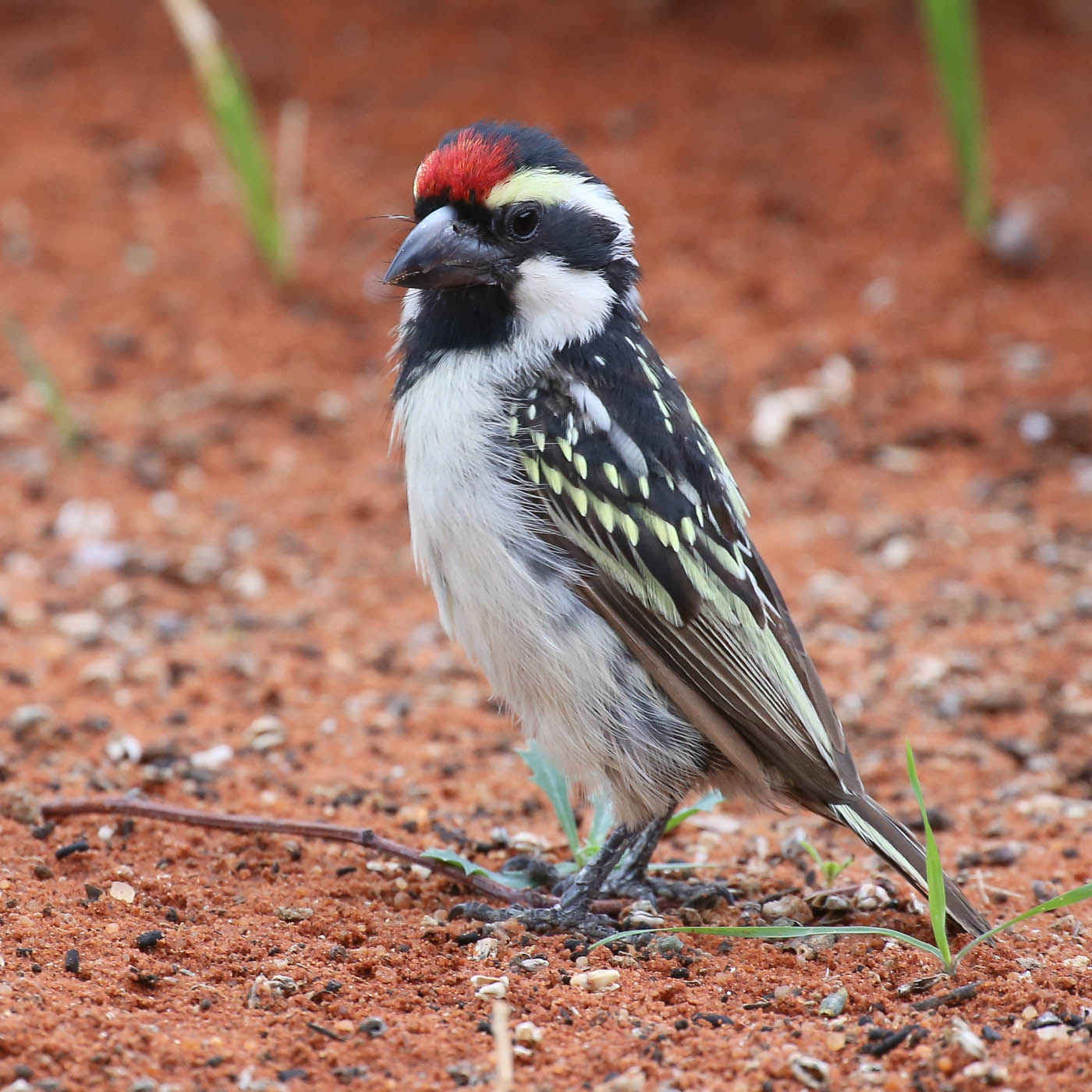
The Acacia Pied Barbet is the black-and-white barbet of the dry west and centre of the region, with a red forehead spot and a black throat patch. It is virtually restricted to southern Africa and is the only barbet that penetrates deep into the Karoo and the Kalahari.
Voice
A nasal, trumpeting naa-naa-naa, like a toy horn, and a series of low hollow hoots, poop-poop-poop-poop, that gradually swells. Also rasping and grating notes when agitated.
Recording: Walter Wallner — CC BY-NC-SA 4.0 · converted to mono · xeno-canto
Identification
About 17 cm, with a stout black bill. Forehead red, crown black; a broad supercilium is yellow above the eye and white behind it, with a black eye-stripe below and a white stripe from the bill base. The throat carries a solid black patch, the rest of the underparts white with at most faint streaking on the flanks. Upperparts black spotted and streaked with yellow and white, rump yellowish. The sexes are alike; juveniles lack the red on the forehead.
Confusion species
Miombo Pied Barbet (Tricholaema frontata) of the northern miombo lacks the solid black throat patch and has a pale yellow, spotted belly. Black-Collared Barbet (Lybius torquatus) is larger, with a wholly red face and a black collar. Yellow-Fronted Tinkerbird (Pogoniulus chrysoconus) and Southern Red-Fronted Tinkerbird (Pogoniulus pusillus) have a similarly striped face but are much smaller and lack the black throat.
Habitat
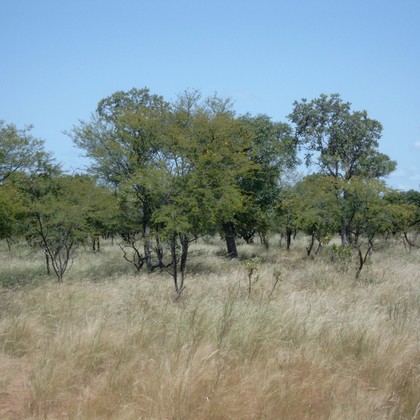
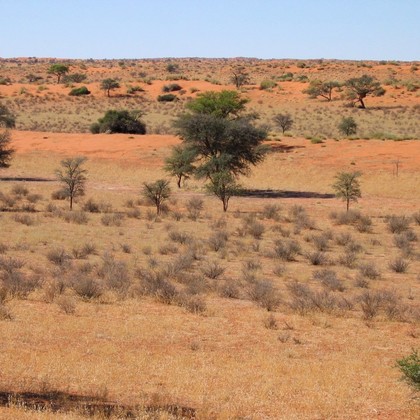
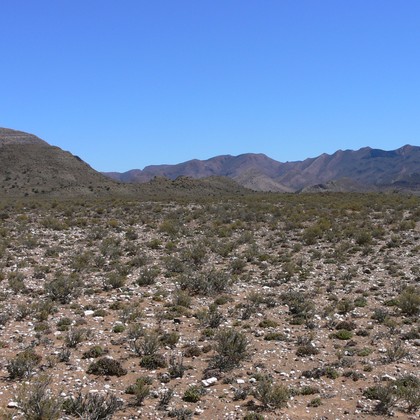
Dry savanna and thornveld, Kalahari thornveld, Karoo with trees along dry river beds, and the acacia-lined margins of fynbos and renosterveld, into gardens, farmyards and planted tree lines. It eats fruit, especially mistletoe berries and figs, supplemented with insects, and also takes nectar. It excavates a nest hole in a dead branch or an aloe stem.
Where the bird is most at home, classified by the vegetation units of southern Africa.
Range and movements
The west and centre of the region: virtually all of South Africa except the wet east coast and the highest Drakensberg, lower-lying Lesotho, Namibia, Botswana, western and southern Zimbabwe and southern Angola; rare in Eswatini and southern Mozambique. It hardly occurs outside southern Africa.
- Resident
- Summer visitor (c. Oct–Mar)
- Winter visitor (c. Apr–Sep)
- Passage (Mar–Apr, Oct–Nov)
- dark = core range, pale = thinly spread
How and when to look
In dry thornveld and Karoo bush it is readily found by listening for the nasal toy-horn call. It visits water points, fruiting trees and sugar-water feeders in gardens. In the Karoo, check tree lines along dry river beds, where it is often the only barbet.
Conservation status
Not threatened and common. It has expanded its range southwards and westwards thanks to planted trees, gardens and farmyards in otherwise treeless country.
Scientific name
Tricholaema leucomelas | (Boddaert, 1783)
Boddaert described the species in 1783 as Bucco leucomelas; because it was later moved to another genus, the author and year stand in brackets. The genus Tricholaema was introduced in 1855 by Verreaux & Verreaux. Tricholaema comes from the Greek thrix (trichos), 'hair', and laimos, 'throat' — for the bristly hair-like feathers around the throat and bill base. leucomelas comes from the Greek leukos, 'white', and melas, 'black' — for the black-and-white plumage. The specimen the first description was based on came from Cape of Good Hope.