All species › Passerines › Finches › Brimstone Canary
Brimstone Canary | Crithagra sulphurata
Zwavelkanarie | Serín Azufrado
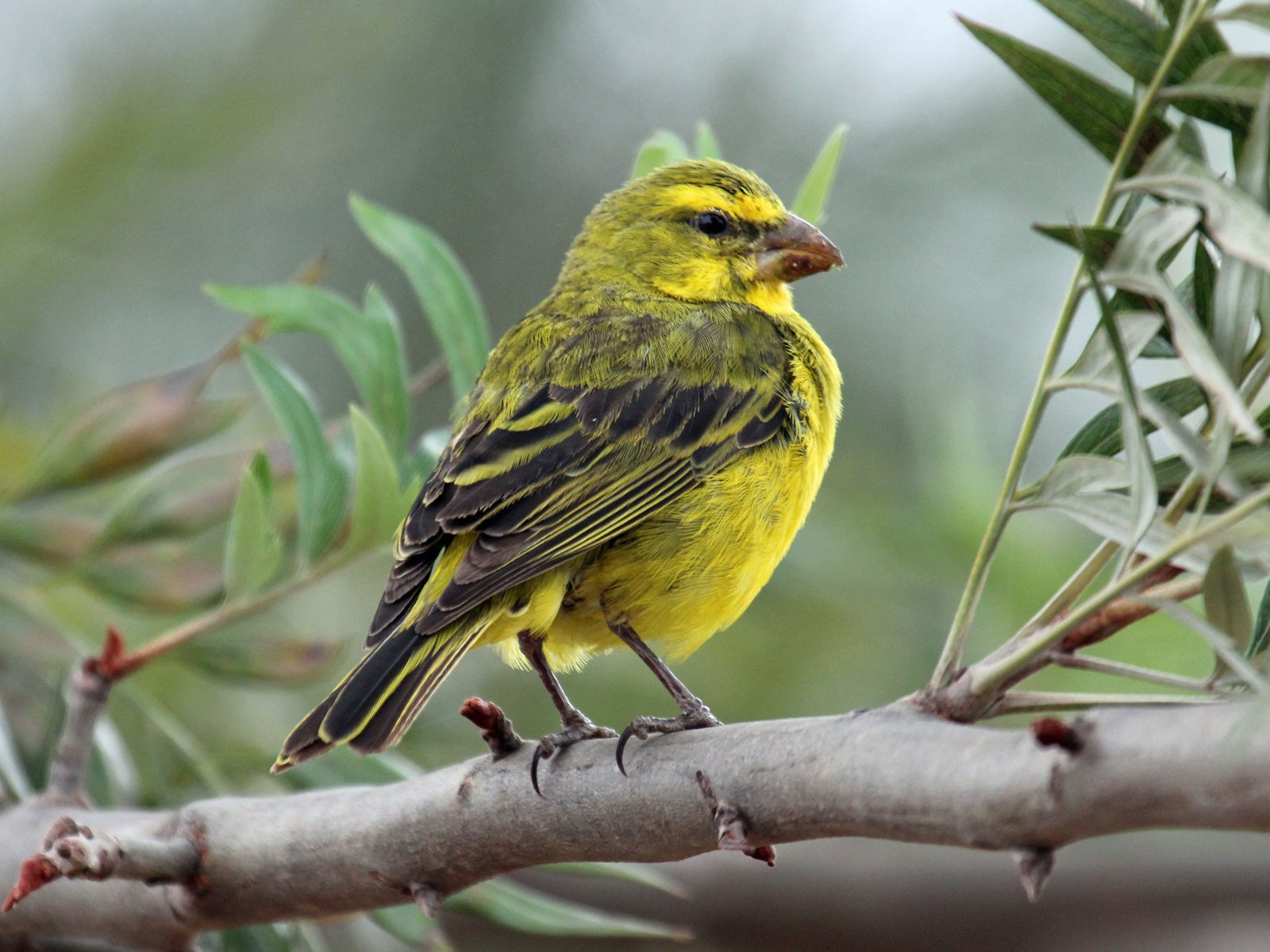
The Brimstone Canary is the largest and heaviest-billed of the region's yellow canaries: an olive-green and yellow bird with a thick, pale conical bill with which it cracks hard seeds, buds and fruit. It lives in pairs or small parties in dense scrub and forest edge and is noticed more for its full song than for its colours.
Voice
A rich, rather slow and varied song of clear whistles and trills, lower and fuller than that of the Yellow-Fronted Canary, along the lines of chiroo-chiroo-tweet-chee, often from a prominent branch. The call is a hoarse chuu or a soft tswee.
Recording: Daan van der Hoeven — CC BY-NC-SA 4.0 · converted to mono · xeno-canto
Identification
14–16 cm. The upperparts are olive-green with faint dark streaking on crown and mantle; the underparts yellow with an olive-green wash across breast and flanks. A yellow supercilium and yellow throat are separated by an olive-green cheek patch and a narrow olive moustachial stripe. The bill is strikingly heavy and pale horn to pinkish. Wings and tail are dark with green edges; the rump is green and does not contrast with the back. The female is duller than the male; juveniles are drab green with fine streaking on the breast. Birds in south-western South Africa are the dullest olive and the heaviest-billed; birds further north and east are yellower.
Confusion species
The Yellow-Fronted Canary (Crithagra mozambica) is smaller, with a fine bill, a grey crown and nape, a sharp black moustachial stripe, white tail tips and a bright yellow rump. The male Yellow Canary (Crithagra flaviventris) is brighter yellow, has a smaller bill and a yellow rump and lives in drier, open country in the west. The Lemon-Breasted Canary (Crithagra citrinipectus) of southern Mozambique is small, with a white belly and a lemon-yellow breast patch. The heavy bill, green rump and olive-green tone always separate the Brimstone Canary.
Habitat
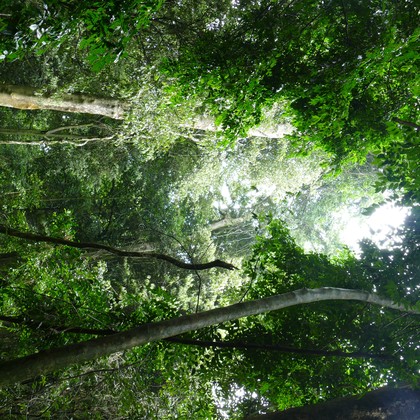
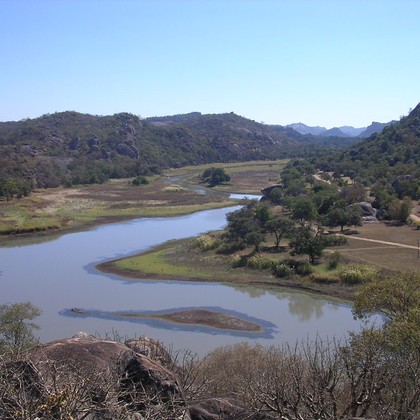
Dense scrub, forest edge, clearings, coastal and dune forest, riverine thicket, montane scrub, overgrown gardens and rank growth near fields. It eats seeds, buds, flowers, fruit and occasionally insects, mostly in shrubs and low trees but also on the ground. The cup nest is placed low in a dense bush.
Where the bird is most at home, classified by the vegetation units of southern Africa.

Range and movements
Within the region in southern and eastern South Africa, from the Western Cape along the coast and through the interior of the Eastern Cape to KwaZulu-Natal, Mpumalanga and Limpopo, and in Eswatini, the fringes of Lesotho, eastern Zimbabwe, Mozambique, Malawi, Zambia and western and northern Angola. Only a handful of reports from Namibia and absent from Botswana. Beyond the region from the DR Congo and Tanzania to Rwanda, Burundi, Uganda and Kenya.
- Resident
- Summer visitor (c. Oct–Mar)
- Winter visitor (c. Apr–Sep)
- Passage (Mar–Apr, Oct–Nov)
- dark = core range, pale = thinly spread
How and when to look
Listen in scrub at forest edges for the full, slow song, then look for a green-and-yellow bird with a strikingly thick, pale bill. In gardens in the Cape and along the coast of the Eastern Cape and KwaZulu-Natal it comes to feeders and fruiting shrubs. When torn between this species and Yellow-Fronted Canary, check the rump first: green in the Brimstone, bright yellow in the Yellow-fronted.
Conservation status
Not threatened. Common to fairly common and widespread; it benefits locally from rank growth and gardens but disappears where scrub is cleared. Trapped on a small scale for the cage-bird trade.
Scientific name
Crithagra sulphurata | (Linnaeus, 1766)
Linnaeus described the species in 1766 as Loxia sulphurata; because it was later moved to another genus, the author and year stand in brackets. The genus Crithagra was introduced in 1827 by Swainson. Crithagra comes from the Greek krithē, 'barley', and agra, 'hunting' — a 'barley hunter', for the seed-eating diet of these canaries and seedeaters. sulphurata is Latin for 'sulphur-coloured', from sulfur, 'sulphur' — for the yellow plumage. The specimen the first description was based on came from Cape of Good Hope.