All species › Passerines › Weavers › Cardinal Quelea
Cardinal Quelea | Quelea cardinalis
Kardinaalwever | Quelea Cardenal
The Cardinal Quelea is the smallest quelea: a nomadic seedeater of wet grassland that suddenly appears in numbers after good rains to breed. The breeding male wears a scarlet hood extending onto the breast; outside the breeding season it is an inconspicuous, streaky brown bird in mixed flocks.

Voice
A rough, scratchy chatter from flocks, and as song a series of rasping notes that accelerates into a grating trill, roughly chik-chik-chik-chrrrr.
Recording: GABRIEL LEITE — CC BY-NC-SA 4.0 · converted to mono · xeno-canto
Identification
10 to 11 cm, with a short conical bill. The breeding male has a bright red hood running from forehead and crown over face and throat onto the upper breast, with no black on the face; on the hindcrown and nape the red is limited, so that the head looks neatly hooded. The upperparts are brown with black streaks, the flight feathers have yellowish edges and the underparts are pale buff. The bill is then dark. The female and non-breeding male are streaky brown with a pale buff supercilium, a pale throat and a horn-coloured bill.
Confusion species
The male Red-Headed Quelea (Quelea erythrops) is larger and has a blackish chin and throat; its red extends further over the nape but less far onto the breast. Red-Billed Quelea (Quelea quelea) has a red or orange-red bill all year. Red-Headed Weaver (Anaplectes rubriceps) has a pinkish-red bill and a white belly and lives in trees, not grassland. Females and non-breeding birds often cannot be separated in the field from other queleas and from bishops (Euplectes); note the small size and the males in the same flock.
Habitat
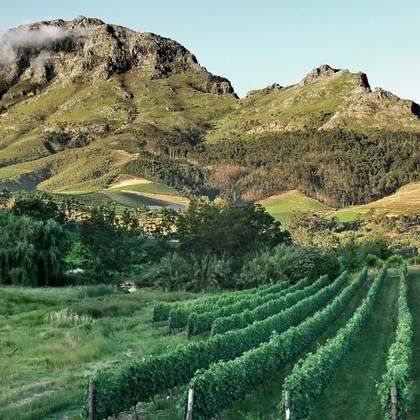
Wet and flooded grassland, vleis, rank marsh edges and fields with tall grass. It breeds in loose colonies; the nests are small, thin-walled grass balls woven between tall grass stems. Outside the breeding season it wanders in mixed flocks with other weavers, bishops and waxbills.
Where the bird is most at home, classified by the vegetation units of southern Africa.

Range and movements
Within the region only on the north-eastern edge: northern Malawi and north-eastern Zambia, where it appears irregularly in the rainy season and breeds locally. Beyond the region from South Sudan and Ethiopia through Uganda, Kenya, Rwanda and Burundi to eastern DR Congo and Tanzania.
- Summer visitor (c. Oct–Mar)
- dark = core range, pale = thinly spread
How and when to look
In the rainy season in northern Malawi and north-eastern Zambia, check every group of queleas in tall, wet grass. A male with a red hood reaching the breast and no black throat is a Cardinal Quelea. Being nomadic, the species can be numerous one year and absent the next.
Conservation status
Not threatened. Widespread in East Africa; in the region an irregular peripheral species whose numbers depend on rainfall.
Scientific name
Quelea cardinalis | (Hartlaub, 1880)
Hartlaub described the species in 1880 as Hyphantica cardinalis; because it was later moved to another genus, the author and year stand in brackets. The genus Quelea was introduced in 1850 by Reichenbach. The origin of Quelea is uncertain; Linnaeus gave no explanation. It may derive from medieval Latin qualea, 'quail', for the vast flocks, like the biblical quails. cardinalis is Latin for 'cardinal' — for the male's cardinal-red head, like a cardinal's red robes. The specimen the first description was based on came from Lado, South Sudan.