All species › Passerines › Waxbills › Chestnut-Breasted Nigrita
Chestnut-Breasted Nigrita | Nigrita bicolor
Bruinborstnigrita | Negrita Pechirrufa
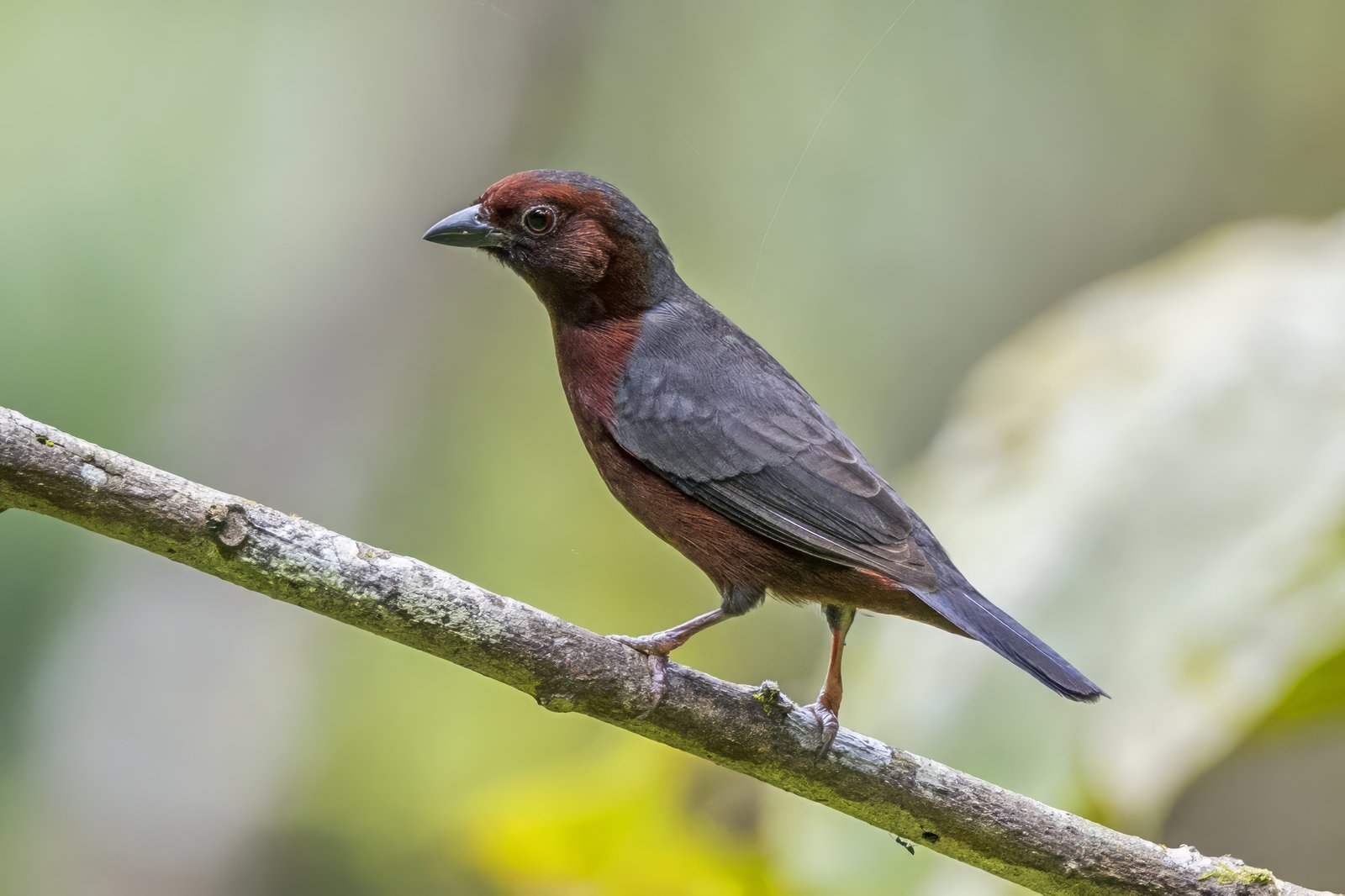
The Chestnut-Breasted Nigrita is a dark, inconspicuous waxbill of forest edges and secondary growth, slate-grey above and deep chestnut below. Like all nigritas it eats many insects and fruits besides seeds and feeds more often in trees than on the ground.
Voice
A soft, high tsip as a contact call. The song is a series of three to five descending, pure whistles, tee-tee-too-too, often from a hidden song post.
Recording: Bram Piot — CC BY-NC-SA 4.0 · converted to mono · xeno-canto
Identification
11 to 12 cm, slender with a fairly long tail and a pointed black bill. Crown, nape, back and wings are dark slate-grey, rump and tail blackish. The forehead, face and entire underparts are deep chestnut to maroon-brown, darkening to dark brown on the undertail coverts. The eye is red. The sexes are alike. Juveniles are duller and browner, with grey-brown underparts.
Confusion species
The White-Breasted Nigrita (Nigrita fusconotus) has a black cap, a brown back and white underparts. The Grey-Headed Nigrita (Nigrita canicapillus) and the Pale-Fronted Nigrita (Nigrita luteifrons) are grey above and black below. The Dusky Twinspot (Euschistospiza cinereovinacea) of the Angolan highlands is also grey and dark red, but has a black tail and red flanks and lives in grassland and scrub, not forest. The chestnut underparts are decisive in good light.
Habitat
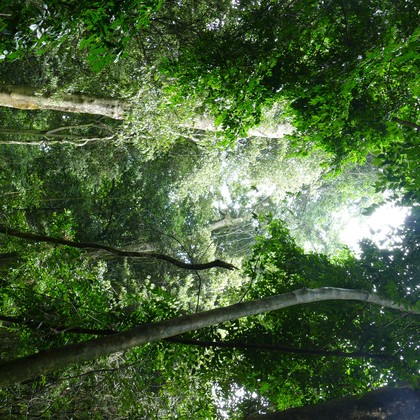
Edges of evergreen lowland forest, secondary forest, gallery forest, overgrown plantations and tangles with oil palms and lianas. It forages in pairs or small groups in dense foliage, from shrub height to the canopy, and sometimes on the ground.
Where the bird is most at home, classified by the vegetation units of southern Africa.

Range and movements
Within the region only in northern Angola: Cabinda and the forests of Uíge and Cuanza Norte, with a sparse extension towards the western escarpment forests. Beyond the region from Senegambia and Sierra Leone through West and Central Africa to Uganda and western DR Congo.
How and when to look
Look for it at forest edges and in overgrown coffee and oil-palm plantations around Uíge. In the shade of the foliage it looks wholly black; wait for a moment in the sun, when the chestnut underparts light up. The descending whistled song is often the best clue.
Conservation status
Not threatened. Common in West and Central Africa and tolerant of secondary growth; in Angola restricted to the northern forest zone and rarely recorded there.
Scientific name
Nigrita bicolor | (Hartlaub, 1844)
Hartlaub described the species in 1844 as Pytelia bicolor; because it was later moved to another genus, the author and year stand in brackets. The genus Nigrita was introduced in 1843 by Strickland. Nigrita comes from the Modern Latin nigritus, 'black' (related to niger) — for the largely dark plumage of these nigritas. bicolor is Latin for 'two-coloured' — for the dark upperparts and chestnut underparts. The specimen the first description was based on came from Gold Coast (now Ghana).