All species › Passerines › Shrikes › Mackinnon's Shrike
Mackinnon's Shrike | Lanius mackinnoni
Mackinnons klauwier | Alcaudón de Mackinnon
Mackinnon's Shrike is a slender, long-tailed shrike of forest edges and clearings in the Central African highlands, found in the region only in northern Angola. It resembles a grey version of the fiscals and has adapted well to gardens, villages and fields in former forest country.
Voice
A rasping, scolding cherr-cherr. The song is a soft, varied series of whistles and scratchy notes, with imitations of other birds.
Recording: Paweł Szymański — CC BY-NC-SA 4.0 · shortened to the first 60 s, mono · xeno-canto
Identification
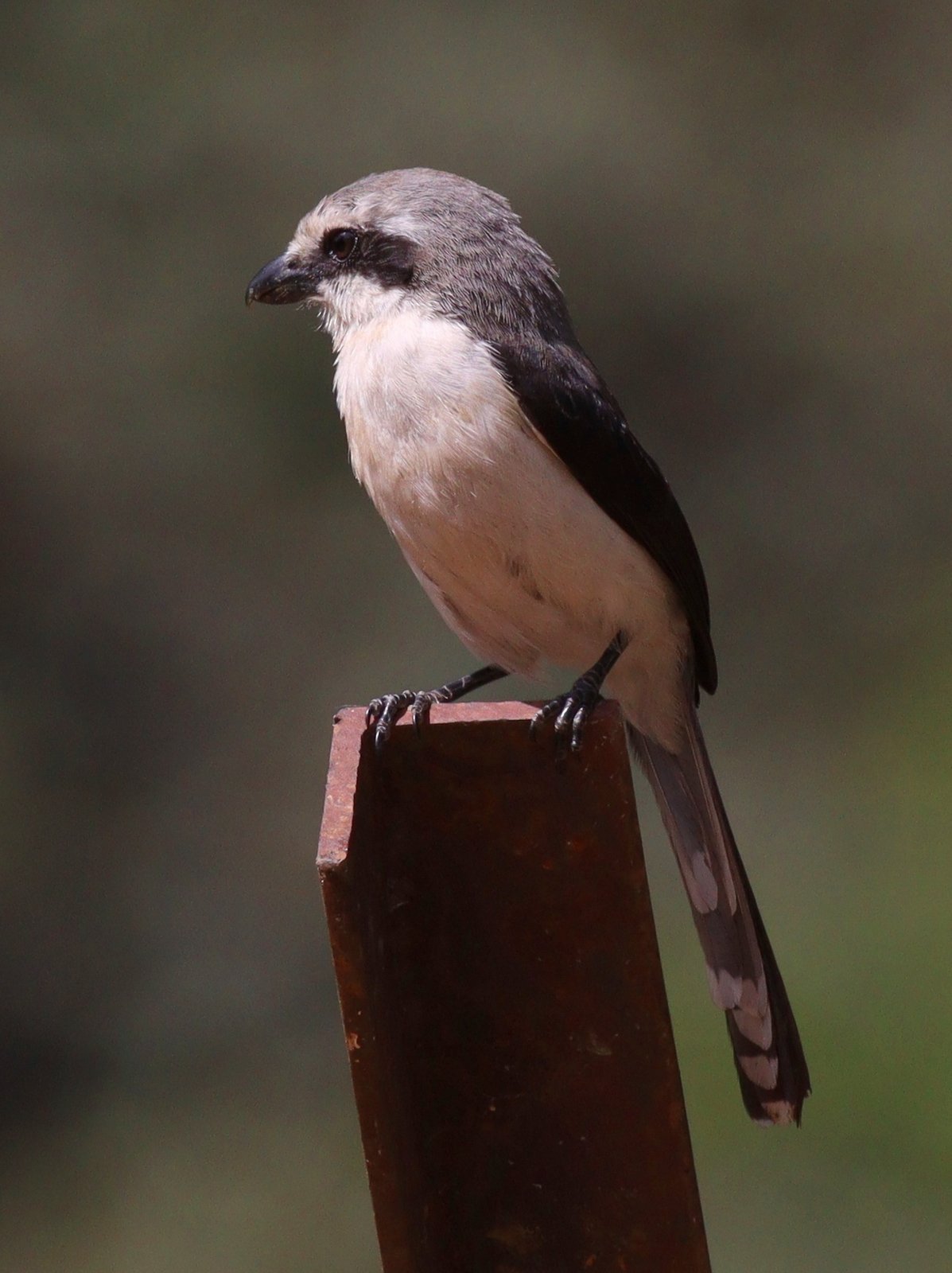
20–21 cm. Crown, nape and mantle are slate-grey, with a narrow white supercilium above a broad black mask. The scapulars are white and form a V on the back. The wings are black, with no white primary patch. The tail is long, black with white edges and white tips. The underparts are white. The female has a small rufous patch on the flanks. Juveniles are grey-brown with dense dark barring. It sits upright on a low lookout and flicks its tail.
Confusion species
Northern Fiscal Lanius humeralis is black above, lacks the white supercilium and has a white wing patch. Lesser Grey Shrike Lanius minor has a shorter tail, a white primary patch, a pink wash on the breast and, in adults, a black forehead; it does not occur in forest country. Souza's Shrike Lanius souzae is smaller, with a brown back and rufous-brown wings, and lives in miombo.
Habitat
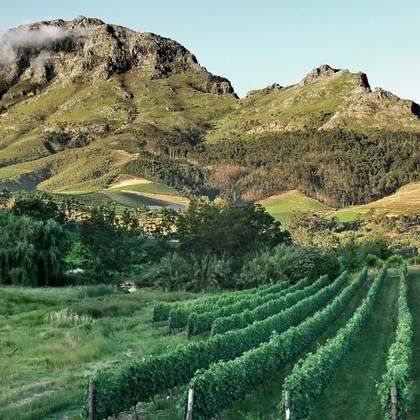
Forest edge, clearings, secondary growth and scrub, also fields, villages, gardens and tea plantations in former forest country, from lowland to the mountains. It hunts from a low perch for insects on the ground.
Where the bird is most at home, classified by the vegetation units of southern Africa.


Range and movements
In the region only in northern and north-western Angola, in highland country with forest and clearings. Beyond the region from the Obudu Plateau in Nigeria and Cameroon through Gabon and Congo to eastern Democratic Republic of the Congo, Rwanda, Burundi, Uganda, western Kenya and north-western Tanzania.
How and when to look
Year-round. Search forest edges, tracks and field margins in the highlands of northern Angola for a grey shrike with a white eyebrow on a low branch or post. It is fairly tame and allows close views.
Conservation status
Not threatened; common over much of its range. The species benefits from the opening up of forest, as it thrives in secondary growth and farmland.
Scientific name
Lanius mackinnoni | Sharpe, 1891
Sharpe described the species in 1891 and placed it straight away in the genus where it still stands. The genus Lanius was introduced in 1758 by Linnaeus. Lanius is Latin for 'butcher', from shrikes' habit of impaling prey on thorns and barbed wire. mackinnoni honours Archibald Donald Mackinnon, a Scottish physician and colonial administrator in British East Africa, who provided the first specimen. The specimen the first description was based on came from Kavirondo, western Kenya.