All species › Passerines › Cisticolas › Pale-Crowned Cisticola
Pale-Crowned Cisticola | Cisticola cinnamomeus
Bleekkopgraszanger | Cistícola Castaño
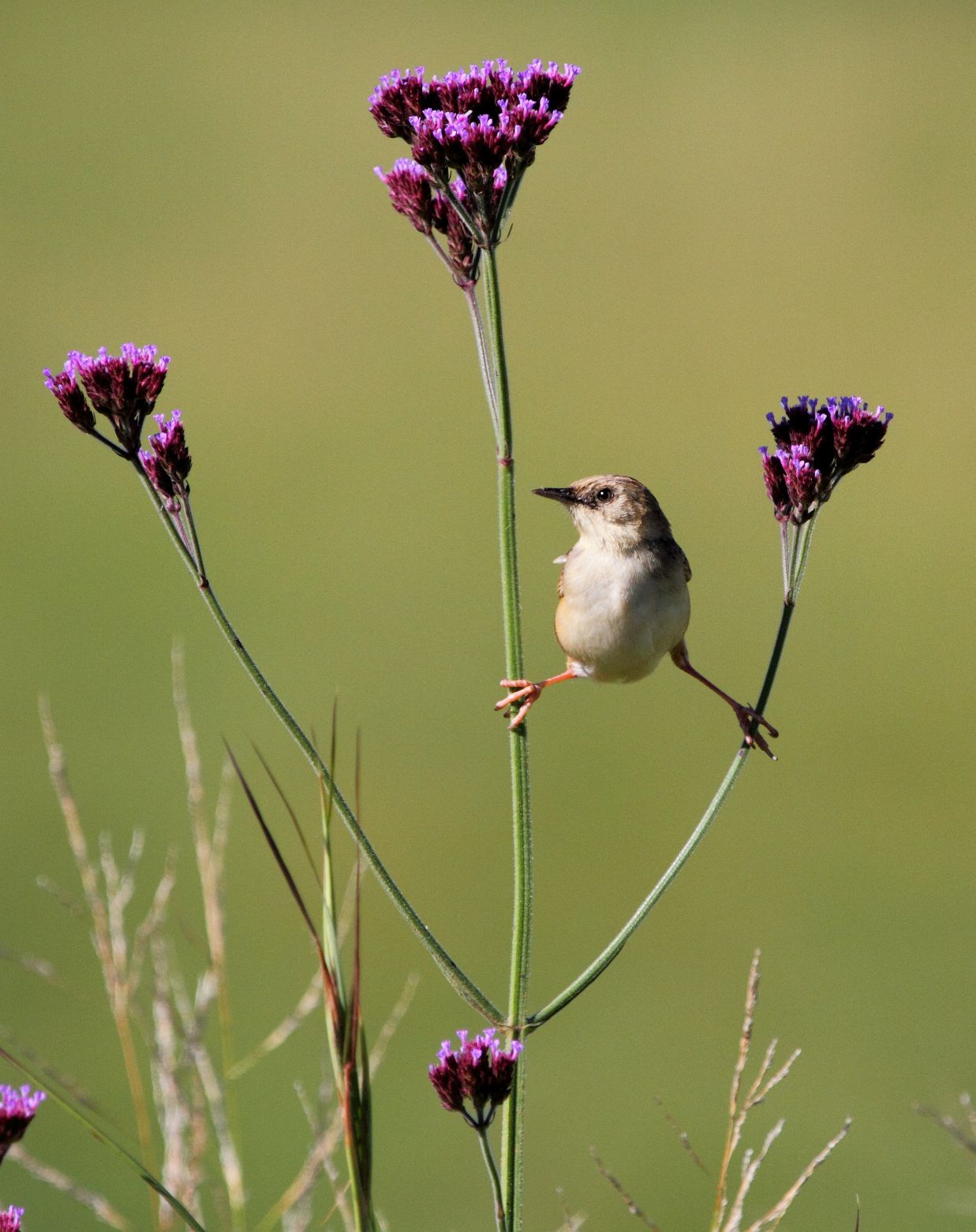
The Pale-Crowned Cisticola is a small ‘cloud-scraper’ of wet grassland around vleis, and the only one of this group that is recognisable by appearance in breeding plumage: the male has an unstreaked, pale cinnamon crown and deep black lores. It was formerly included in Pectoral-Patch Cisticola.
Voice
The display song, high in the sky, is a thin, insect-like series, tsee-tsee-tsee-tsee or swee-swee-swee, sustained for a long time as the bird circles; the dive is accompanied by a few dry ticks but no loud wing-snapping. The call is a soft, dry chik. The song is so high and faint that it is often lost in the wind.
Recording: Dries Van de Loock — CC BY-NC-SA 4.0 · converted to mono · xeno-canto
Identification
About 10 cm, short-tailed. The breeding male has a plain, pale cinnamon-buff crown and forehead without streaks, contrasting sharply with black lores and a heavily black-streaked mantle and back; the rump is warm brown. The underparts are pale buff, warmer on the flanks. The female and non-breeding birds have a finely streaked crown, no black lores and a slightly longer tail, and then closely resemble Cloud and Wing-Snapping Cisticolas. The legs are pale pink. In display males hang high over the wet grassland and then dive steeply down.
Confusion species
Cloud Cisticola Cisticola textrix always has a streaked crown, lives in drier grassland and sings a series of whistles followed by dry clicks. Wing-Snapping Cisticola Cisticola ayresii is smaller and darker, has a streaked crown and produces loud wing-snaps in display. Desert Cisticola Cisticola aridulus lives in dry grassland and is paler and longer-tailed. Levaillant's Cisticola Cisticola tinniens shares the vleis but sits in taller, reedy vegetation and has a rufous crown and wing and a long tail. Beyond the region Pectoral-Patch Cisticola Cisticola brunnescens replaces this species.
Habitat
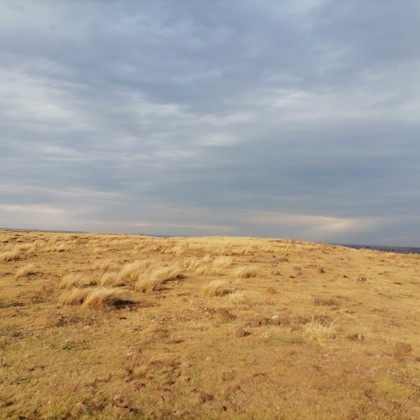
Wet and damp grassland with short to medium grasses and sedges: the edges of vleis and dambos, marshy hollows, seepage zones and soggy pastures, especially on the plateau and in hill country. It avoids dry grassland and tall reeds. It breeds in the wet summer months.
Where the bird is most at home, classified by the vegetation units of southern Africa.


Range and movements
Within the region in eastern South Africa (Mpumalanga, KwaZulu-Natal, the eastern Free State and Gauteng), in Eswatini, eastern and central Zimbabwe, central Mozambique, Malawi, Zambia and central and eastern Angola. Beyond the region north to southern Democratic Republic of the Congo, Congo-Brazzaville, Gabon and Tanzania.
- Resident
- Summer visitor (c. Oct–Mar)
- Passage (Mar–Apr, Oct–Nov)
- dark = core range, pale = thinly spread
How and when to look
Search from November to March in wet hollows and vlei margins on the highveld, for example around Wakkerstroom and Dullstroom, or in the dambos of Zambia and Malawi. The male with his pale crown and black lores often perches briefly on a grass stem after the dive; that is the moment for a certain identification. Outside the breeding season silent birds cannot be separated safely from the other cloud-scrapers.
Conservation status
Not threatened. Locally fairly common, but in South Africa sensitive to the draining of vleis, overgrazing, afforestation and too-frequent burning, which cause suitable wet grassland to disappear.
Scientific name
Cisticola cinnamomeus | Reichenow, 1904
Reichenow described the species in 1904 and placed it straight away in the genus where it still stands. The genus Cisticola was introduced in 1829 by Kaup. Cisticola combines the Ancient Greek kisthos 'rock-rose' with the Latin colere 'to dwell'. cinnamomeus is Latin for 'cinnamon-coloured', for the rufous head and warm tones of the plumage. The specimen the first description was based on came from Uhehe (Iringa region), Tanzania.