All species › Passerines › Larks › Red-Capped Lark
Red-Capped Lark | Calandrella cinerea
Roodkapleeuwerik | Terrera Capirotada
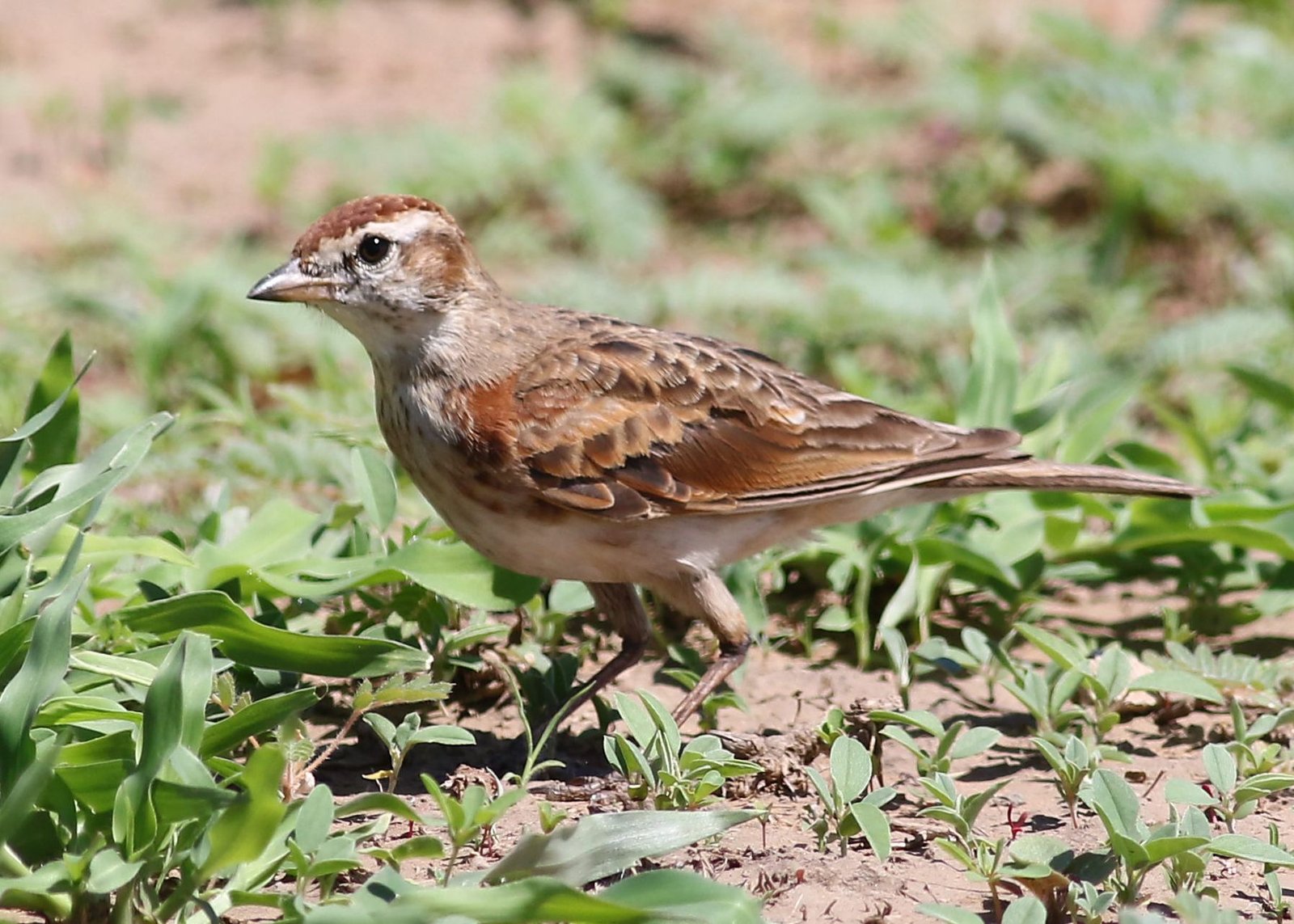
Red-Capped Lark is a slender, upright lark with a rufous crown and rufous patches on each side of the breast, set off against white underparts. It is one of the commonest larks of open country in southern Africa, often on short-mown grass, airfields and burnt ground.
Voice
The call, mainly in flight, is a dry chweet or tseep, often repeated by a flushing flock. The song, usually in a high, undulating display flight and sometimes from the ground, is a long, varied series of twittering and squeaky notes, often including mimicry of other birds.
Recording: Dawie de Swardt — CC BY-NC-SA 4.0 · shortened to the first 60 s, mono · xeno-canto
Identification
14–16 cm. Slender and long-winged, with a fine, pointed bill. The crown is rufous and can be raised into a short crest. A broad white supercilium separates the crown from the brown cheek. The upperparts are grey-brown to rufous-brown with dark streaks. The underparts are white, with a rufous patch on each side of the breast that sometimes almost forms a breast band. In flight the dark tail with pale outer edges and the long wings are obvious. Sexes alike. Juveniles lack the rufous and are dark above, densely spotted white, which can cause confusion.
Confusion species
Pink-Billed Lark Spizocorys conirostris is smaller and stockier, with a short pink conical bill and buff underparts without rufous breast patches. Stark's Lark Spizocorys starki is paler, with a pointed crest lacking rufous and a pink bill. Male Chestnut-Backed Sparrow-Larks Eremopterix leucotis also show chestnut on the back but have a black-and-white head and black underparts. Juvenile Red-Capped Larks resemble African Pipit Anthus cinnamomeus but have a shorter tail and bill and a stockier gait.
Habitat
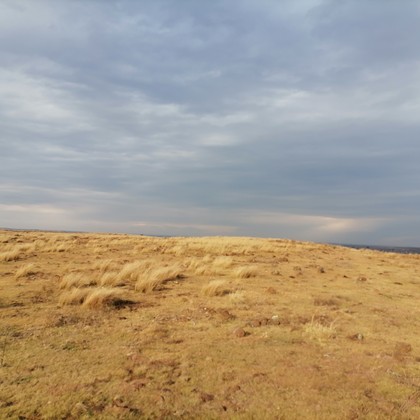
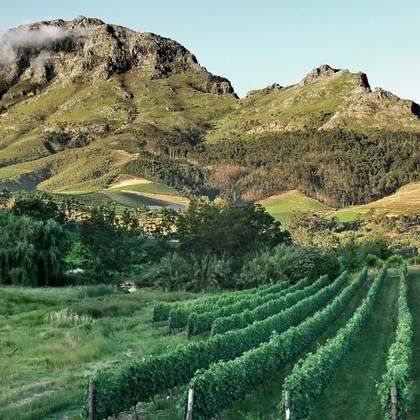
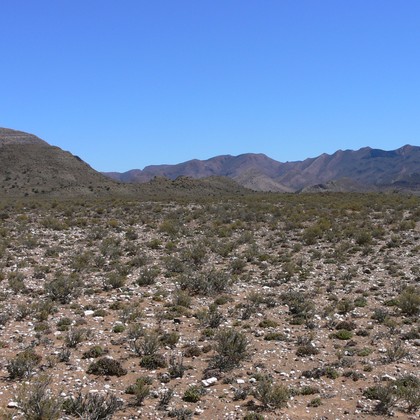
Short, open grassland, bare or recently burnt ground, wheatfields and fallow land, airfields and sports fields, and dry plains in the Karoo and Kalahari. It favours very short grass and bare patches and avoids tall grass and woodland. It forages walking on the ground for insects and seeds.
Where the bird is most at home, classified by the vegetation units of southern Africa.
Range and movements
Widespread in the region: throughout South Africa (common on the highveld, in the Karoo and in the Western Cape), Lesotho, Eswatini, Namibia, Botswana, Zimbabwe, Zambia, Malawi and Angola, locally in western and southern Mozambique. Beyond the region north to East Africa (Tanzania, Kenya and Uganda) and southern Democratic Republic of the Congo.
- Resident
- Summer visitor (c. Oct–Mar)
- Winter visitor (c. Apr–Sep)
- Passage (Mar–Apr, Oct–Nov)
- dark = core range, pale = thinly spread
How and when to look
Year-round, check airfields, sports fields, recently burnt grassland and stubble fields; outside the breeding season flocks of tens to hundreds are often present. The rufous breast patches are the best feature at a distance. When faced with spotted, odd-looking birds, consider juvenile Red-Capped Larks before thinking of a pipit or a rare lark.
Conservation status
Not threatened; common and widespread. It benefits from agriculture, grazing and fires that create short grass and bare ground. No large-scale threats are known.
Scientific name
Calandrella cinerea | (Gmelin, 1789)
Gmelin described the species in 1789 as Alauda cinerea; because it was later moved to another genus, the author and year stand in brackets. The genus Calandrella was introduced in 1829 by Kaup. Calandrella is a diminutive of Greek kalandros, the calandra lark, so 'little calandra lark'. cinerea is Latin for 'ash-grey', from cinis, 'ash' — for the grey-brown upperparts. The specimen the first description was based on came from Barnaul, Siberia (as given in the source; probably erroneous).