All species › Passerines › Swallows and martins › Red-Throated Cliff Swallow
Red-Throated Cliff Swallow | Petrochelidon rufigula
Roodkeelklifzwaluw | Golondrina Gorjirroja
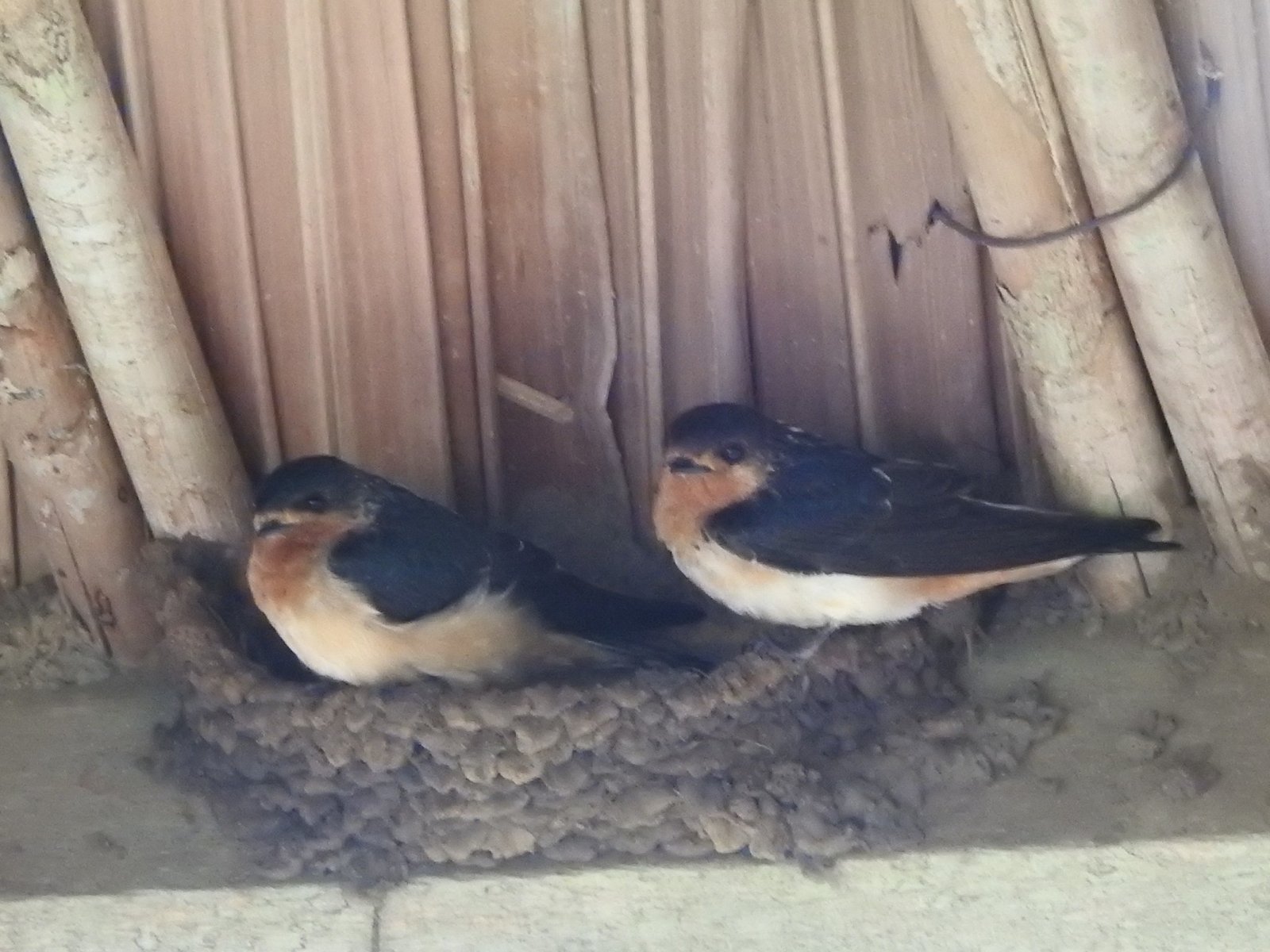
The Red-Throated Cliff Swallow is a small, stocky swallow with a square tail, a pale rufous rump and a striking rufous throat. It is the Central African counterpart of the South African Cliff Swallow and breeds in colonies under bridges and rock overhangs, in the region mainly in Angola.
Voice
A soft, scratchy chrrp and a dry twitter, mainly around the colony and in groups hunting over water.
Recording: Matthew L. Brady — CC BY-NC-SA 4.0 · shortened to the first 60 s, mono · xeno-canto
Identification
12 cm. Crown, mantle and wings glossy blue-black. Forehead, chin and throat are rufous-chestnut and form a sharply defined, warm throat patch. The rump is pale rufous-buff. The underparts are dingy white to pale buff, without streaks or breast band. The tail is short and square-cut, without streamers or white spots. Juveniles are browner with a duller throat. Small and compact, with a quick, fluttering flight low over open ground and water.
Confusion species
Angola Swallow Hirundo angolensis also has a rufous throat, but a dark rump, grey-brown underparts and a forked tail with white spots. Barn Swallow Hirundo rustica has a dark rump, a black breast band and long tail streamers. Lesser Striped Swallow Cecropis abyssinica has a rufous rump but heavily streaked underparts and long streamers. South African Cliff Swallow Petrochelidon spilodera is larger, with a dark-mottled throat, and breeds further south.
Habitat
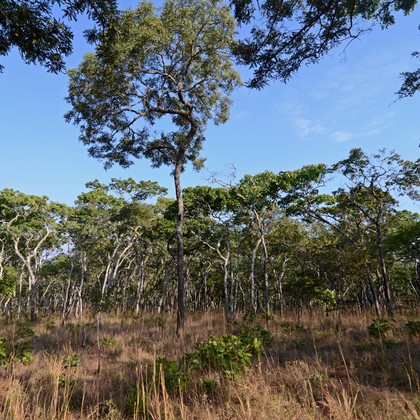
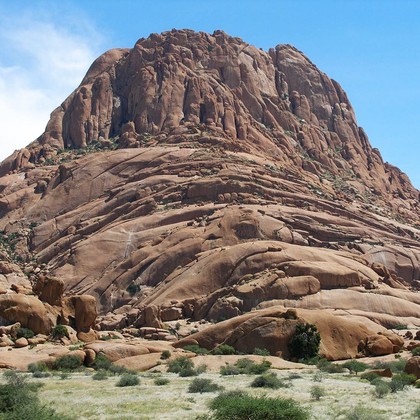
Open country on the plateau: grassland, open miombo and farmland, usually near rivers and dams. It breeds in colonies of mud nests with a short entrance tunnel, under bridges, in culverts, under rock overhangs and on buildings. It hunts flying insects low down, often together with other swallows.
Where the bird is most at home, classified by the vegetation units of southern Africa.

Range and movements
In the region mainly in Angola, where it is locally common on the central and western plateau and in the north; also in western and north-western Zambia. Reports from Zimbabwe are unconfirmed. Some birds move north outside the breeding season. Beyond the region from Gabon and the Republic of the Congo to southern Democratic Republic of the Congo.
- Resident
- dark = core range, pale = thinly spread
How and when to look
In Angola check river bridges on the plateau, for example around Huambo, Kuito and Malanje, where colonies hang under the road deck. In flight the square tail and pale rump stand out; in good light the rufous throat can be seen even at distance.
Conservation status
Not threatened; locally common. Like the South African Cliff Swallow the species benefits from bridges and other structures as nest sites. No large-scale threats are known, but the species is little studied.
Scientific name
Petrochelidon rufigula | (Bocage, 1878)
Bocage described the species in 1878 as Hirundo rufigula; because it was later moved to another genus, the author and year stand in brackets. The genus Petrochelidon was introduced in 1851 by Cabanis. Petrochelidon comes from the Greek petros, 'rock', and khelidōn, 'swallow' — for the cliff swallows' habit of building their mud nests against rock faces. rufigula comes from the Latin rufus, 'red', and gula, 'throat' — for the rufous throat. The specimen the first description was based on came from Caconda, Angola.