All species › Passerines › Swallows and martins › South African Cliff Swallow
South African Cliff Swallow | Petrochelidon spilodera
Kaapse klifzwaluw | Golondrina Sudafricana
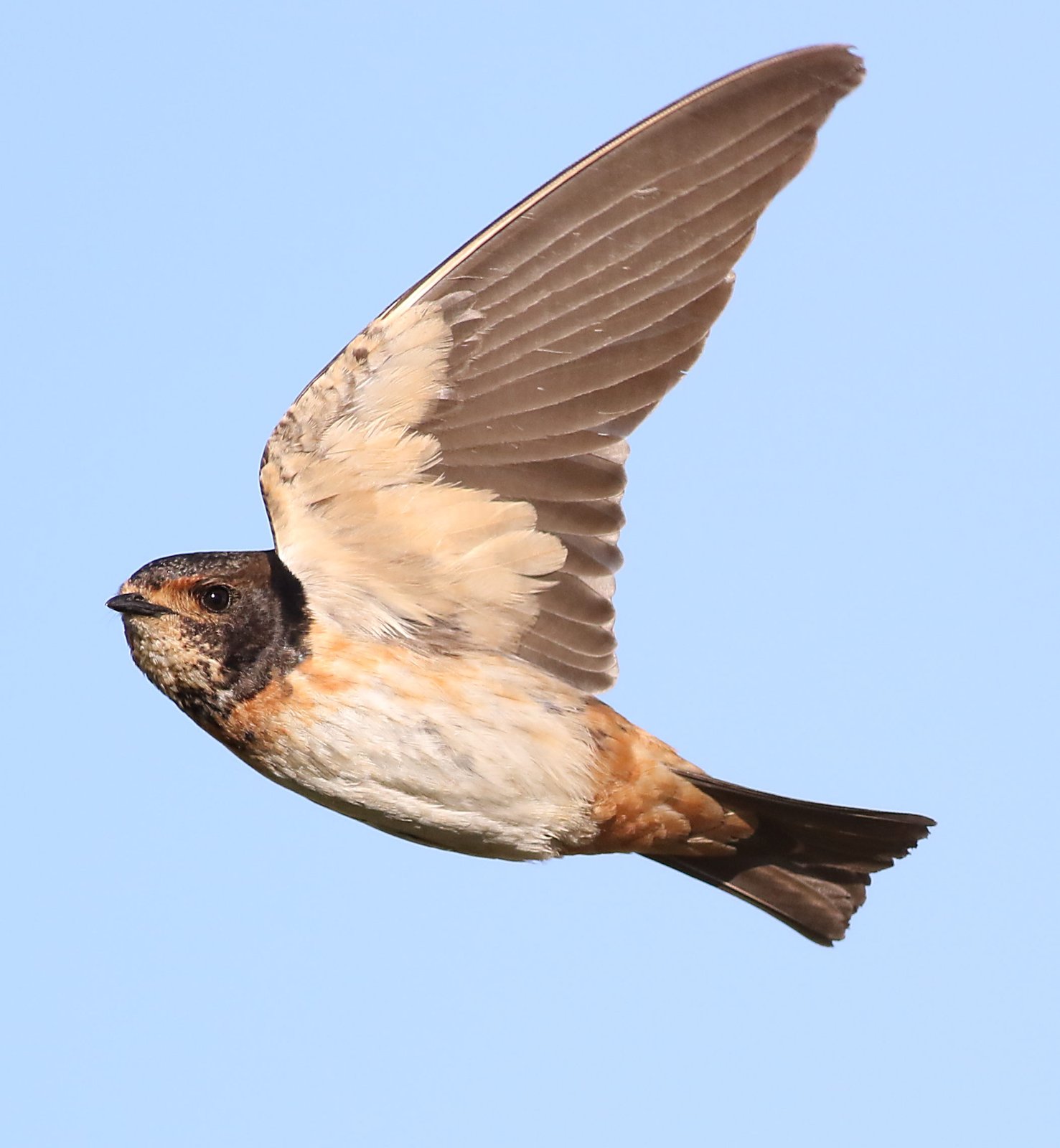
The South African Cliff Swallow is a stocky swallow with a square tail, a pale rufous-buff rump and a dark-mottled throat. It breeds almost exclusively in southern Africa, in dense colonies of gourd-shaped mud nests under bridges, in culverts and under eaves, and migrates to the Congo Basin for the winter.
Voice
A soft, grating chooerp or choor-choor, mainly around the colony. The song is a dry, scratchy twitter; when disturbed the whole colony calls with a high tseep.
Recording: Dawie de Swardt — CC BY-NC-SA 4.0 · shortened to the first 60 s, mono · xeno-canto
Identification
14–15 cm. Crown dark brownish black, mantle blue-black with fine pale streaks. The rump is pale rufous-buff and contrasts clearly with back and tail. Throat and chin are pale buff with heavy dark spotting, which together form a vague mottled breast band; the rest of the underparts are dingy white to buff, with rufous-buff undertail coverts. The tail is short and square-cut or only slightly notched, without streamers or white spots. Juveniles are browner. The silhouette is compact with broad wings; the flight is fluttering and often low over grass and water.
Confusion species
Greater Striped Swallow Cecropis cucullata and Lesser Striped Swallow Cecropis abyssinica have a rufous rump but a deeply forked tail with long streamers and streaked underparts. Large Rock Martin Ptyonoprogne fuligula is plain brown, without a pale rump, with white spots in the spread tail. Western House Martin Delichon urbicum has a pure white rump and underparts. A juvenile Barn Swallow Hirundo rustica has a dark rump and a dark breast band on white underparts. Red-Throated Cliff Swallow Petrochelidon rufigula does not occur in the same area.
Habitat
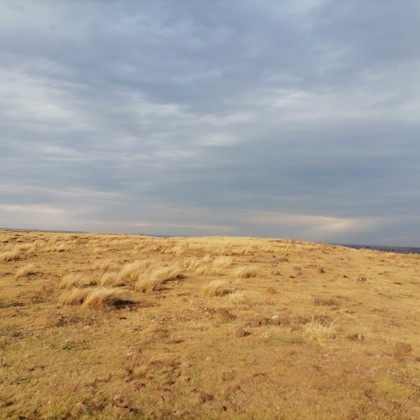
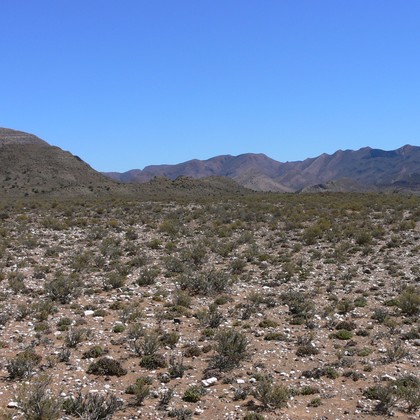
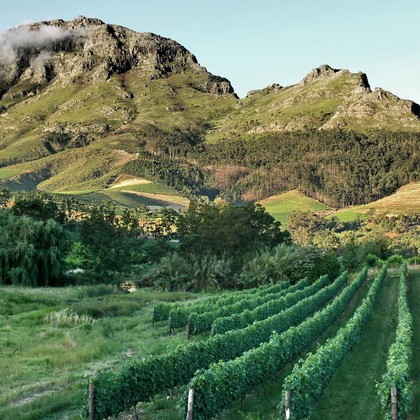
Open grassland, Karoo scrub and farmland, usually near water. Originally the species bred under rock overhangs and cliffs, but nowadays almost always under bridges, in concrete culverts, under the eaves of farm buildings and on water towers. The gourd-shaped nests with a short entrance tunnel are packed together, sometimes hundreds in one place. It hunts flying insects, often together with other swallows.
Where the bird is most at home, classified by the vegetation units of southern Africa.
Range and movements
Breeds on the central plateau of South Africa: the Free State, Gauteng, North West Province, the Mpumalanga highveld, western KwaZulu-Natal and the Northern and Eastern Cape, and also in Lesotho, southern Botswana and southern and eastern Namibia. Absent from April to August; the wintering area lies in the Congo Basin but remains poorly known. On passage it is rarely seen in Zimbabwe, Zambia and Angola.
- Resident
- Summer visitor (c. Oct–Mar)
- Winter visitor (c. Apr–Sep)
- Passage (Mar–Apr, Oct–Nov)
- dark = core range, pale = thinly spread
How and when to look
From September to March usually found under river bridges and roadside culverts on the highveld and in the eastern Karoo; look for the row of mud nests against the ceiling. Birds in flight are recognised by the square tail and pale rump. In the Free State and Lesotho it is the commonest colonial swallow.
Conservation status
Not threatened and locally very common. The species has expanded its range considerably thanks to bridges, culverts and buildings. Colonies can be lost during bridge maintenance and are sometimes taken over by House Sparrows.
Scientific name
Petrochelidon spilodera | (Sundevall, 1850)
Sundevall described the species in 1850 as Hirundo spilodera; because it was later moved to another genus, the author and year stand in brackets. The genus Petrochelidon was introduced in 1851 by Cabanis. Petrochelidon comes from the Greek petros, 'rock', and khelidōn, 'swallow' — for the cliff swallows' habit of building their mud nests against rock faces. spilodera comes from the Greek spilos, 'spot', and derē, 'neck, throat' — for the spotted throat. The specimen the first description was based on came from Mooi River, former Transvaal, South Africa.